The Bill and Its Secrets
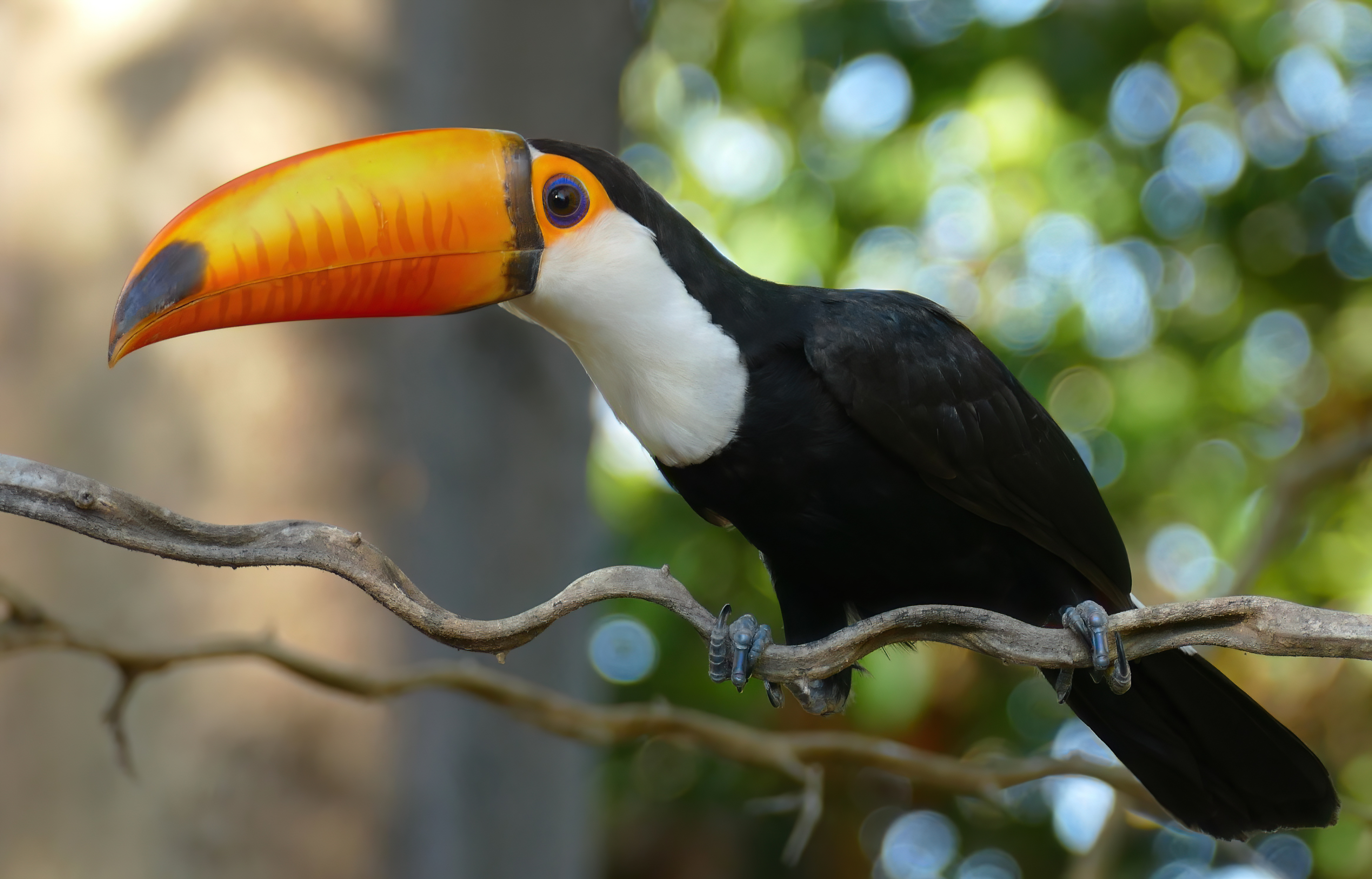
A toucan’s enormous bill might look heavy and awkward, but it is actually surprisingly lightweight. The outer layer is made of keratin, the same protein found in human fingernails, and the inside is a honeycomb-like mesh of thin bone filled with air pockets. This clever structure gives the bill strength without weighing the bird down. Scientists have discovered that the bill also works as a built-in cooling system: blood vessels near the surface can release excess body heat into the surrounding air, helping the toucan regulate its temperature in the warm, humid rainforest. The long bill is useful for reaching fruit on the tips of thin branches that would snap under the bird’s full weight, giving toucans access to food that many other animals cannot reach.
What They Look Like
Beyond their famous bills, toucans are strikingly colorful birds. Most species have glossy black feathers on their bodies, accented with patches of bright yellow, white, red, or orange on the throat and chest. Their skin around the eyes is often vivid blue or green, adding even more color to their appearance. Toucans range in size from the smaller toucanets, which are about 30 centimeters long, to the toco toucan, which can reach over 60 centimeters from bill tip to tail. Despite their large bills, toucans are not especially heavy birds, typically weighing between 130 and 680 grams depending on the species.
Seed Dispersers of the Rainforest
Toucans are among the rainforest’s most important seed dispersers. When a toucan swallows a fruit whole, the seeds pass through its digestive system unharmed and are deposited far from the parent tree in the bird’s droppings. This process helps new trees sprout in different parts of the forest, promoting genetic diversity and allowing the rainforest to regenerate after disturbances like storms or logging. Some tree species depend so heavily on toucans and similar fruit-eating birds that their seeds will not germinate well without passing through an animal’s gut first. Without toucans, the structure and diversity of tropical forests would change dramatically over time.
Where They Live
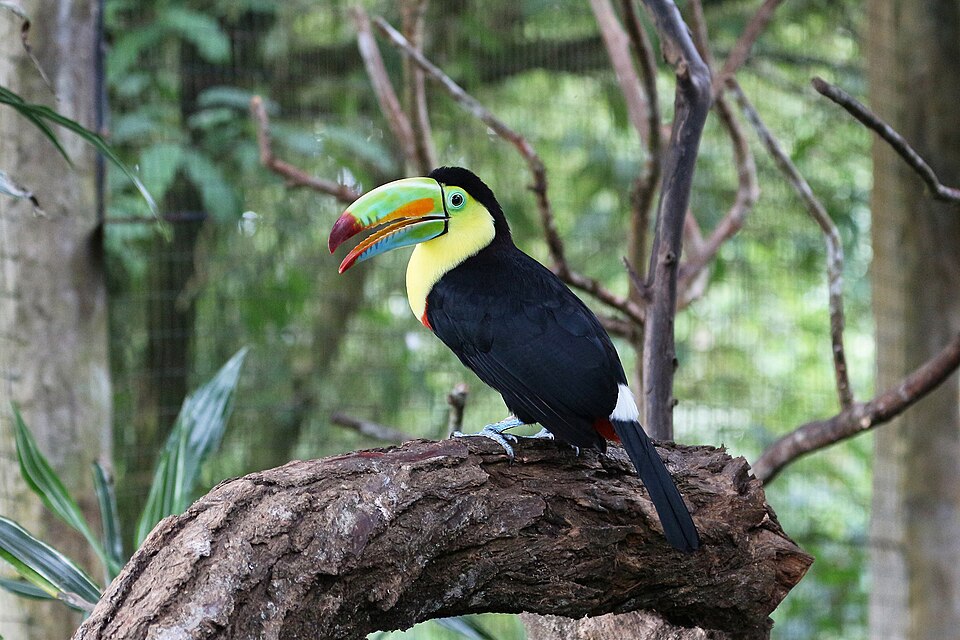
Toucans are found in tropical and subtropical forests from southern Mexico through Central America and into South America, as far south as northern Argentina. Most species prefer the dense canopy of lowland rainforests, where fruit trees are abundant, but some live in cloud forests high in the Andes mountains. Toucans are not strong long-distance fliers because their short, rounded wings are better suited for hopping between nearby branches. They spend most of their time in the upper layers of the forest canopy, where sunlight helps fruit ripen and where they can spot predators like jaguars and birds of prey from a safe distance.
Nesting and Family Life
Toucans nest inside tree cavities, often taking over holes originally carved out by woodpeckers. They do not build nests of their own but instead lay their eggs directly on the floor of the cavity, sometimes on a bed of regurgitated seeds. A typical clutch contains two to four small, white eggs, and both parents share the work of incubating them for about 16 to 20 days. Toucan chicks are born blind and featherless, and their bills are small at first, growing to full size over several months. At night, toucan families squeeze together inside their tree holes, tucking their bills over their backs and folding their tails upward to fit in the tight space.
What They Eat
Toucans are primarily frugivores, meaning fruit makes up the bulk of their diet. They favor figs, berries, and palm fruits, tossing each piece into the air and catching it in their open bill before swallowing it whole. However, toucans are opportunistic feeders and will also eat insects, spiders, lizards, and even small frogs when the chance arises. During the nesting season, they sometimes raid the nests of smaller birds to eat eggs or chicks, a behavior that makes them both predator and prey in the complex web of rainforest life. This varied diet means toucans interact with many different species, connecting multiple layers of the food web.
Toucans and the Rainforest Ecosystem
The relationship between toucans and their rainforest home shows how closely species depend on one another. By spreading seeds across the forest floor, toucans help maintain the incredible diversity of tree species that defines a tropical rainforest. Those trees, in turn, provide food and shelter for countless other creatures, from sloths dozing in the branches to macaws nesting in neighboring hollows. When toucan populations decline due to habitat loss or illegal trapping for the pet trade, the effects ripple outward, reducing the forest’s ability to regrow and support wildlife. Protecting toucans means protecting the rainforest itself, and the thousands of species that call it home.
 OtterKnow Kids Encyclopedia