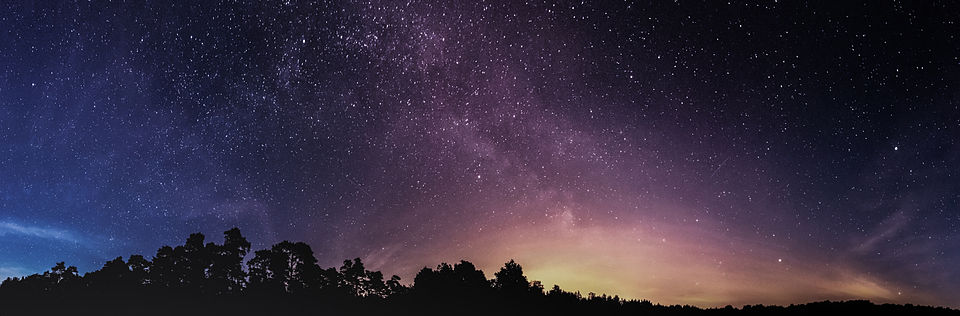
How Stars Make Light
Stars create light and energy through a process called nuclear fusion. Deep inside a star’s core, hydrogen atoms are squeezed together so tightly that they combine to form helium atoms. This process releases a tremendous amount of energy in the form of light and heat. Nuclear fusion is so powerful that it keeps a star shining for billions of years. Our Sun has been burning its hydrogen fuel for about 4.6 billion years and still has plenty left.
How Far Away Are Stars?
Stars are so far away that scientists use a special unit called a light-year to measure the distance. A light-year is the distance that light travels in one full year — about 5.88 trillion miles. The closest star to Earth besides the Sun is Proxima Centauri, which is about 4.24 light-years away. That means the light you see from Proxima Centauri tonight actually left that star more than four years ago. When you look at stars, you are really looking back in time!
The Life Cycle of a Star
Stars do not last forever — they are born, they live, and they eventually die. Stars are born inside huge clouds of gas and dust called nebulae. Gravity pulls the gas and dust together until it gets hot enough to start nuclear fusion, and a new star begins to shine. A star like our Sun will shine steadily for about 10 billion years before running out of fuel. When a star dies, it can become a white dwarf, a neutron star, or even a black hole, depending on how big it was.
Our Closest Star — The Sun
The Sun is the star closest to Earth, sitting about 93 million miles away from us. It is a medium-sized star called a yellow dwarf, even though it is actually white when seen from space. The Sun is so large that about 1.3 million Earths could fit inside it. Without the Sun, life on Earth would be impossible because it provides the light and warmth that plants and animals need to survive. The Sun’s gravity also holds all the planets in our solar system in their orbits.
Constellations and Star Patterns
For thousands of years, people have looked up at the night sky and connected stars into patterns called constellations. Ancient civilizations like the Greeks, Egyptians, and Chinese gave these star patterns names based on animals, heroes, and objects they recognized. Today, astronomers officially recognize 88 constellations that cover the entire sky. Some famous constellations include Orion the Hunter, Ursa Major (the Great Bear), and the Southern Cross. Constellations helped ancient travelers navigate and also helped farmers know when to plant and harvest their crops.
Why Stars Twinkle
When you look up at the night sky, stars appear to twinkle and shimmer. This twinkling is not caused by the stars themselves — it happens because of Earth’s atmosphere. Starlight has to travel through layers of moving air before it reaches your eyes, and the air bends the light in different directions. This bending makes the star look like it is flickering or changing brightness. Planets usually do not twinkle as much because they are closer to Earth and appear larger in the sky, so their light is less affected by the atmosphere.
Studying Stars
Scientists who study stars are called astronomers. They use powerful telescopes on Earth and in space to observe stars in great detail. The Hubble Space Telescope, launched in 1990, has taken detailed pictures of stars and galaxies millions of light-years away. By studying the light from a star, astronomers can figure out what it is made of, how hot it is, and how far away it is. Space telescopes like the James Webb Space Telescope, launched in 2021, are helping scientists discover new stars and learn even more about how the universe works.
 OtterKnow Kids Encyclopedia