Stars in Our Galaxy
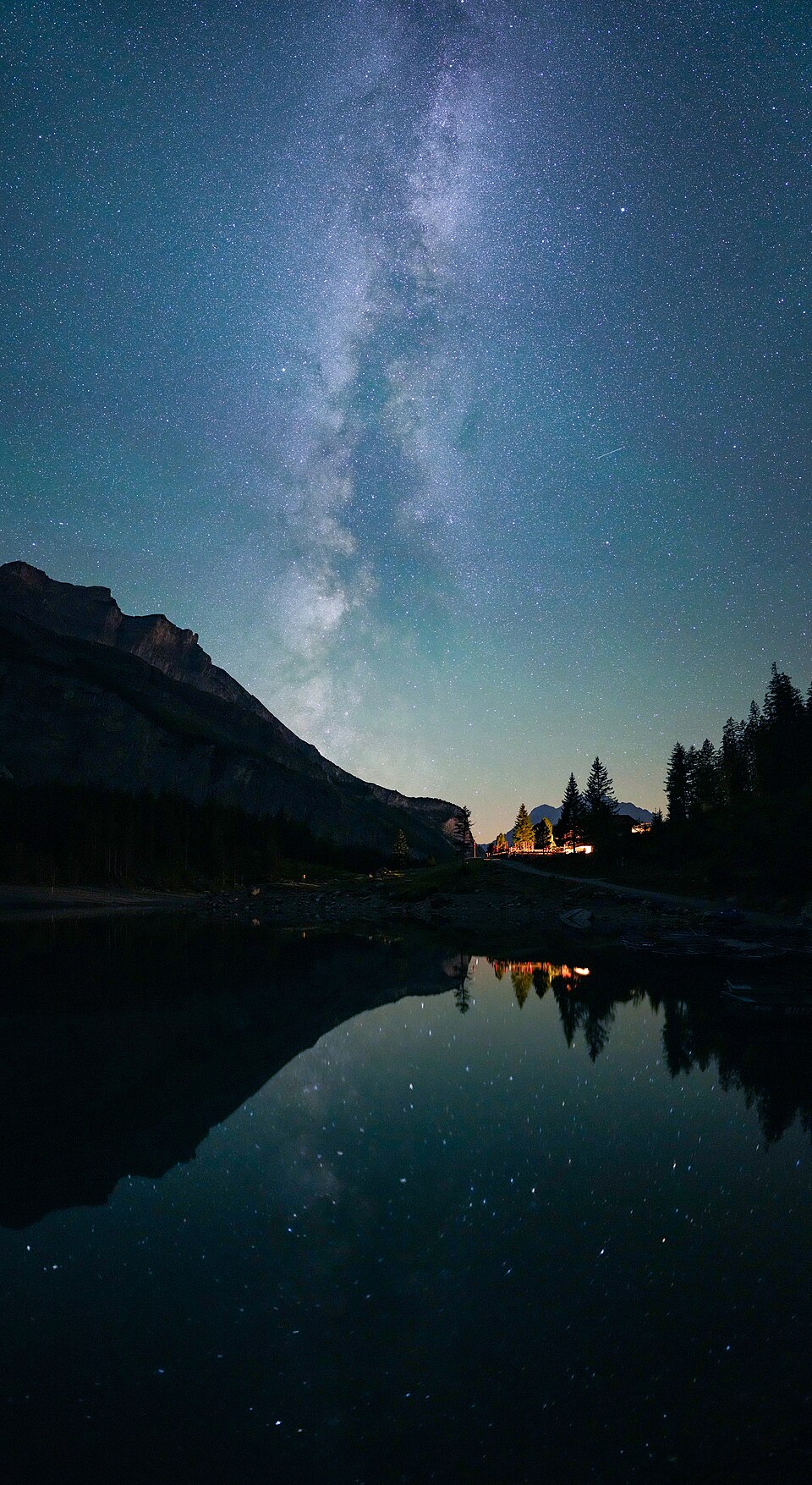
Our home galaxy, the Milky Way, contains between 100 billion and 400 billion stars. The Sun is just one ordinary star among all of them. Most of the stars in the Milky Way are too far away and too faint for us to see without a telescope. The galaxy is shaped like a flat disk with spiral arms, and our solar system sits about two-thirds of the way out from the center. When you look at the milky band of light stretching across the night sky, you are actually seeing the combined glow of millions of distant stars in our own galaxy.
Billions of Galaxies
The Milky Way is just one galaxy among billions. Astronomers using the Hubble Space Telescope estimated that the observable universe contains at least 200 billion galaxies. Some galaxies are much larger than ours, while others are small dwarf galaxies with only a few billion stars. The James Webb Space Telescope, launched in 2021, has helped scientists discover galaxies that formed very early in the history of the universe. Each of these galaxies contains millions, billions, or even trillions of stars of its own.
How Scientists Estimate Star Numbers
Since no one can actually count every star, scientists use clever methods to estimate the total number. They measure the brightness and mass of a galaxy to figure out roughly how many stars it contains. They also study nearby regions of space in great detail and then multiply what they find across the whole universe. Powerful telescopes like the Hubble and James Webb space telescopes can peer deep into space to observe extremely distant galaxies. These observations help astronomers refine their estimates over time.
Different Kinds of Stars
Not all stars are the same. Some are red dwarfs, which are small, cool, and very common — they make up about 70 percent of all stars in the Milky Way. Others are massive blue giants that burn extremely hot and bright but live much shorter lives. Our Sun is a medium-sized yellow star, sometimes called a yellow dwarf. Stars also come in different colors depending on their surface temperature, ranging from cool red stars to extremely hot blue-white stars. The variety of star types means that the universe is filled with a wide range of different suns.
Stars We Cannot See
Most of the stars in the universe are invisible to us, even with telescopes. Red dwarf stars are so faint that they can only be detected if they are relatively close to Earth. Many stars are hidden behind thick clouds of gas and dust that block their light. Some stars are simply too far away for their light to have reached us yet. Scientists believe there could be many more stars than current estimates suggest, hidden in parts of the universe we have not yet been able to observe.
Why the Number Keeps Changing
The estimated number of stars in the universe has changed many times throughout history. Ancient people thought there were only a few thousand stars because that is all they could see. When Galileo first used a telescope in 1610, he discovered that the Milky Way was made of countless individual stars. In the 1920s, astronomer Edwin Hubble proved that other galaxies existed far beyond our own. Today, with more advanced telescopes and technology, scientists continue to update their estimates as they discover new galaxies and learn more about how stars form and die.
Stars Are Still Being Born
New stars are forming right now in giant clouds of gas and dust called nebulae. The Orion Nebula, which is visible from Earth, is one famous place where new stars are being born. At the same time, old stars are dying — some fade away quietly, while others explode in spectacular events called supernovae. Scientists estimate that about three new stars are born in the Milky Way every year. This means the total number of stars in the universe is always slowly changing, with new ones appearing and old ones fading away.
 OtterKnow Kids Encyclopedia