Eating in Microgravity
Astronauts on the ISS eat three meals a day, but mealtime looks very different from what you experience at home. Most food comes in sealed pouches or cans, and astronauts add water to dehydrated meals before eating them. Crumbs and liquids float in microgravity, so astronauts avoid crumbly foods like regular bread and instead use tortillas. Fresh fruits and vegetables are a rare treat that arrive on resupply spacecraft every few months. Astronauts from different countries often share their favorite foods, turning meals into a chance to learn about other cultures.
Sleeping Without Gravity
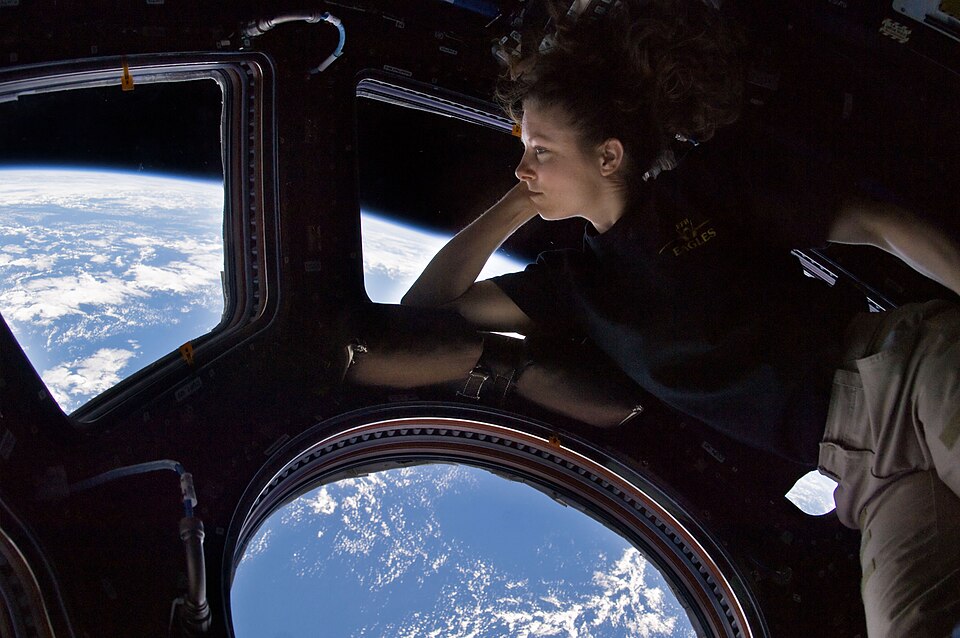
In space, there is no “up” or “down,” so astronauts can sleep in any direction. They zip themselves into sleeping bags attached to the wall so they do not float around and bump into equipment. Most astronauts sleep about six to eight hours each night inside small crew quarters that are about the size of a phone booth. Some astronauts say sleeping in space feels like floating on a cloud because nothing presses against their body. The ISS crew follows a schedule based on Greenwich Mean Time to keep a regular day-and-night routine, even though they see 16 sunrises and sunsets every 24 hours.
Exercise Is Essential
Without gravity pulling on their muscles and bones, astronauts would lose strength very quickly. That is why every crew member on the ISS must exercise for about two hours each day using special machines. They use a treadmill with bungee straps that hold them down, a stationary bicycle, and a weightlifting machine that uses vacuum cylinders instead of actual weights. Studies have shown that astronauts can lose up to 1 to 2 percent of their bone density each month without regular exercise. Staying fit in space is not just about feeling good — it helps astronauts stay healthy enough to walk again when they return to Earth.
Health Challenges in Space
Living in space for months or years creates real challenges for the human body. Without gravity, body fluids shift toward the head, which can cause headaches and vision problems. Astronauts also face higher levels of radiation from cosmic rays because they are above Earth’s protective atmosphere. NASA’s Twin Study compared astronaut Scott Kelly, who spent nearly a year in space, with his twin brother Mark, who stayed on Earth, and found changes in Scott’s gene expression and immune system. Scientists are working hard to solve these problems before sending humans on longer missions to the Moon and Mars.
Water and Air Recycling
The ISS uses advanced technology to keep astronauts alive in the vacuum of space. A system called the Environmental Control and Life Support System recycles about 90 percent of the water on the station, including moisture from sweat and even urine. Oxygen is produced by a machine that splits water molecules into hydrogen and oxygen through a process called electrolysis. Carbon dioxide that astronauts breathe out is removed from the air by chemical scrubbers so it does not build up to dangerous levels. These recycling systems are essential because sending water and air from Earth would cost thousands of dollars per pound.
Growing Food in Space
One of the most exciting experiments on the ISS is learning how to grow plants in microgravity. NASA’s Veggie experiment has successfully grown lettuce, radishes, and chili peppers aboard the station. Plants need special LED lights and carefully controlled watering systems because water forms floating blobs instead of soaking into soil in microgravity. Learning to grow food in space is important for future missions to Mars, where a trip could take six to nine months each way. If astronauts can grow their own fresh food, they will need to carry less supplies and will get important vitamins and nutrients.
The Future of Space Living
Space agencies around the world are planning for humans to live in space for even longer periods. NASA’s Artemis program aims to build a space station called Gateway that will orbit the Moon and serve as a stopping point for missions to Mars. Private companies are also designing space stations that could one day welcome tourists and researchers. Scientists are studying whether astronauts could use resources found on the Moon or Mars, like water ice and minerals, to build shelters and make fuel — a concept called in-situ resource utilization. Living in space long-term will require solving many challenges, but each year brings us closer to becoming a species that lives beyond Earth.
 OtterKnow Kids Encyclopedia