Parts of the Shuttle
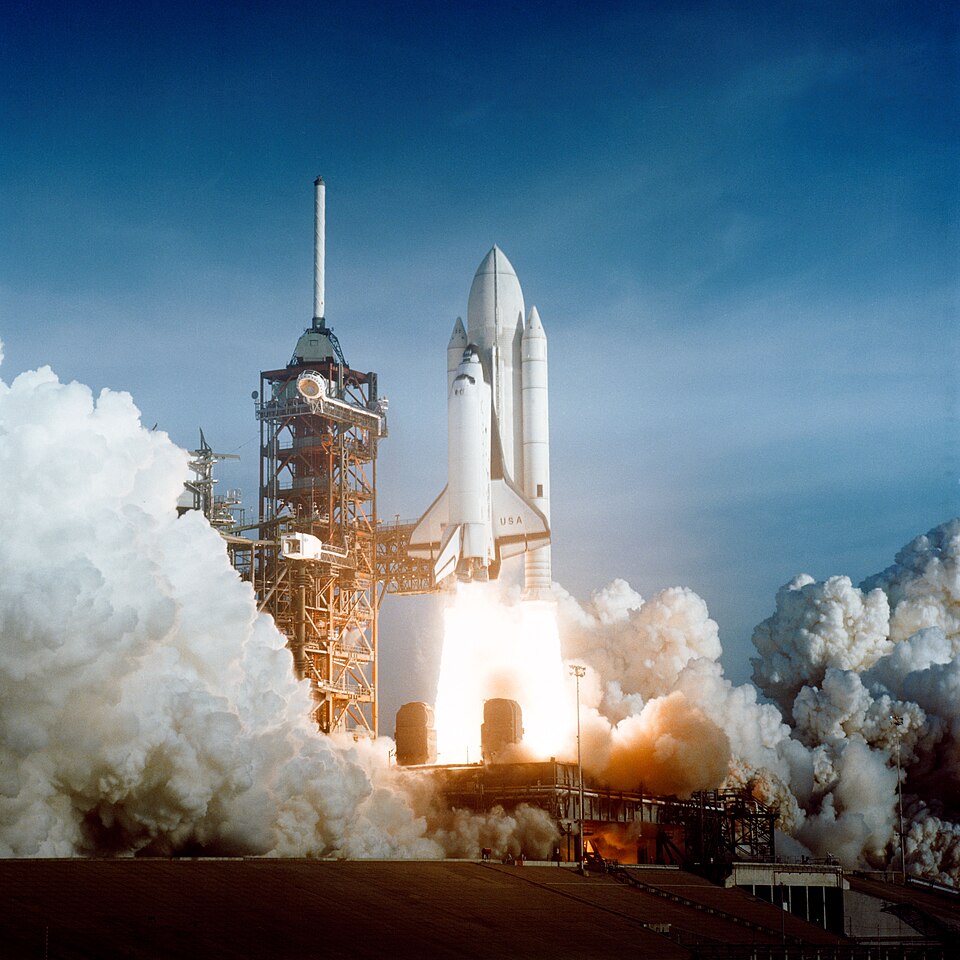
The Space Shuttle system had three main parts that worked together during launch. The orbiter was the airplane-shaped vehicle where the astronauts rode, and it had a large cargo bay for carrying satellites and equipment. Two tall, white solid rocket boosters provided extra power during the first two minutes of flight and then parachuted into the ocean to be recovered and reused. The large orange external tank held liquid hydrogen and liquid oxygen fuel for the orbiter’s three main engines. The external tank was the only part that was not reused, burning up in the atmosphere after each launch.
Launching into Space
A Space Shuttle launch was one of the most powerful events on Earth. At liftoff, the three main engines and two solid rocket boosters together produced about 6.5 million pounds of thrust. The solid rocket boosters separated about two minutes after launch at an altitude of roughly 45 kilometers and parachuted into the Atlantic Ocean. The main engines continued firing for about eight and a half minutes total until the shuttle reached orbit. Once in space, the external tank was released and broke apart as it fell back through the atmosphere.
Life on the Shuttle
Astronauts on the Space Shuttle experienced weightlessness once they reached orbit, floating inside the cabin and sleeping in bags attached to the walls. The shuttle could carry up to seven crew members on most missions, though some flights had as many as eight. Astronauts ate specially prepared meals, exercised to keep their muscles strong, and performed scientific experiments. The shuttle’s cargo bay could be opened in space, and astronauts sometimes performed spacewalks to repair satellites or work on other equipment outside the vehicle.
Building the International Space Station
One of the Space Shuttle’s greatest achievements was helping to build the International Space Station. The shuttle’s cargo bay was large enough to carry massive station components into orbit, and its robotic arm helped put the pieces together. Construction of the ISS began in 1998 and required dozens of shuttle missions over more than a decade. Without the Space Shuttle’s ability to carry heavy loads and support spacewalking astronauts, building the station would not have been possible.
The Hubble Space Telescope
The Space Shuttle played a key role in the story of the Hubble Space Telescope, one of the most important scientific instruments ever built. In 1990, the shuttle Discovery carried Hubble into orbit, releasing it from the cargo bay about 550 kilometers above Earth. When scientists discovered that Hubble’s main mirror had a flaw that blurred its images, shuttle astronauts flew up and installed corrective lenses in 1993. Shuttle crews visited Hubble five times in total to repair and upgrade the telescope, keeping it working for more than 30 years.
Tragedies and Lessons
The Space Shuttle program experienced two terrible tragedies that reminded everyone how dangerous space travel can be. In January 1986, the shuttle Challenger broke apart 73 seconds after launch, killing all seven crew members, including teacher Christa McAuliffe. The disaster was caused by a failed rubber seal called an O-ring on one of the solid rocket boosters. In February 2003, the shuttle Columbia broke apart during reentry, again killing all seven astronauts aboard. Each tragedy led to important safety improvements and years of careful investigation before flights resumed.
The Shuttle’s Legacy
The Space Shuttle program ended in July 2011 when Atlantis completed the final mission, STS-135. Over 30 years, the shuttle carried more than 350 different astronauts into space and traveled a combined distance of over 870 million kilometers. The remaining orbiters are now displayed in museums across the United States, where visitors can see them up close. The shuttle proved that reusable spacecraft could work and inspired the next generation of vehicles, including SpaceX’s Crew Dragon, which now carries astronauts to the International Space Station.
 OtterKnow Kids Encyclopedia