The Heat Shield
When a spacecraft plunges into Earth’s atmosphere, the air in front of it gets compressed and heated to temperatures above 3,000 degrees Fahrenheit. That is hot enough to melt steel! To protect the spacecraft and its crew, engineers attach a heat shield to the bottom of the capsule. The heat shield is made of special materials that absorb and carry away the intense heat. On NASA’s Orion capsule, the heat shield is called an ablative shield because tiny pieces of it burn away, taking the heat with them.
Slowing Down
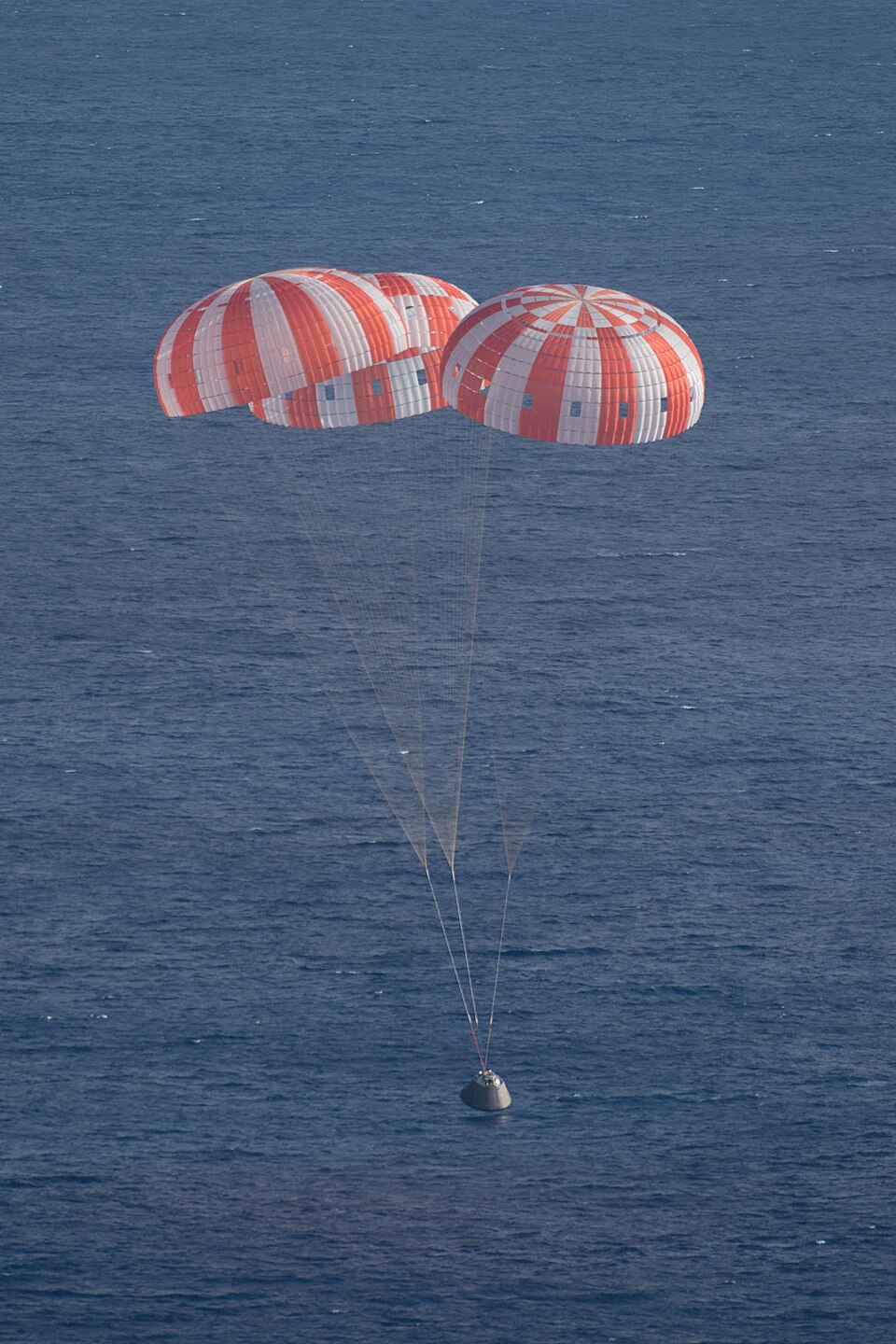
A spacecraft must shed most of its speed before it can land safely. The first big slowdown happens from air resistance, also called drag, as the spacecraft pushes through thicker and thicker layers of atmosphere. Next, parachutes deploy to slow the capsule even further. The SpaceX Crew Dragon uses four main parachutes that open in stages to gently bring the capsule down to a speed safe enough for splashdown. Without parachutes, the capsule would still be moving far too fast to survive landing.
Splashdown Landings
Many spacecraft land in the ocean, which is called a splashdown. NASA used ocean landings for the Mercury, Gemini, and Apollo programs in the 1960s and 1970s. The water acts as a cushion, absorbing the force of impact and protecting the crew inside. Today, SpaceX Crew Dragon capsules also splash down in the ocean, where recovery boats pick up the astronauts. Navy ships and helicopters are positioned nearby to reach the crew quickly after landing.
Landing on Solid Ground
Some spacecraft are designed to land on solid ground instead of water. Russia’s Soyuz capsules have used land landings in the steppes of Kazakhstan since the 1960s. The Soyuz fires small retro-rockets just before touching down to soften the impact. The Space Shuttle was unique because it glided back to Earth like an airplane and landed on a runway. Blue Origin’s New Shepard capsule uses a combination of parachutes and retro-rockets to land gently on the desert floor in Texas.
Reusable Rockets
One of the biggest breakthroughs in space travel is the development of reusable rockets. SpaceX’s Falcon 9 rocket booster flies back to Earth after launch and lands upright on a landing pad or a drone ship in the ocean. This technology saves hundreds of millions of dollars because the same booster can be flown many times instead of being thrown away. Before reusable rockets, every launch vehicle was used just once and then discarded into the ocean. SpaceX has successfully landed and reused Falcon 9 boosters over 300 times.
The Blackout Zone
During reentry, there is a period of several minutes when mission control loses all contact with the spacecraft. This is called the communications blackout, and it happens because the extreme heat creates a layer of ionized gas, called plasma, around the spacecraft. The plasma blocks radio signals from getting through. Astronauts inside the capsule cannot talk to anyone on the ground during this time, which can be nerve-wracking for everyone involved. Modern spacecraft designs are working on ways to reduce or eliminate this blackout period.
The Future of Landing
Engineers are developing exciting new ways to bring spacecraft back to Earth. SpaceX is designing its massive Starship to land vertically using its own engines, without needing parachutes at all. NASA’s Orion capsule, built for deep space missions to the Moon and Mars, uses an advanced heat shield and parachute system for ocean splashdowns. Sierra Nevada Corporation is building the Dream Chaser, a small space plane that will land on runways like the old Space Shuttle. These new technologies will make space travel safer, cheaper, and more routine in the years ahead.
 OtterKnow Kids Encyclopedia