How Big Is the Sun?
The Sun is enormous compared to everything else in the solar system. Its diameter is about 864,000 miles, which means roughly 1.3 million Earths could fit inside it. The Sun makes up about 99.86% of all the mass in the entire solar system. It is about 93 million miles away from Earth, a distance that scientists call one astronomical unit, or AU.
How the Sun Makes Energy
The Sun produces energy through a process called nuclear fusion, which happens deep inside its core. In the core, temperatures reach about 27 million degrees Fahrenheit, which is hot enough to force hydrogen atoms to combine and form helium. This fusion process releases tremendous amounts of energy in the form of light and heat. Every second, the Sun converts about 600 million tons of hydrogen into helium, and it has enough fuel to keep shining for another 5 billion years.
Layers of the Sun
The Sun has several layers, each with different properties. The core is the innermost layer where nuclear fusion takes place, and it is the hottest part of the Sun. Surrounding the core are the radiative zone and the convective zone, which carry energy outward toward the surface. The visible surface of the Sun is called the photosphere, and above it are the chromosphere and the corona, which can be seen during a total solar eclipse as a glowing halo around the Moon.
Sunspots and Solar Activity
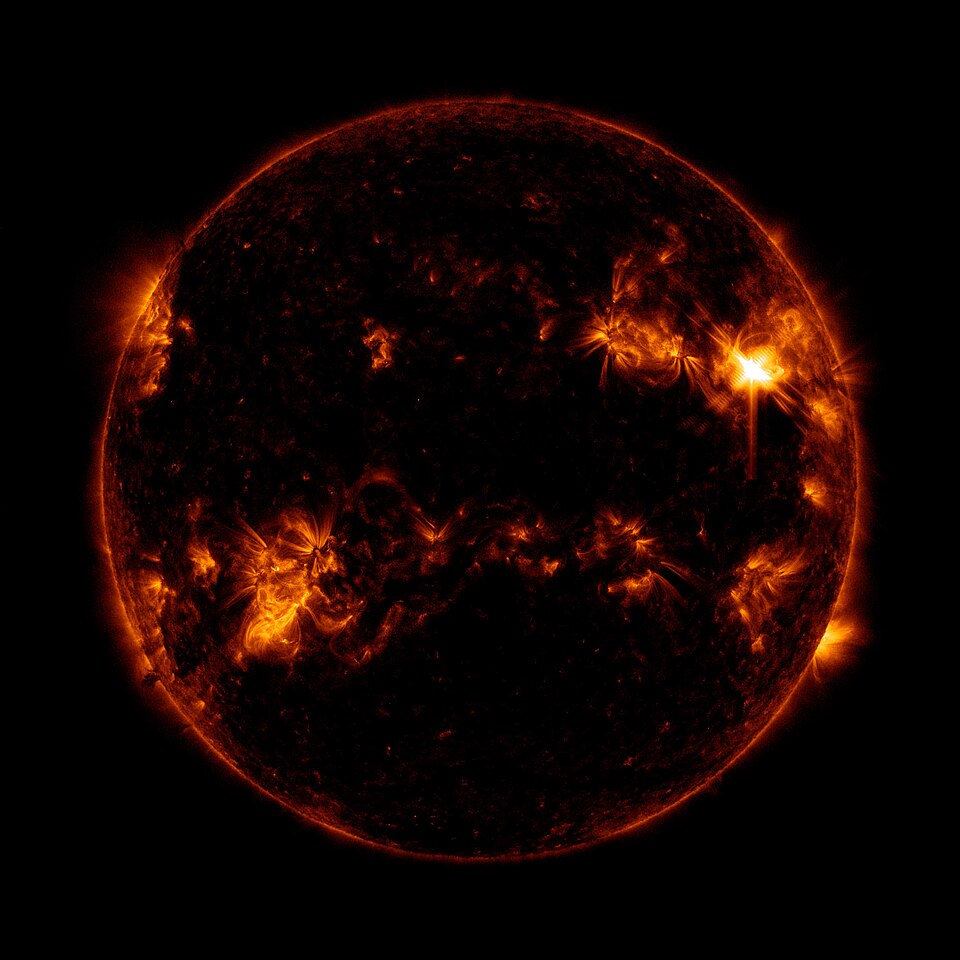
Sunspots are dark patches on the Sun’s surface that appear darker because they are cooler than the surrounding areas. They are caused by strong magnetic fields that prevent some heat from reaching the surface. The number of sunspots rises and falls in a cycle that lasts about 11 years, known as the solar cycle. During periods of high solar activity, the Sun can release powerful bursts of energy called solar flares and coronal mass ejections, which can affect satellites and power grids on Earth.
The Sun and Earth
The Sun’s energy drives nearly everything that happens on Earth, from weather patterns to the growth of plants. Sunlight takes about 8 minutes and 20 seconds to travel from the Sun to Earth. Earth’s tilted axis means that different parts of the planet receive different amounts of sunlight throughout the year, which creates the seasons. The Sun also produces a stream of charged particles called the solar wind, which interacts with Earth’s magnetic field to create the beautiful northern and southern lights, known as auroras.
The Sun’s Life Cycle
The Sun is currently about 4.6 billion years old, roughly halfway through its life. In about 5 billion years, the Sun will begin to run out of hydrogen fuel in its core and will start to expand into a red giant star. As a red giant, it will grow so large that it may swallow Mercury and Venus. Eventually, the Sun will shed its outer layers and shrink down into a small, dense object called a white dwarf, which will slowly cool over trillions of years.
Studying the Sun
Scientists use special telescopes and spacecraft to study the Sun safely, since looking directly at it can damage your eyes. NASA’s Parker Solar Probe, launched in 2018, has flown closer to the Sun than any spacecraft in history, passing through the outer atmosphere called the corona. The Solar Dynamics Observatory watches the Sun 24 hours a day from orbit, capturing detailed images of solar flares and sunspots. By studying the Sun, scientists learn not only about our own star but also about the billions of other stars in the universe.
 OtterKnow Kids Encyclopedia