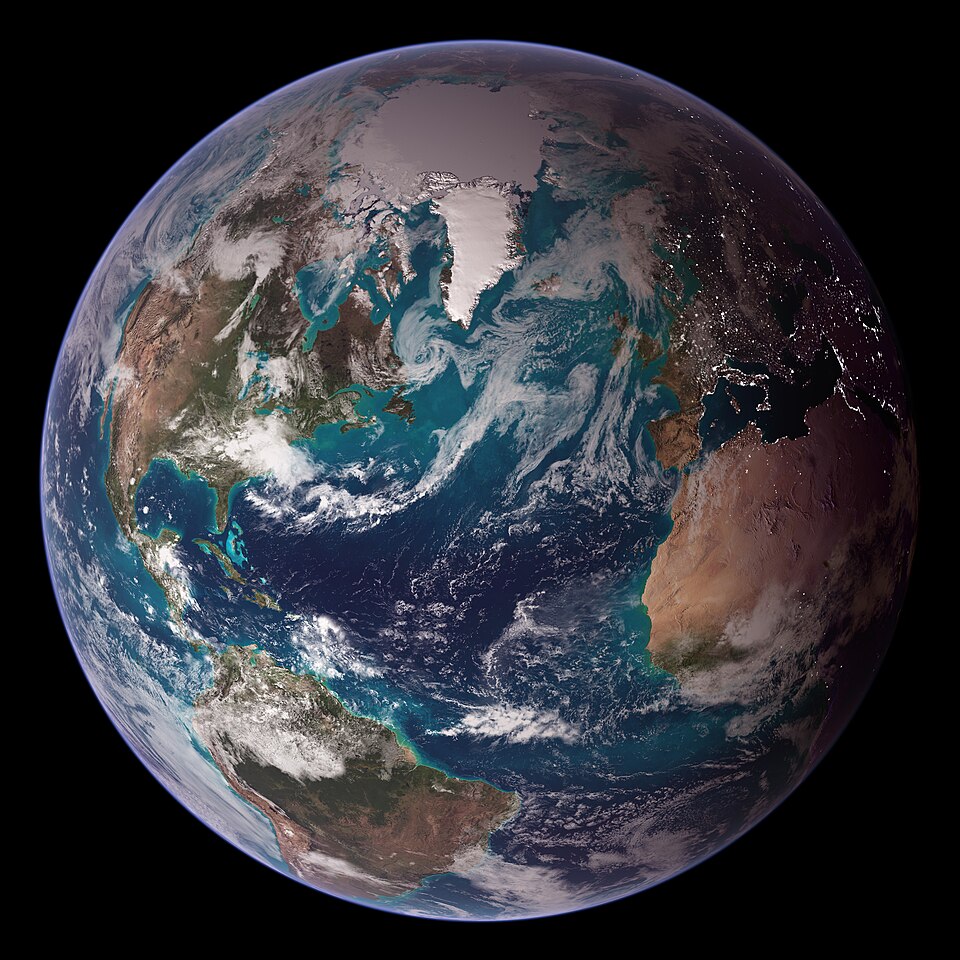
The Blue Planet
About 71 percent of Earth’s surface is covered by water, which is why it is often called the Blue Planet. Most of this water is in the five great oceans: the Pacific, Atlantic, Indian, Southern, and Arctic. Earth is the only planet in our solar system that has liquid water on its surface, which is one of the key reasons life can thrive here. The oceans help control Earth’s temperature by absorbing heat from the Sun and moving it around the planet through currents. Fresh water makes up only about 2.5 percent of all the water on Earth, and most of that is locked up in glaciers and ice caps.
Earth’s Layers
If you could slice Earth in half, you would see that it is made up of several layers, like an onion. The outermost layer is the crust, which is the thin, rocky shell we live on. Beneath the crust is the mantle, a thick layer of hot rock that can flow slowly over long periods of time. At the center of the Earth is the core, which has two parts: a liquid outer core made mostly of iron and nickel, and a solid inner core. The inner core is incredibly hot, reaching temperatures of about 9,800 degrees Fahrenheit, which is almost as hot as the surface of the Sun.
Earth’s Atmosphere
Earth is surrounded by a blanket of gases called the atmosphere, which stretches hundreds of miles above the surface. The atmosphere is made up of about 78 percent nitrogen and 21 percent oxygen, with small amounts of other gases like argon and carbon dioxide. This layer of air protects us from harmful radiation from the Sun and from most meteoroids, which burn up as they speed through the atmosphere. The atmosphere also traps heat from the Sun, keeping Earth warm enough for liquid water and life to exist. Without our atmosphere, Earth’s average temperature would be well below freezing.
Plate Tectonics
Earth’s crust is not one solid piece but is broken into large sections called tectonic plates that float on top of the mantle. There are about 15 major tectonic plates, and they are constantly moving, though very slowly, at about the same speed your fingernails grow. When plates push together, they can form mountain ranges like the Himalayas, and when they pull apart, they create valleys and new ocean floor. Earthquakes happen when plates suddenly slip past each other, and volcanoes often form along plate boundaries where hot magma rises from below. Millions of years ago, all the continents were joined together in one supercontinent that scientists call Pangaea.
Earth’s Moon
Earth has one natural satellite, the Moon, which is about one-quarter the size of Earth. The Moon orbits Earth at an average distance of about 238,900 miles and is the fifth-largest moon in our solar system. It takes the Moon about 27.3 days to complete one orbit around Earth, and it always shows the same face toward us because it rotates at the same rate it orbits. The Moon’s gravity pulls on Earth’s oceans and creates the tides that rise and fall each day. Scientists believe the Moon formed about 4.5 billion years ago when a Mars-sized object crashed into the young Earth and sent a huge cloud of debris into orbit.
Seasons and Rotation
Earth takes about 365.25 days to complete one orbit around the Sun, which is why we have leap years every four years to account for that extra quarter day. Our planet is tilted on its axis at about 23.5 degrees, and this tilt is what causes the seasons. When the Northern Hemisphere tilts toward the Sun, it experiences summer, while the Southern Hemisphere has winter, and vice versa. Earth also spins on its axis once every 24 hours, giving us day and night. At the equator, the surface of Earth is spinning at about 1,040 miles per hour, though we cannot feel it because everything around us is moving at the same speed.
Protecting Our Planet
Earth is a special place, and scientists have not found another planet quite like it anywhere in the universe. The combination of liquid water, a protective atmosphere, and a magnetic field that shields us from solar wind makes Earth uniquely suited for life. However, human activities like burning fossil fuels, cutting down forests, and polluting waterways are changing Earth’s environment in ways that affect all living things. Scientists around the world are working to understand these changes and find solutions to protect our planet. Everyone can help by conserving water, reducing waste, and learning about the natural world around them.
 OtterKnow Kids Encyclopedia