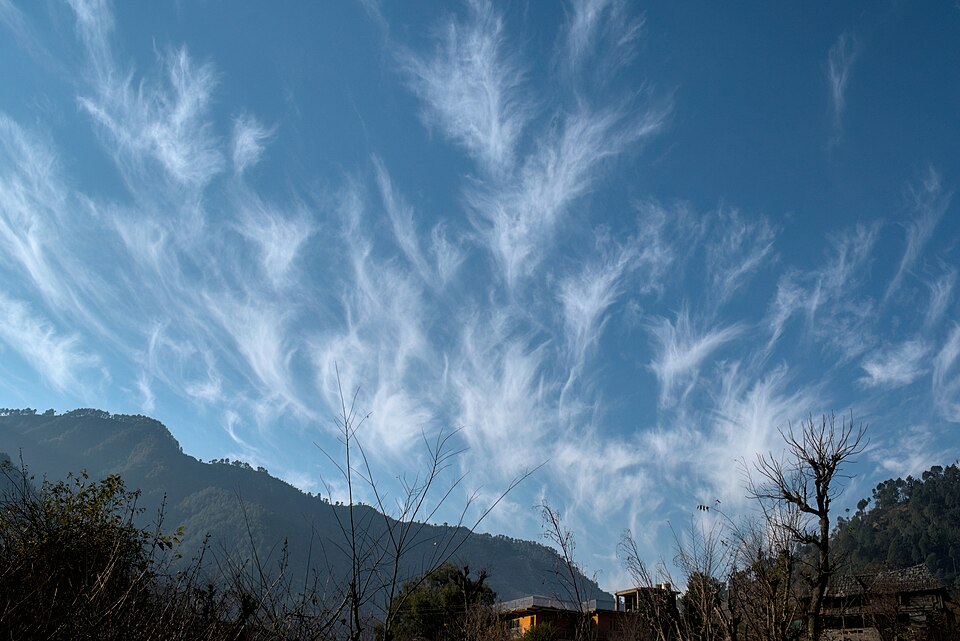
Earth’s Atmosphere
The sky is not actually a solid blue ceiling above us. What we call the “sky” is really Earth’s atmosphere, a blanket of gases that surrounds our planet. The atmosphere is mostly made of nitrogen and oxygen, along with tiny amounts of other gases. It also contains billions of tiny particles like dust, water droplets, and pollen floating around. These gas molecules and particles are so small that we cannot see them, but they play a huge role in making the sky look blue.
How Light Scatters
When sunlight enters Earth’s atmosphere, it bumps into the gas molecules and tiny particles floating in the air. When light hits these molecules, it bounces off in different directions. Scientists call this process “scattering.” Not all colors of light scatter the same way. The amount of scattering depends on the size of the wavelength, with shorter wavelengths scattering much more than longer ones.
Rayleigh Scattering
The scientific explanation for why the sky is blue is called Rayleigh scattering, named after the British scientist Lord Rayleigh who figured it out in the 1870s. Rayleigh discovered that gas molecules scatter short-wavelength light, like blue and violet, much more than long-wavelength light, like red and orange. In fact, blue light is scattered about ten times more than red light. Even though violet light has an even shorter wavelength than blue, our eyes are more sensitive to blue light, so the sky looks blue instead of violet. Some violet light also gets absorbed by the upper atmosphere before it reaches our eyes.
Sunrises and Sunsets
If the sky is blue during the day, why does it turn orange, pink, and red at sunrise and sunset? The answer has to do with how far sunlight has to travel through the atmosphere. When the sun is near the horizon, its light must pass through a much thicker layer of air to reach your eyes. During this longer journey, almost all of the blue light gets scattered away in other directions. The red and orange light, which has longer wavelengths and scatters less, is what makes it through to your eyes. That is why sunsets and sunrises are filled with warm, fiery colors.
Why Clouds Are White
You might wonder why clouds are white if the sky around them is blue. Clouds are made of water droplets and ice crystals that are much larger than the gas molecules in the atmosphere. When light hits these bigger particles, all colors of light scatter equally in every direction. Scientists call this Mie scattering. Since all the colors scatter the same amount and mix back together, clouds appear white. When clouds become very thick and dense, less light passes through them, which is why storm clouds look gray or dark.
The Sky on Other Planets
The color of the sky depends on what gases and particles are in a planet’s atmosphere. Mars has a thin atmosphere filled with tiny iron-rich dust particles. These dust particles scatter red and orange light, giving Mars a butterscotch or pinkish sky during the day. During Martian sunsets, the sky actually turns blue, which is the opposite of what happens on Earth. On the moon, there is no atmosphere at all, so the sky is always pitch black, even during the daytime when the sun is shining.
Experimenting with Light
You can see how scattering works with a simple experiment at home. Fill a clear glass with water and add a few drops of milk. Then shine a flashlight through the glass. The milky water will look slightly blue from the side because the tiny milk particles scatter the blue light, just like the atmosphere does. If you look at the light coming through the other side of the glass, it will appear reddish or orange, just like a sunset. This experiment shows the same basic science that paints our sky blue every day.
 OtterKnow Kids Encyclopedia