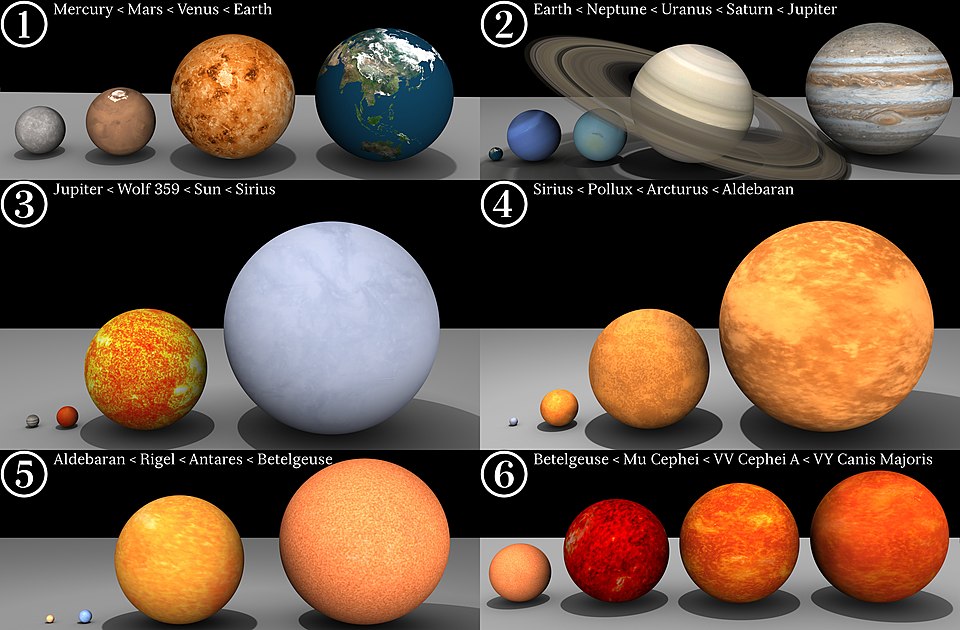
Enormous Planets and Gas Giants
Jupiter, the largest planet in our solar system, is so big that more than 1,300 Earths could fit inside it. But astronomers have discovered exoplanets (planets outside our solar system) that make Jupiter look small. Some “hot Jupiters” orbit very close to their stars and can be twice as wide as Jupiter. The exoplanet HAT-P-67b is one of the largest known planets, with a diameter about twice that of Jupiter. These giant planets are made mostly of gas and do not have a solid surface you could stand on.
Nebulae — Giant Clouds in Space
Nebulae are massive clouds of gas and dust that float between the stars. The Tarantula Nebula, located in a nearby galaxy called the Large Magellanic Cloud, stretches about 1,800 light-years across. Some nebulae are places where new stars are being born, while others are the remains of stars that have exploded. The Carina Nebula is one of the largest star-forming regions in our galaxy, spanning about 300 light-years. These colorful clouds can contain enough material to create thousands of new stars.
The Milky Way and Other Galaxies
Our home galaxy, the Milky Way, contains between 100 billion and 400 billion stars and stretches about 100,000 light-years across. But the Milky Way is not even close to being the largest galaxy. IC 1101, one of the biggest known galaxies, is about 6 million light-years in diameter — roughly 60 times wider than our galaxy. Galaxies come in different shapes, including spirals like the Milky Way, egg-shaped ellipticals, and irregular galaxies with no particular shape. The Andromeda Galaxy, our nearest large neighbor, is about 2.5 million light-years away and is on a collision course with the Milky Way, though the crash will not happen for about 4.5 billion years.
Galaxy Clusters and Superclusters
Galaxies do not float alone through space — they group together in clusters held by gravity. The Virgo Cluster, the nearest large galaxy cluster to us, contains about 2,000 galaxies spread across 15 million light-years. Galaxy clusters themselves group into even larger structures called superclusters. The Laniakea Supercluster, which includes our Milky Way, spans about 520 million light-years and contains roughly 100,000 galaxies. These superclusters are among the largest structures that are held together by gravity.
Cosmic Filaments and the Cosmic Web
The largest structures in the known universe are cosmic filaments — enormous threads of galaxies and gas that stretch across billions of light-years. Together, these filaments form a pattern called the cosmic web, which looks like a giant sponge or web stretching in every direction. The Hercules-Corona Borealis Great Wall is one of the largest known structures, stretching about 10 billion light-years across. Between the filaments are vast empty regions called cosmic voids, which can be hundreds of millions of light-years wide. Scientists study the cosmic web to understand how the universe grew and changed after the Big Bang.
Supermassive Black Holes
At the center of most large galaxies sits a supermassive black hole — an object so dense that nothing, not even light, can escape its pull. The supermassive black hole at the center of the galaxy M87, called M87*, has a mass equal to about 6.5 billion Suns. The black hole TON 618 is one of the most massive ever discovered, with a mass of about 66 billion Suns. Even though black holes themselves are invisible, they can be surrounded by glowing disks of hot gas that are larger than our entire solar system. In 2019, scientists captured the first-ever image of a black hole’s shadow using the Event Horizon Telescope.
Why Size Matters in Space
Understanding the largest structures in space helps scientists learn how the universe formed and continues to change. By mapping galaxy clusters and cosmic filaments, researchers can study the effects of dark matter and dark energy, two mysterious forces that shape the universe. Comparing giant and small structures also helps scientists understand the force of gravity at different scales. New telescopes like the James Webb Space Telescope are revealing structures that were too faint or too far away to see before. Every new discovery about the biggest things in space helps scientists piece together how galaxies, stars, and planets formed.
 OtterKnow Kids Encyclopedia