The Real Sam Wilson
Many historians believe Uncle Sam was inspired by a real person named Samuel Wilson, who lived in Troy, New York. During the War of 1812, Samuel Wilson was a meatpacker who supplied barrels of beef and pork to the United States Army. He stamped the barrels with “U.S.” to show they belonged to the United States government, but soldiers joked that the letters stood for “Uncle Sam” Wilson. The nickname spread quickly, and people began using “Uncle Sam” as a fun way to refer to the federal government. In 1961, the U.S. Congress officially recognized Samuel Wilson as the inspiration for Uncle Sam.
Uncle Sam in Early America
The character of Uncle Sam first appeared in newspapers and political cartoons during the War of 1812. At first, different artists drew him in many different ways, and he did not always look the same. Some early drawings showed him as a younger man without the famous top hat and striped clothing. Over time, artists began to give Uncle Sam a more consistent look that matched the colors and symbols of the American flag. By the mid-1800s, Uncle Sam was one of the most recognized symbols in the country.
The Famous “I Want You” Poster
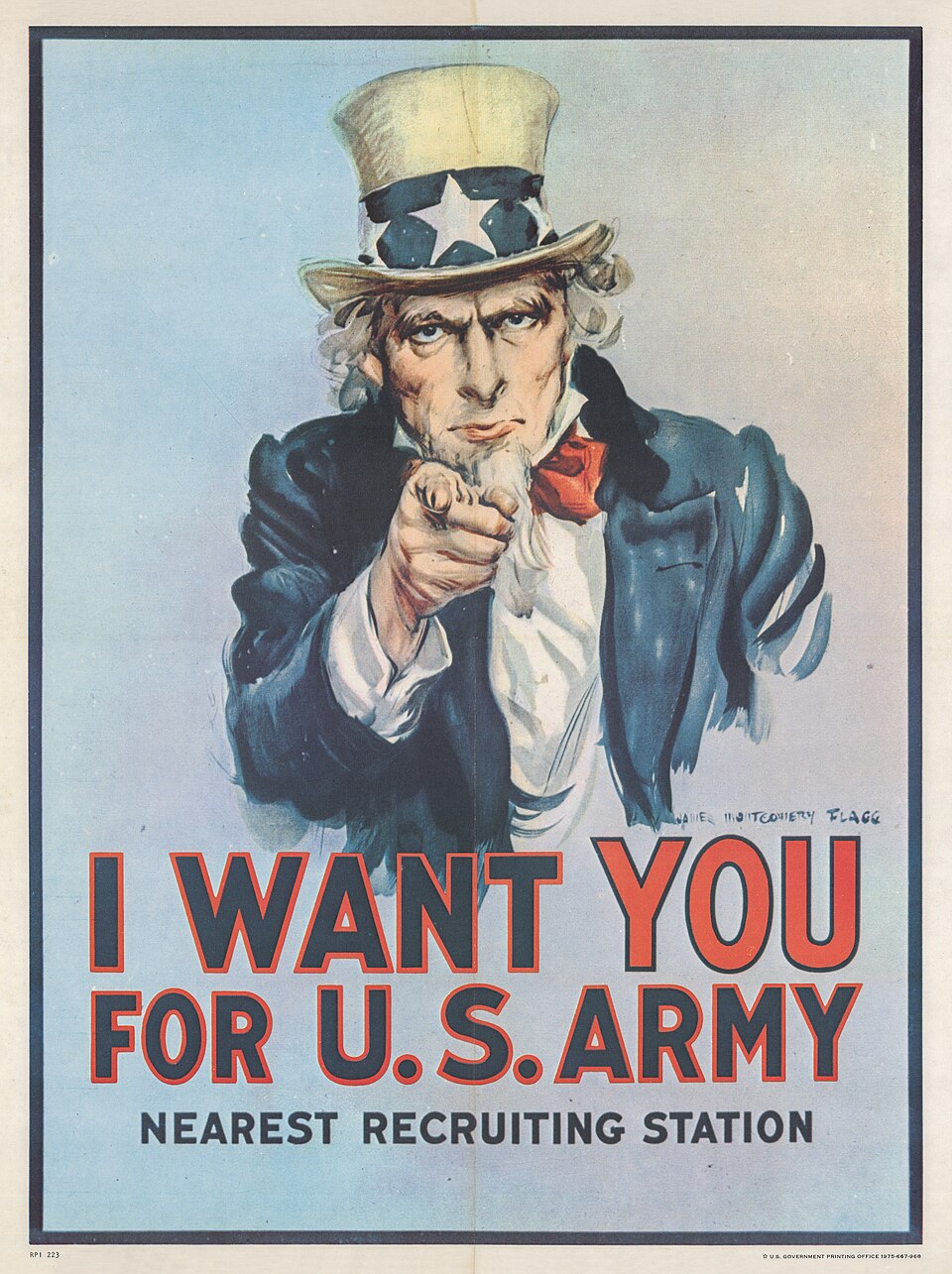
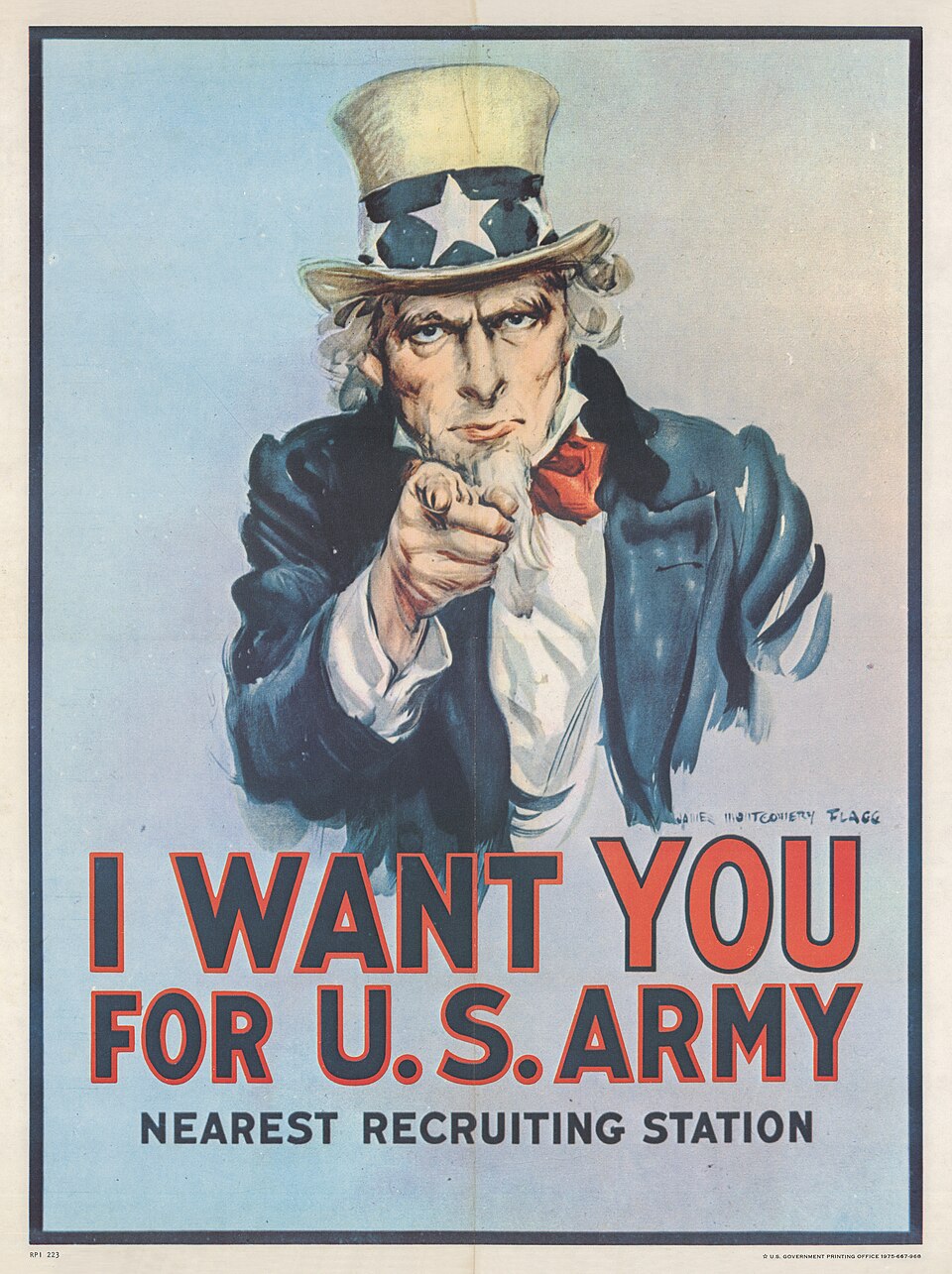
The most well-known image of Uncle Sam comes from a military recruiting poster created during World War I. The poster was painted by artist James Montgomery Flagg in 1917 and shows Uncle Sam pointing directly at the viewer with the words “I Want YOU for U.S. Army.” Flagg actually used his own face as a model for Uncle Sam’s features. The poster was so powerful that it was used again during World War II to encourage people to join the military. More than four million copies of the poster were printed during World War I alone.
Uncle Sam and Brother Jonathan
Before Uncle Sam became popular, another character called Brother Jonathan was used to represent America. Brother Jonathan was a fictional figure who stood for the common American citizen, especially people from New England. As Uncle Sam became more widely known in the 1800s, he gradually replaced Brother Jonathan as the main symbol of the nation. Unlike Brother Jonathan, Uncle Sam represented the government itself rather than just the people. Today, very few people remember Brother Jonathan, but Uncle Sam remains instantly recognizable.
Uncle Sam in Political Cartoons
Political cartoonists have used Uncle Sam for nearly two centuries to comment on government actions and national events. Famous cartoonist Thomas Nast, who also helped create the modern image of Santa Claus, drew many influential pictures of Uncle Sam in the 1800s. Nast gave Uncle Sam the tall, thin appearance and star-spangled outfit that we recognize today. In these cartoons, Uncle Sam might look happy, angry, or worried depending on what was happening in the country. Political cartoons with Uncle Sam helped ordinary people understand and discuss important issues of their time.
Uncle Sam Around the World
Uncle Sam is recognized not just in the United States but around the world as a symbol of America. Other countries have created their own national symbols inspired by the idea of Uncle Sam, such as John Bull for England and Marianne for France. During wartime and international events, foreign cartoonists often draw Uncle Sam to represent the United States in their own newspapers. The character has appeared in movies, television shows, advertisements, and even on postage stamps. Uncle Sam’s image is so powerful that people from many different countries can identify him immediately.
Uncle Sam Today
Uncle Sam continues to appear in modern American culture, from Fourth of July decorations to political discussions. The city of Troy, New York, where Samuel Wilson lived, proudly calls itself the “Home of Uncle Sam” and has a statue honoring him. Every year on September 13, Americans can celebrate Uncle Sam Day, which was established to honor the birthday of Samuel Wilson. Uncle Sam’s image is used in everything from government advertisements to school textbooks. After more than 200 years, Uncle Sam remains one of the most enduring and beloved symbols of the United States.
 OtterKnow Kids Encyclopedia