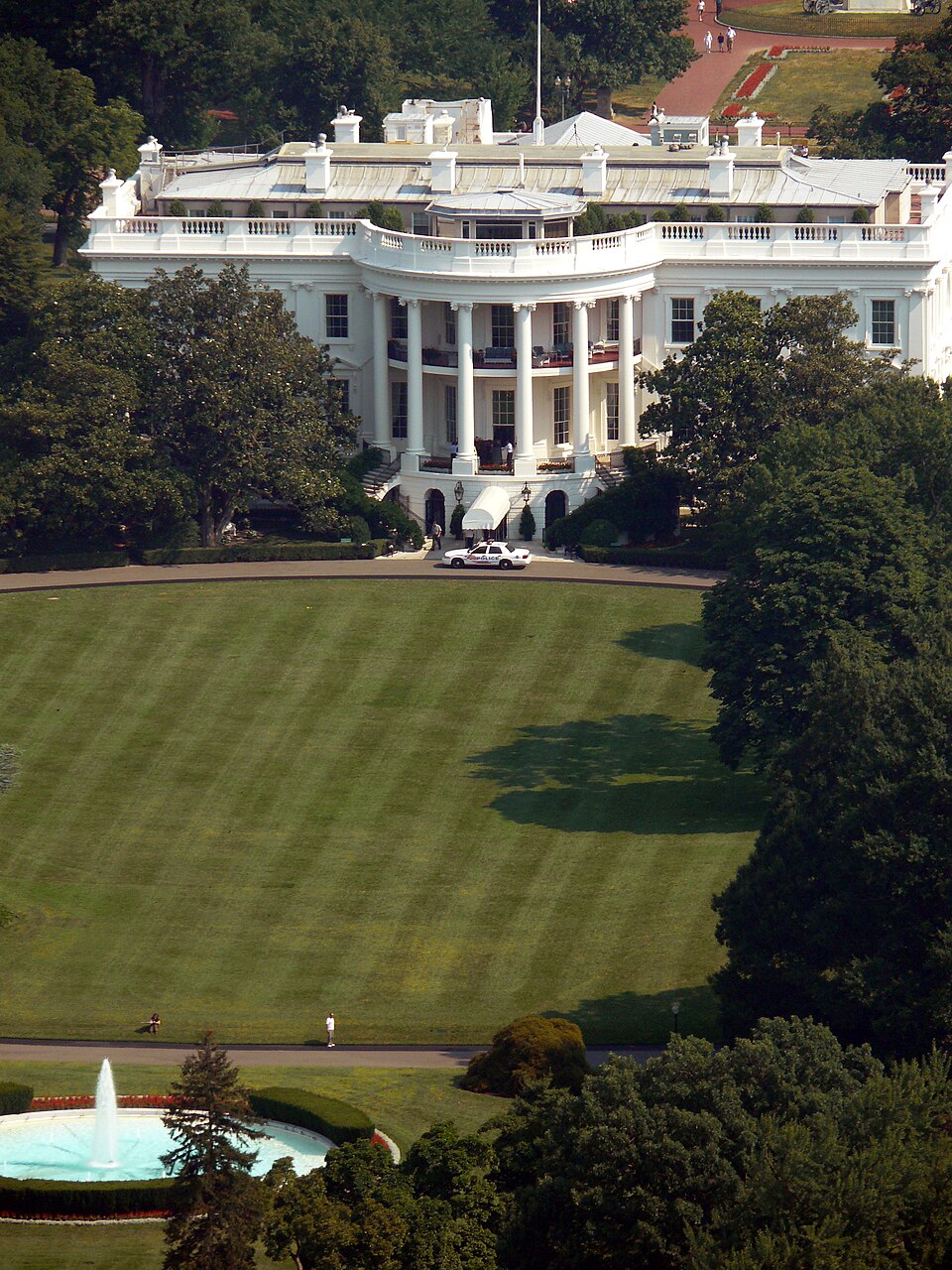
The History of the White House
The White House was designed by Irish-born architect James Hoban, who won a competition to create the building in 1792. President George Washington chose the location and oversaw the early construction, but he never actually lived there because it was not finished during his presidency. Construction took eight years, and President John Adams became the first president to move in on November 1, 1800. The building was originally called the President’s House or the Executive Mansion, and President Theodore Roosevelt made “The White House” its official name in 1901.
The Building and Its Rooms
The White House has 132 rooms, 35 bathrooms, and 6 levels, including two basement floors. Some of the most famous rooms include the Oval Office, where the president works, and the East Room, which is the largest room in the building. The State Dining Room can seat up to 140 guests for formal dinners with world leaders and other important visitors. There are also a movie theater, a bowling alley, a swimming pool, and a tennis court on the grounds.
The Burning of the White House
During the War of 1812, British soldiers invaded Washington, D.C., and set fire to the White House on August 24, 1814. The fire destroyed most of the interior, leaving only the outer stone walls standing. First Lady Dolley Madison famously saved a large portrait of George Washington before fleeing the building. James Hoban, the original architect, was brought back to rebuild the White House, and the reconstruction took about three years to complete.
The West Wing and the Oval Office
The West Wing was added to the White House in 1902 during President Theodore Roosevelt’s administration because the growing presidential staff needed more office space. The famous Oval Office was built in 1909 under President William Howard Taft and was moved to its current location in the West Wing in 1934. Each new president can redecorate the Oval Office, choosing new curtains, rugs, and artwork to make it their own. The Resolute desk, a gift from Queen Victoria of England in 1880, is one of the most commonly used desks in the Oval Office.
The White House Grounds
The White House sits on 18 acres of land that include beautiful gardens, fountains, and a large lawn. The South Lawn is where the president hosts events like the annual Easter Egg Roll, which has been a tradition since 1878. The Rose Garden, located just outside the Oval Office, is often used for press conferences and ceremonies. The Kitchen Garden, started by First Lady Michelle Obama in 2009, grows fresh vegetables and herbs that are used in White House meals and donated to local food banks.
Who Works at the White House?
About 6,000 people work at the White House complex every day, including the president’s closest advisors and staff members. The White House has its own team of chefs, florists, electricians, and housekeepers who keep the building running smoothly. The Secret Service is responsible for protecting the president and the first family around the clock. The White House also has its own medical unit, so the president can receive healthcare without leaving the building.
Visiting the White House
Public tours of the White House are free, but visitors must request tickets through their member of Congress well in advance. Tours typically include rooms on the Ground Floor and State Floor, such as the East Room, the Blue Room, and the Red Room. About 6,000 visitors tour the White House each week when tours are available. The White House Visitor Center, located nearby, offers exhibits and information for those who want to learn more about the building’s history.
 OtterKnow Kids Encyclopedia