The War of 1812
To understand “The Star-Spangled Banner,” you need to know about the War of 1812. This war was fought between the United States and Great Britain from 1812 to 1815. The British had one of the most powerful navies in the world at that time, and they attacked several American cities along the coast. One of the most important battles took place at Fort McHenry in Baltimore, Maryland, in September 1814. The outcome of this battle inspired the words to the song that would later become America’s anthem.
Francis Scott Key
Francis Scott Key was the American lawyer and poet who wrote the words to “The Star-Spangled Banner.” Key was born in 1779 in Frederick County, Maryland, and grew up to practice law in Washington, D.C. In September 1814, he boarded a British ship in the Chesapeake Bay to negotiate the release of an American prisoner named Dr. William Beanes. The British agreed to free Beanes but would not let Key leave until after their attack on Fort McHenry. Key watched the entire battle from the ship, anxiously waiting to see who would win.
The Battle of Baltimore
On September 13, 1814, British warships began bombarding Fort McHenry with rockets and bombs. The attack lasted about 25 hours, with the British firing between 1,500 and 1,800 shells at the fort. American soldiers inside the fort fought back bravely under the command of Major George Armistead. Through the night, Key could see flashes of light from the explosions but could not tell if the fort had fallen. When dawn broke on September 14, he saw a huge American flag still flying over the fort, meaning the Americans had successfully defended Baltimore.
Writing the Song
Inspired by the sight of the flag waving over Fort McHenry, Francis Scott Key began writing a poem on the back of a letter he had in his pocket. He called it “Defence of Fort M’Henry,” and he finished it after returning to shore in Baltimore. The poem was set to the tune of a popular British song called “To Anacreon in Heaven,” which was well known in America at the time. The song was quickly printed as a broadside (a single printed sheet) and spread throughout the country. Within weeks, newspapers across the United States published the words, and people everywhere began singing it.
The Flag That Inspired the Song
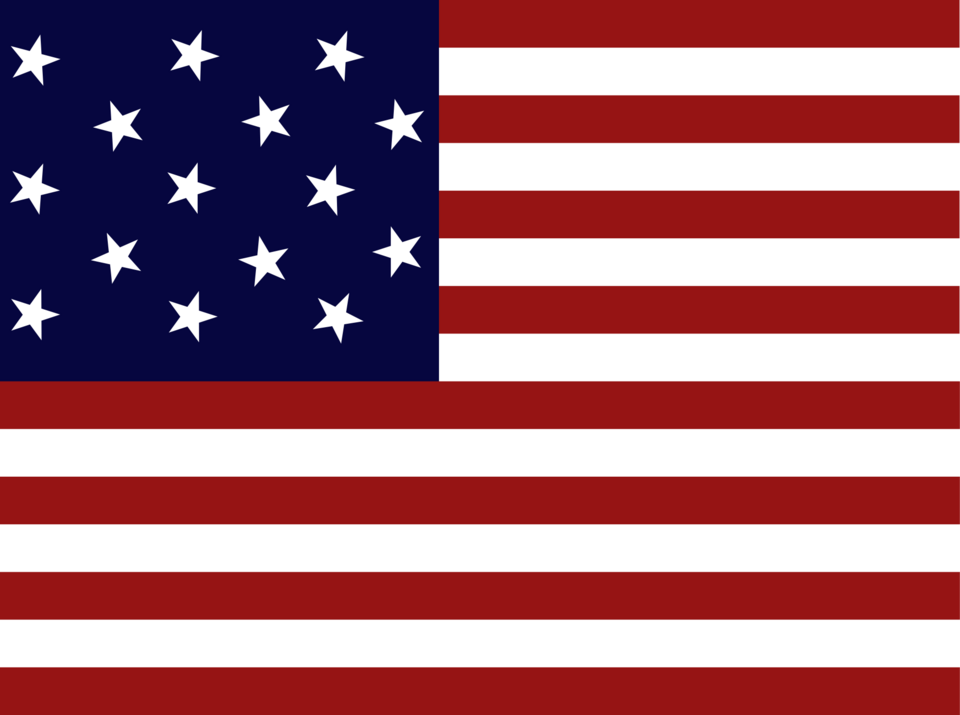
The flag that Key saw flying over Fort McHenry was enormous, measuring 30 feet by 42 feet. It had 15 stars and 15 stripes, representing the 15 states in the Union at that time. Major Armistead had asked a Baltimore seamstress named Mary Pickersgill to sew the flag, and she made it with the help of her daughter and nieces. Armistead wanted the flag to be large enough that the British would have no trouble seeing it from a distance. Today, this original flag is preserved and displayed at the Smithsonian’s National Museum of American History in Washington, D.C.
Becoming the National Anthem
Although “The Star-Spangled Banner” was popular for over a century, it did not officially become the national anthem until 1931. President Herbert Hoover signed a law on March 3, 1931, that made it the official anthem of the United States. Before that, other patriotic songs like “America the Beautiful” and “Hail, Columbia” were also used at national events. Some people had argued that the song was too hard for most people to sing, but supporters believed its powerful story made it the best choice. The song has four verses, though most Americans only know and sing the first one.
The Star-Spangled Banner Today
Today, “The Star-Spangled Banner” is played at thousands of events across the country every year. Famous performances include Whitney Houston’s powerful rendition at Super Bowl XXV in 1991 and Jimi Hendrix’s guitar version at Woodstock in 1969. At sporting events, fans stand, remove their hats, and often sing along with the performer. The anthem reminds Americans of the bravery shown at Fort McHenry and the values the country was built upon. Whether sung by a famous artist or a school choir, the song continues to unite Americans in pride and patriotism.
 OtterKnow Kids Encyclopedia