The Valley of Heart’s Delight
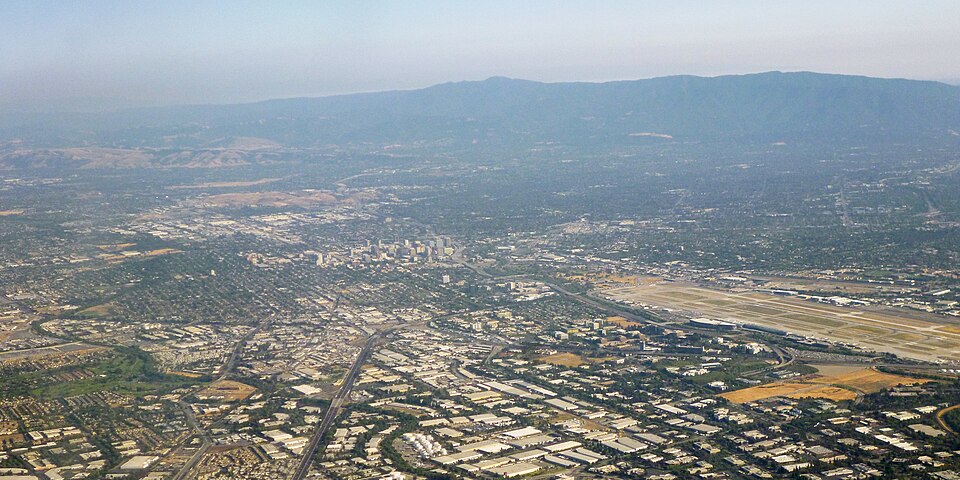
For thousands of years before European settlers arrived, the Ohlone people lived in the Santa Clara Valley. By the late 1800s and early 1900s, the valley had become one of the most productive fruit-growing regions in the world. Millions of apricot, cherry, plum, and prune trees blanketed the landscape, and the area earned the nickname the Valley of Heart’s Delight. Canneries and dried-fruit packing houses were the biggest employers. Nobody could have imagined that within a few decades, orchards would give way to office parks and laboratories.
The HP Garage: Where It All Began
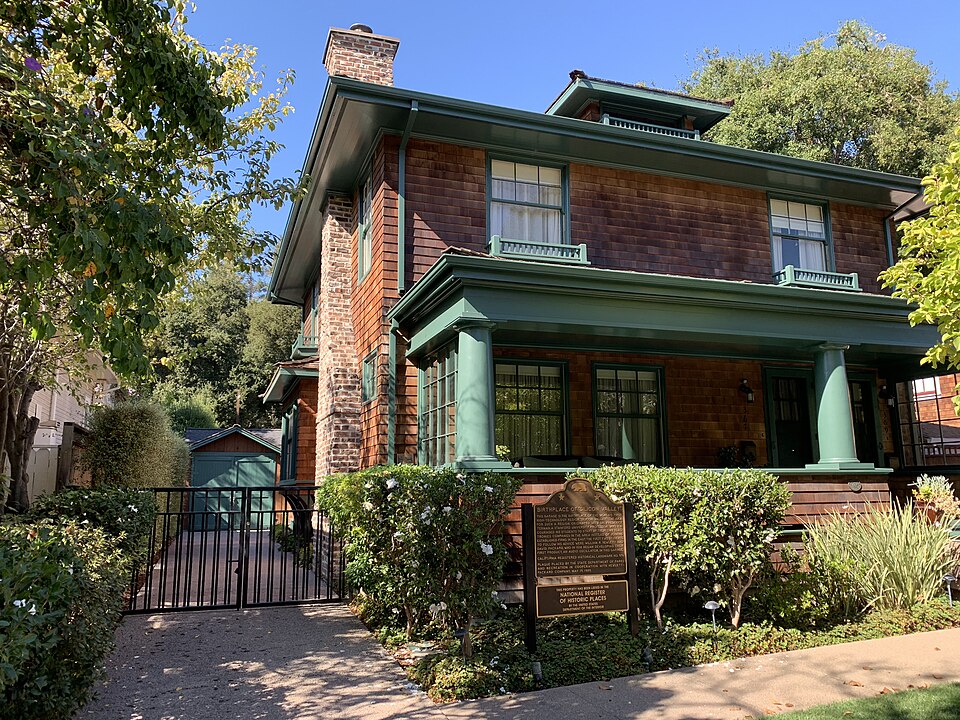
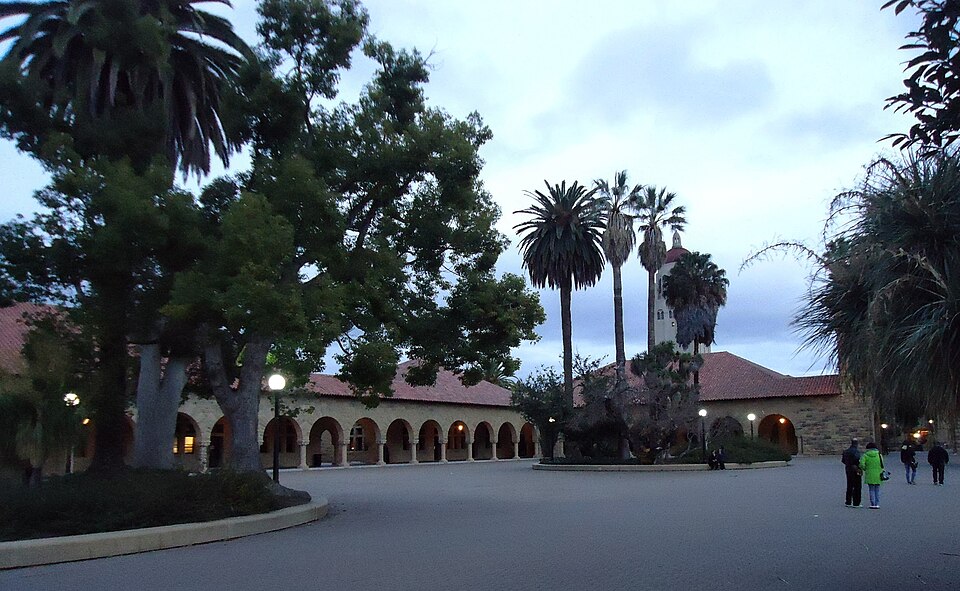
The shift from farming to technology started at Stanford University. In the 1930s, a professor named Frederick Terman noticed that his best engineering students kept leaving California to take jobs on the East Coast. He encouraged them to stay and start their own companies nearby. In 1939, two of Terman’s students, William Hewlett and David Packard, took his advice. Working out of a small garage at 367 Addison Avenue in Palo Alto, they built an audio oscillator, an electronic instrument used to test sound equipment. One of their first customers was Walt Disney Studios, which bought eight oscillators for the movie Fantasia. Hewlett-Packard grew into a giant technology company, and that garage is now a California Historical Landmark called the Birthplace of Silicon Valley.
The Transistor and the Traitorous Eight
The next big leap came from a physicist named William Shockley. In 1947, Shockley and his colleagues at Bell Labs in New Jersey co-invented the transistor, a tiny device that controls electrical signals and is the building block of all modern electronics. Shockley won the Nobel Prize for this work. In 1956, he moved to Mountain View, California, and opened Shockley Semiconductor Laboratory to build transistors using a material called silicon.
Shockley was a brilliant scientist but a difficult boss. In 1957, eight of his top researchers quit and started their own company, Fairchild Semiconductor. People called them the “traitorous eight.” Fairchild became hugely successful and pioneered ways to put many transistors onto a single chip of silicon, creating what we now call integrated circuits or microchips. Several Fairchild employees later left to start their own companies, including Robert Noyce and Gordon Moore, who founded Intel in 1968. Intel went on to make the microprocessors that power most of the world’s computers.
Apple and the Personal Computer Revolution
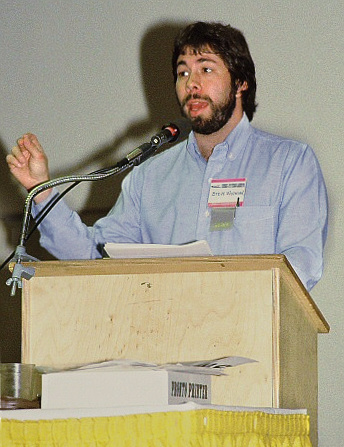
By the 1970s, the orchards were disappearing and tech companies were sprouting up everywhere. In 1976, two friends named Steve Jobs and Steve Wozniak built a computer in the Jobs family garage in Los Altos. Wozniak designed the electronics while Jobs handled the business side. Their company, Apple, introduced the Apple II in 1977, one of the first personal computers that regular families could use at home. Apple later created the Macintosh, the iPod, the iPhone, and the iPad, each one changing how people interact with technology. The idea that a world-changing company could start in someone’s garage became a powerful symbol of Silicon Valley’s spirit of innovation.
The Internet Era and Beyond
The 1990s brought the internet, and Silicon Valley was at the center of the revolution. Companies like Yahoo, eBay, and Amazon (which later moved to Seattle) showed that the internet could transform shopping, communication, and entertainment. In 1998, two Stanford graduate students, Larry Page and Sergey Brin, started Google in a rented garage in Menlo Park. Google became the world’s most popular search engine and grew into one of the most valuable companies in history.
In 2004, Mark Zuckerberg launched Facebook from his Harvard dorm room, and the company soon moved its headquarters to Menlo Park. Smartphones, social media, streaming video, electric cars, and artificial intelligence have all driven new waves of innovation in Silicon Valley. Today the region continues to attract inventors and entrepreneurs from around the world who hope to build the next great technology company.
The Housing Cost Explosion
As tech companies grew and multiplied, they brought hundreds of thousands of highly paid workers into a relatively small geographic area. All of those workers needed places to live — but the number of new homes built in the Bay Area did not keep up with demand. The result: home prices and rents rose dramatically, year after year.
Today the San Francisco Bay Area is one of the most expensive places to live in the United States. The median price of a home in many Bay Area counties regularly exceeds one million dollars. Workers who do important jobs — teachers, nurses, bus drivers, firefighters — often struggle to afford housing near where they work. Many commute two or three hours each way from distant, more affordable cities. The tension between the region’s enormous economic success and its housing affordability crisis is one of the defining challenges of Silicon Valley today.
Fun Facts
- Before it was a tech hub, the Santa Clara Valley produced so much fruit that it was called the Valley of Heart’s Delight.
- The HP Garage at 367 Addison Avenue in Palo Alto is a California Historical Landmark and is often called the Birthplace of Silicon Valley.
- The name “Silicon Valley” was first used by journalist Don Hoefler in a series of articles in the newspaper Electronic News in January 1971.
- Fairchild Semiconductor’s alumni went on to found more than 60 technology companies, including Intel and AMD.
- Google was started as a research project by two Stanford PhD students in 1998 and is now one of the most valuable companies in the world.
 OtterKnow Kids Encyclopedia