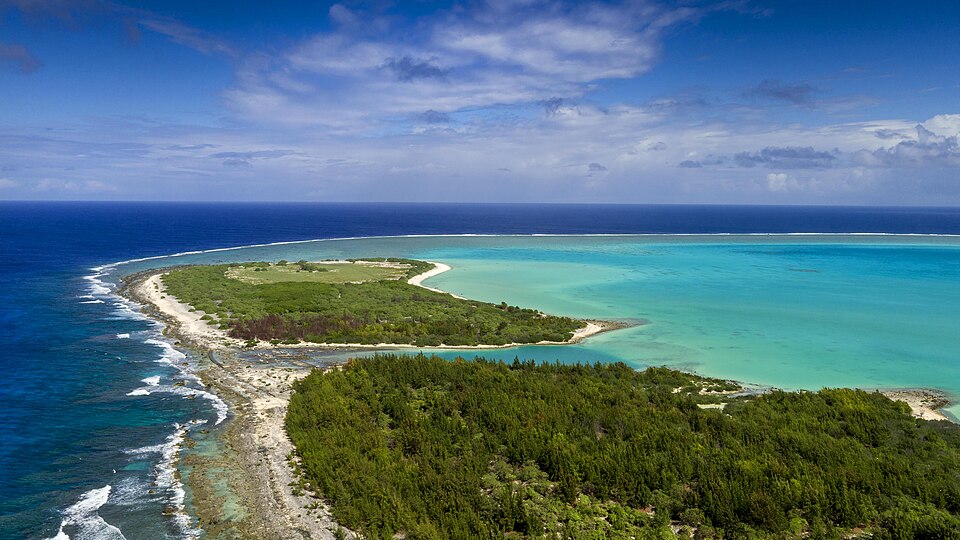
Islands can form in several different ways depending on where they are located. Volcanic islands are created when underwater volcanoes erupt and build up layers of lava above the ocean surface, like the Hawaiian Islands in the Pacific Ocean. Continental islands were once connected to a mainland but became separated when sea levels rose or the land shifted, such as Great Britain. Coral islands, also called atolls, form when coral reefs grow around a volcanic island that eventually sinks below the water. Some islands in rivers and lakes form when flowing water deposits sand and sediment in one spot over many years.
Famous Islands Around the World
Some of the most well-known islands on Earth are enormous and home to millions of people. Greenland is the largest island in the world, covering about 836,330 square miles, and it belongs to the Kingdom of Denmark. Madagascar, off the southeast coast of Africa, is the fourth-largest island and is home to thousands of animal and plant species found nowhere else on Earth. Japan is an island nation made up of nearly 7,000 islands, with four main islands where most of its 125 million people live. Australia is sometimes called an island, but geographers classify it as a continent because of its massive size.
Peninsulas form over long periods of time through geological processes that shape the land. Some peninsulas were created when tectonic plates pushed land outward into the sea, forming long arms of land surrounded by water on three sides. Others formed when rising sea levels flooded low-lying areas around a strip of higher ground, leaving it jutting out into the ocean. Erosion from wind and waves can also carve coastlines into peninsula shapes over thousands of years. The narrow strip of land connecting a peninsula to the mainland is sometimes called an isthmus.
Famous Peninsulas Around the World
Many important peninsulas can be found on every continent except Antarctica. The Arabian Peninsula in the Middle East is the largest peninsula in the world, covering about 1.25 million square miles and containing countries like Saudi Arabia, Yemen, and Oman. The Italian Peninsula stretches into the Mediterranean Sea and is shaped like a boot, making it one of the easiest landforms to spot on a map. The Florida Peninsula extends southward from the southeastern United States and is surrounded by the Atlantic Ocean on the east and the Gulf of Mexico on the west. The Scandinavian Peninsula in northern Europe is home to Norway and Sweden.
Life on Islands and Peninsulas
Living on an island or peninsula creates unique experiences for the people and animals that call these places home. Island communities often develop their own cultures, languages, and traditions because they are separated from the mainland by water. Many island and peninsula economies depend heavily on fishing, tourism, and shipping because of their close relationship with the ocean. Animals on islands can evolve in unusual ways because they are isolated from mainland predators and competitors, which is why islands like the Galapagos have species found nowhere else. Peninsulas often serve as important ports and trading centers because ships can dock along their long coastlines.
Islands, Peninsulas, and Climate
The water surrounding islands and peninsulas has a big effect on their weather and climate. Large bodies of water heat up and cool down more slowly than land, so coastal areas on islands and peninsulas tend to have milder temperatures year-round. Islands in tropical regions near the equator, like those in the Caribbean, enjoy warm weather but also face the threat of hurricanes. Peninsulas can have different weather on each side because they are bordered by separate bodies of water with different temperatures. This effect of water on temperature is called a maritime climate, and it makes many islands and peninsulas comfortable places to live.
Why Islands and Peninsulas Matter
Islands and peninsulas play important roles in geography, history, and the environment. Throughout history, peninsulas and islands have been valuable for trade and defense because they are naturally protected by water on most sides. Many of the world’s most important harbors and ports are located on peninsulas or island coastlines. Islands are home to about 10 percent of the world’s population and contain some of the most biodiverse ecosystems on the planet. Protecting island and peninsula environments is important because rising sea levels caused by climate change threaten low-lying coastal areas and small island nations around the world.
 OtterKnow Kids Encyclopedia