The History of the Holiday
The celebration of George Washington’s birthday began while he was still alive and serving as president in the 1790s. In 1879, Congress made February 22nd a federal holiday, making it the first federal holiday to honor an individual American. When Abraham Lincoln’s birthday on February 12th also became widely celebrated, some people wanted to honor both presidents together. In 1971, the Uniform Monday Holiday Act moved the holiday to the third Monday in February to create more three-day weekends for workers. Although the federal holiday is still officially called “Washington’s Birthday,” most Americans know it as Presidents’ Day.
George Washington: The First President
George Washington is often called the “Father of His Country” because of his leadership during the American Revolution and as the first president. He commanded the Continental Army during the Revolutionary War and helped the American colonies win their independence from Britain. After the war, he served as president of the Constitutional Convention, which created the U.S. Constitution in 1787. Washington served two terms as president from 1789 to 1797 and set many important traditions, including the peaceful transfer of power. He voluntarily stepped down after two terms, setting a precedent that lasted until the 22nd Amendment made it the law in 1951.
Abraham Lincoln: The Great Emancipator
Abraham Lincoln, the 16th president, is one of the most admired leaders in American history. He led the country through the Civil War from 1861 to 1865, working to keep the United States together when southern states tried to leave the Union. In 1863, Lincoln issued the Emancipation Proclamation, which declared that enslaved people in Confederate states were to be set free. He also helped pass the 13th Amendment to the Constitution, which permanently abolished slavery throughout the entire country. Lincoln was tragically assassinated by John Wilkes Booth on April 14, 1865, just days after the Civil War ended.
How Americans Celebrate
Presidents’ Day is celebrated in many different ways across the country. Schools often hold special lessons about the presidents, with students learning about Washington, Lincoln, and other important leaders. Some communities host parades, reenactments, or ceremonies at presidential landmarks and memorials. Many stores hold Presidents’ Day sales, making it one of the biggest shopping weekends of the year. Some people visit presidential museums, libraries, or historic sites like Mount Vernon (Washington’s home) or the Lincoln Memorial in Washington, D.C.
Presidential Facts and Records
The United States has had 46 presidents as of 2025, each bringing their own story to the office. The youngest person to become president was Theodore Roosevelt, who took office at age 42 after President McKinley was assassinated in 1901. The oldest person to begin a first term as president was Joe Biden, who was 78 years old when he was inaugurated in 2021. William Henry Harrison served the shortest time in office, dying just 31 days after his inauguration in 1841. Franklin D. Roosevelt served the longest, winning four elections and leading the country for over 12 years during the Great Depression and World War II.
Presidential Monuments and Memorials
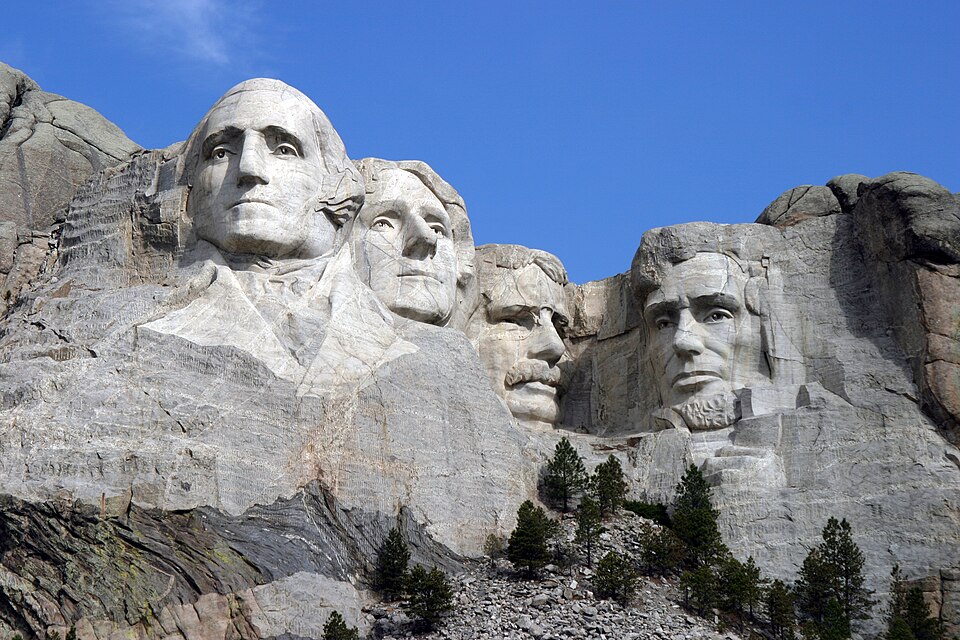
Several famous landmarks honor U.S. presidents and are popular places to visit around Presidents’ Day. Mount Rushmore in South Dakota features the carved faces of Washington, Jefferson, Lincoln, and Theodore Roosevelt on a granite mountainside. The Washington Monument, a 555-foot-tall obelisk in Washington, D.C., is one of the most recognizable structures in the country. The Lincoln Memorial, also in Washington, D.C., houses a 19-foot-tall marble statue of Lincoln seated in a chair. The presidential libraries system, started by Franklin Roosevelt in 1941, preserves documents, artifacts, and records from each modern presidency.
Why Presidents’ Day Matters
Presidents’ Day is more than just a day off from school — it is a chance to learn about the leaders who shaped the United States. Studying the presidents helps us understand how the country has grown and changed over more than 200 years. Each president faced unique challenges, from wars and economic crises to civil rights struggles and new technologies. The holiday encourages citizens to think about the qualities that make a good leader, such as honesty, courage, and dedication to serving others. By honoring the presidency, Americans celebrate the democratic values that the office represents.
 OtterKnow Kids Encyclopedia