A Very Old Tradition
Lunar New Year has been celebrated for more than 3,500 years, making it one of the oldest holidays in the world. It began in ancient China during the Shang Dynasty, when people held ceremonies to honor gods and ancestors at the start of each new year. Over thousands of years, the celebration grew to include feasts, fireworks, and colorful parades. The holiday spread beyond China to countries like Vietnam, South Korea, and many other parts of Asia. Today, Lunar New Year is celebrated by communities in nearly every country on Earth.
The Chinese Zodiac
Each Lunar New Year is connected to one of 12 animals in the Chinese zodiac. The 12 animals are the rat, ox, tiger, rabbit, dragon, snake, horse, goat, monkey, rooster, dog, and pig. According to legend, the Jade Emperor held a great race, and the order the animals finished determined their place in the zodiac cycle. The animal of your birth year is believed to influence your personality — for example, people born in the Year of the Tiger are thought to be brave and confident. The 12-year cycle repeats over and over, so every animal gets its turn again.
Preparations and Traditions
Families begin preparing for Lunar New Year days or even weeks before the holiday arrives. Houses are cleaned from top to bottom to sweep away bad luck and make room for good fortune. People decorate their homes with red paper lanterns, banners, and couplets because red is considered a lucky color that wards off evil spirits. New clothes are bought or made, and families stock up on special foods for the celebrations ahead. Doors and windows may be decorated with paper cutouts of the zodiac animal for that year.
Food and Family Feasts
Food plays a huge role in Lunar New Year celebrations, and many dishes have special meanings. Dumplings are a favorite because their shape looks like ancient Chinese gold ingots, symbolizing wealth. Long noodles are served without cutting them because they represent a long and healthy life. Fish is often the centerpiece of the feast because the Chinese word for fish sounds like the word for abundance. Families gather for a big reunion dinner on New Year’s Eve, which is considered the most important meal of the entire year.
Fireworks and the Legend of Nian
Fireworks and firecrackers are a huge part of Lunar New Year celebrations, and they come from an ancient legend. The story says that a fearsome monster called Nian would come out of hiding at the start of each new year to attack villagers. People discovered that Nian was afraid of loud noises, bright lights, and the color red. They began setting off firecrackers, lighting lanterns, and hanging red decorations to scare the beast away. Today, spectacular fireworks displays light up the sky at midnight to welcome the new year and chase away bad luck.
Lunar New Year Around the World
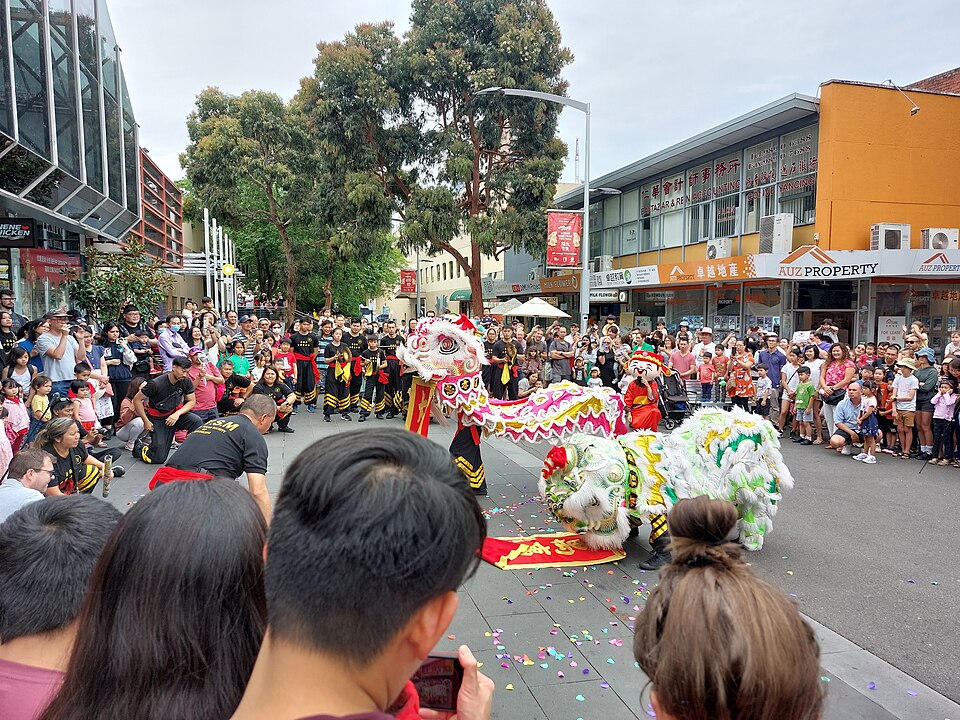
While Lunar New Year began in China, it is celebrated by many different cultures with their own unique traditions. In Vietnam, the holiday is called Tet Nguyen Dan, and people display blossoming peach or apricot branches in their homes. In South Korea, it is called Seollal, and families perform a deep bow called sebae to show respect to their elders. Cities around the world with large Asian communities, like San Francisco, London, and Sydney, hold huge parades with dragon and lion dances. The holiday brings people of many backgrounds together to celebrate new beginnings.
Red Envelopes and Good Wishes
One of the most exciting traditions for children during Lunar New Year is receiving red envelopes called hongbao in Chinese. These bright red packets contain money and are given by parents, grandparents, and other relatives as a symbol of good luck and blessings. The red color of the envelope is meant to protect the person who receives it from evil spirits. Children also greet their elders with special phrases, like “Gong xi fa cai,” which means “Wishing you prosperity.” The Lantern Festival on the 15th and final day of the celebration features beautiful glowing lanterns, riddle games, and sweet rice ball soup called tangyuan.
 OtterKnow Kids Encyclopedia