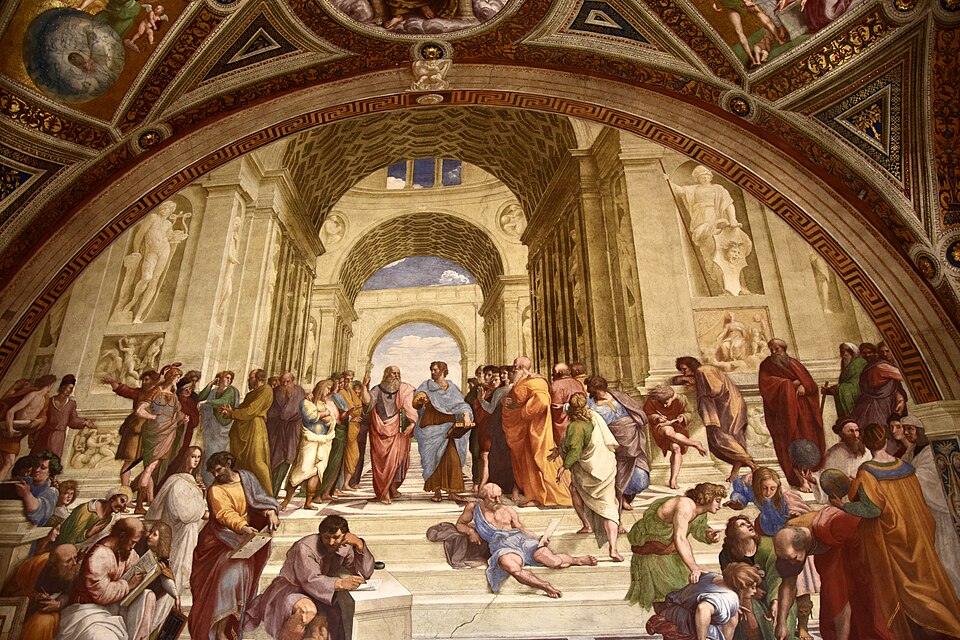
Where It All Began
The Renaissance started in the Italian city of Florence, which was a wealthy center of trade and banking. Rich and powerful families, especially the Medici family, used their money to support artists, writers, and thinkers. The Medici family ran one of the most successful banks in all of Europe and used their fortune to pay for beautiful paintings, sculptures, and buildings all across Florence. Beginning in the 1430s, Cosimo de Medici helped turn Florence into the heart of the Renaissance by supporting artists like Donatello and the architect Filippo Brunelleschi. Later, his grandson Lorenzo de Medici, nicknamed “Lorenzo the Magnificent,” supported great masters including Leonardo da Vinci, Sandro Botticelli, and the young Michelangelo. From Florence, Renaissance ideas spread to other Italian cities like Venice, Milan, and Rome, and eventually across all of Europe.
Amazing Art and Artists
Renaissance artists created some of the most famous works of art in history. Leonardo da Vinci was a true genius who painted the Mona Lisa and The Last Supper while also studying science, engineering, and anatomy. Michelangelo spent four years painting the ceiling of the Sistine Chapel in Rome, covering it with stunning scenes from the Bible while lying on his back on tall scaffolding. Raphael painted The School of Athens, a grand fresco showing the great thinkers of ancient Greece gathered together. These artists developed new techniques like perspective, which made flat paintings look three-dimensional and lifelike. They also studied the human body carefully so they could paint and sculpt people with incredible accuracy and detail.
Science and New Ideas
The Renaissance was not just about art. It was also a time of groundbreaking scientific discoveries. Nicolaus Copernicus proposed that the Earth and other planets orbit the Sun, challenging the old belief that everything revolved around the Earth. Galileo Galilei built improved telescopes and used them to observe the moons of Jupiter and the phases of Venus, providing evidence that Copernicus was right. Scientists began relying on observation and experiments to understand the natural world, rather than simply accepting old ideas without question. This new way of thinking laid the foundation for modern science and encouraged people to ask questions and search for evidence.
The Printing Press Changes Everything
One of the most important inventions of the Renaissance was the printing press. Around 1440, a German craftsman named Johannes Gutenberg developed a printing press that used movable metal type. Before this invention, books had to be copied by hand, which took months and made them extremely expensive. Gutenberg’s press could produce up to 3,600 pages in a single workday, compared to just about 40 pages by older printing methods. By 1500, printing presses across Europe had produced more than 20 million books. Suddenly, knowledge and ideas could spread faster than ever before, allowing more people to read and learn.
Renaissance Thinkers and Writers
Renaissance scholars embraced an idea called humanism, which focused on human abilities, achievements, and potential. Humanist thinkers studied ancient Greek and Roman writings about history, poetry, philosophy, and public speaking. They believed education should help people think for themselves and become well-rounded individuals. Writers like Niccolo Machiavelli explored ideas about government and leadership. William Shakespeare in England wrote plays and poems that are still performed today. These thinkers helped shift people’s attention from only thinking about the afterlife to also appreciating the beauty and possibilities of life on Earth.
The Renaissance’s Lasting Impact
The Renaissance changed the world in ways we can still see today. The beautiful art and architecture from this period fill museums and cities across Europe, attracting millions of visitors every year. The scientific methods developed during the Renaissance are still used by researchers and scientists around the world. The printing press made it possible for ordinary people to own books and educate themselves, leading eventually to public schools and libraries. The Renaissance idea that every person has value and potential helped inspire later movements for human rights and democracy. In many ways, the modern world took shape during the Renaissance.
 OtterKnow Kids Encyclopedia