Life Under Segregation
After the Civil War ended slavery in 1865, many states passed laws called Jim Crow laws that forced Black and white people to use separate schools, restaurants, water fountains, and even seats on buses. These separate facilities were supposed to be “separate but equal,” but the ones set aside for Black people were almost always worse. Black Americans in many Southern states were also prevented from voting through unfair rules like poll taxes and impossible literacy tests. Breaking these rules could lead to arrest, violence, or worse.
Rosa Parks and the Montgomery Bus Boycott
On December 1, 1955, Rosa Parks refused to give up her seat on a city bus in Montgomery, Alabama, to a white passenger. Her arrest sparked the Montgomery Bus Boycott, in which Black residents refused to ride city buses for 381 days. The boycott was organized by leaders including a young minister named Dr. Martin Luther King Jr., who became one of the most important figures in the movement. The boycott hurt the bus company financially and ended when the Supreme Court ruled that segregation on buses was unconstitutional.
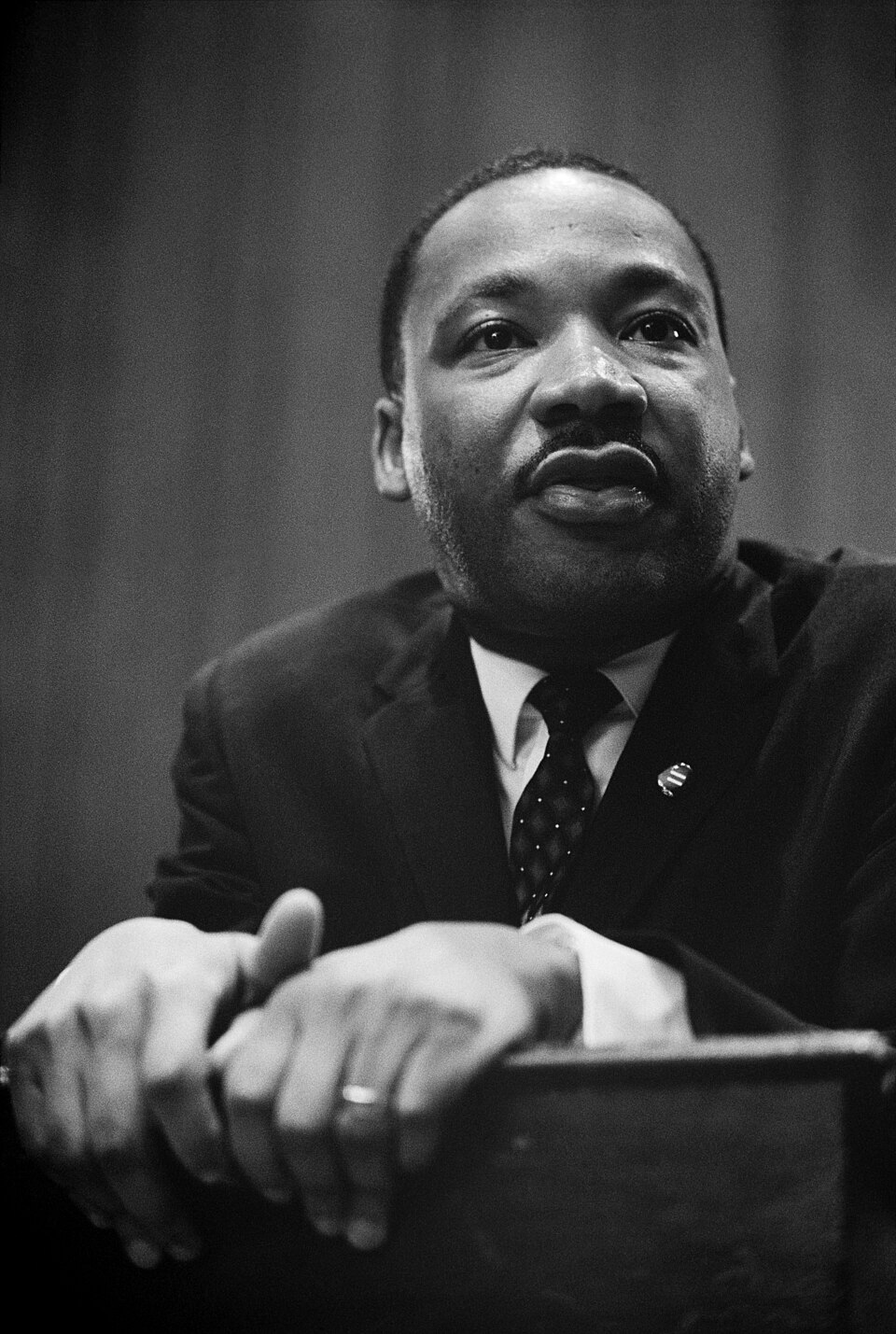
Dr. Martin Luther King Jr.
Dr. Martin Luther King Jr. believed in using nonviolent protest to fight for civil rights, inspired by the teachings of Mahatma Gandhi. He led marches, gave powerful speeches, and organized protests across the South. His most famous speech, “I Have a Dream,” was delivered on August 28, 1963, in front of more than 250,000 people at the March on Washington. In 1964, he received the Nobel Peace Prize for his work fighting racial inequality through peaceful means. Dr. King was tragically assassinated on April 4, 1968, in Memphis, Tennessee, but his legacy continues to inspire people around the world.
Brave Young People
Young people played a huge role in the Civil Rights Movement. In 1954, the Supreme Court case Brown v. Board of Education ruled that segregated schools were unconstitutional, and in 1957, nine Black students known as the Little Rock Nine bravely integrated Central High School in Arkansas while facing angry mobs. College students organized sit-ins at segregated lunch counters, starting in Greensboro, North Carolina, in 1960, where four Black students sat down at a whites-only counter and refused to leave. The Freedom Riders were groups of young people, both Black and white, who rode buses through the South in 1961 to challenge segregation in bus stations. Ruby Bridges was just six years old when she became the first Black child to attend an all-white elementary school in New Orleans in 1960.
Important Laws That Changed America
The Civil Rights Movement led to powerful new laws that changed the country. The Civil Rights Act of 1964 made it illegal to discriminate against people because of their race, color, religion, sex, or national origin in workplaces, schools, and public places. The Voting Rights Act of 1965 removed the unfair barriers that had kept Black Americans from voting, such as literacy tests and poll taxes. The Fair Housing Act of 1968 made it illegal to discriminate in selling or renting homes. These laws did not solve every problem, but they gave people legal tools to fight discrimination.
Other Important Leaders
Many courageous people helped lead the Civil Rights Movement beyond Dr. King. Medgar Evers worked as a field secretary for the NAACP in Mississippi, investigating violence against Black people and organizing voter registration drives before he was murdered in 1963. Congressman John Lewis was beaten by police during the Selma to Montgomery marches in 1965 but continued fighting for justice for the rest of his life. Fannie Lou Hamer, a sharecropper from Mississippi, became a powerful voice for voting rights despite being jailed and beaten for her activism. Thurgood Marshall argued the Brown v. Board of Education case before the Supreme Court and later became the first Black Supreme Court Justice in 1967.
The Movement’s Lasting Impact
The Civil Rights Movement transformed American society and inspired freedom movements around the world. It proved that ordinary people, including children and teenagers, could stand up against injustice and change unfair laws through peaceful action. Martin Luther King Jr. Day, celebrated on the third Monday of January, is a national holiday honoring Dr. King’s legacy and encouraging Americans to serve their communities. While the movement achieved major victories, the work of building a fair and equal society continues today. The courage of the people who marched, protested, and stood up for what was right reminds us that every person has the power to make a difference.
 OtterKnow Kids Encyclopedia