Boats and Ships
Water transportation is one of the oldest forms of travel, with early humans using simple rafts and dugout canoes thousands of years ago. The ancient Egyptians built wooden sailboats to travel up and down the Nile River for trade and transportation around 3,100 BCE. The Phoenicians and Greeks became expert sailors and built large ships that could cross the Mediterranean Sea. During the Age of Exploration in the 1400s and 1500s, European explorers like Christopher Columbus used sailing ships to cross entire oceans. These voyages connected continents and opened trade routes that had never existed before.
The Steam Revolution
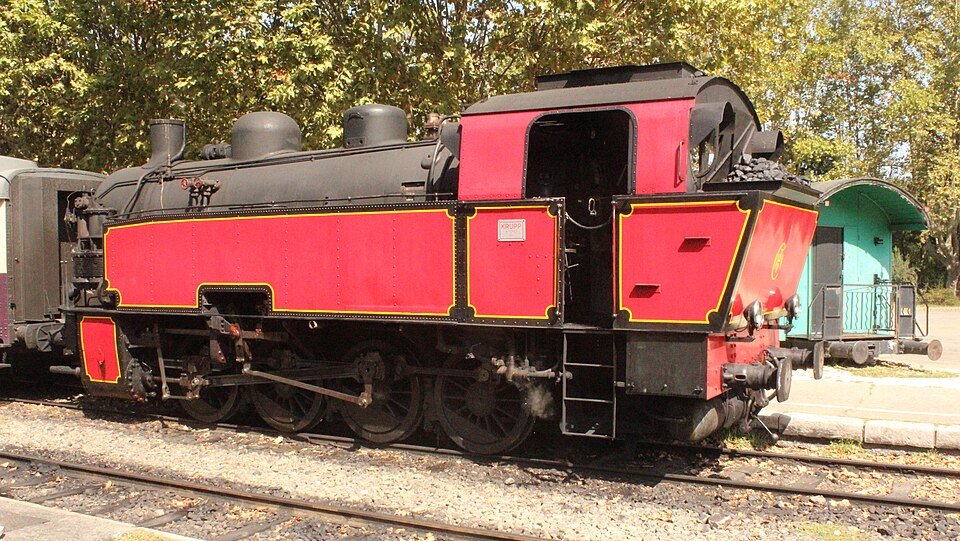
The invention of the steam engine in the 1700s launched a transportation revolution that changed the world. In 1804, Richard Trevithick built the first steam-powered locomotive, which ran on iron rails in Wales. By the 1830s, railroads were spreading across Europe and the United States, carrying passengers and freight at speeds that seemed incredible at the time. The Transcontinental Railroad, completed in 1869, connected the east and west coasts of the United States for the first time by rail. Steam power also transformed water travel, as steamships could cross the Atlantic Ocean in days instead of the weeks or months that sailing ships required.
The Automobile Age
The invention of the automobile gave people the freedom to travel wherever and whenever they wanted. Karl Benz built the first practical automobile powered by a gasoline engine in 1885 in Germany. In 1908, Henry Ford introduced the Model T and used assembly line production to make cars affordable for ordinary families, not just the wealthy. As more people bought cars, governments built highways and roads to connect cities and towns across the country. The automobile changed how people lived, allowing them to work in one place and live in another, which led to the growth of suburbs around major cities.
Taking to the Skies
The dream of human flight became reality on December 17, 1903, when Orville and Wilbur Wright made the first successful powered airplane flight at Kitty Hawk, North Carolina. Their first flight lasted only 12 seconds and covered just 120 feet, but it opened the door to an entirely new form of transportation. During World War I and World War II, airplane technology advanced rapidly as nations built faster and more powerful aircraft. After the wars, commercial airlines began offering passenger flights that could cross the country in hours instead of days. Today, modern jet airplanes carry millions of passengers around the world every year, making it possible to reach almost any destination within a single day.
Rockets and Space Travel
In the twentieth century, humans pushed beyond the skies and into outer space. In 1957, the Soviet Union launched Sputnik, the first artificial satellite to orbit the Earth, beginning the Space Age. On July 20, 1969, American astronaut Neil Armstrong became the first person to walk on the Moon during the Apollo 11 mission. The Space Shuttle program, which operated from 1981 to 2011, allowed astronauts to travel to space and return to Earth multiple times using the same spacecraft. Today, private companies like SpaceX are developing reusable rockets that could one day carry ordinary people to space and even to Mars.
Modern Transportation
Today we have more ways to get around than at any other time in history. High-speed trains in countries like Japan, France, and China can travel over 200 miles per hour, connecting cities faster than cars and sometimes even planes. Electric vehicles are becoming increasingly popular because they produce less pollution than gasoline-powered cars, helping to protect the environment. Engineers are also working on self-driving cars that use computers and sensors to navigate roads without a human driver. Cities around the world are investing in public transportation systems like subways, buses, and light rail to move large numbers of people efficiently.
The Future of Transportation
Scientists and engineers are already working on exciting new forms of transportation that could change how we travel in the coming decades. Hyperloop technology, first proposed by Elon Musk in 2013, would send passengers through low-pressure tubes at speeds of over 600 miles per hour. Companies are developing electric air taxis and flying cars that could carry passengers over traffic in busy cities. Magnetic levitation, or maglev, trains float above the tracks using powerful magnets and can reach speeds over 370 miles per hour with very little friction. Whatever the future holds, the history of transportation shows us that human creativity and determination have always found new and better ways to move from one place to another.
 OtterKnow Kids Encyclopedia