From Kingdom to Republic to Empire
Rome went through three types of government during its long history. At first, Rome was ruled by kings. Around 509 BC, the Romans overthrew their last king and created a republic, where elected leaders called senators made decisions for the people. Two leaders called consuls shared power and could check each other so that no single person became too powerful. The republic lasted for almost 500 years, but as Rome grew larger, powerful generals began fighting for control. In 27 BC, a leader named Octavian became the first emperor and took the name Augustus. From that point on, Rome was an empire ruled by emperors, some wise and some cruel, for another 500 years.
Roman Engineering and Buildings
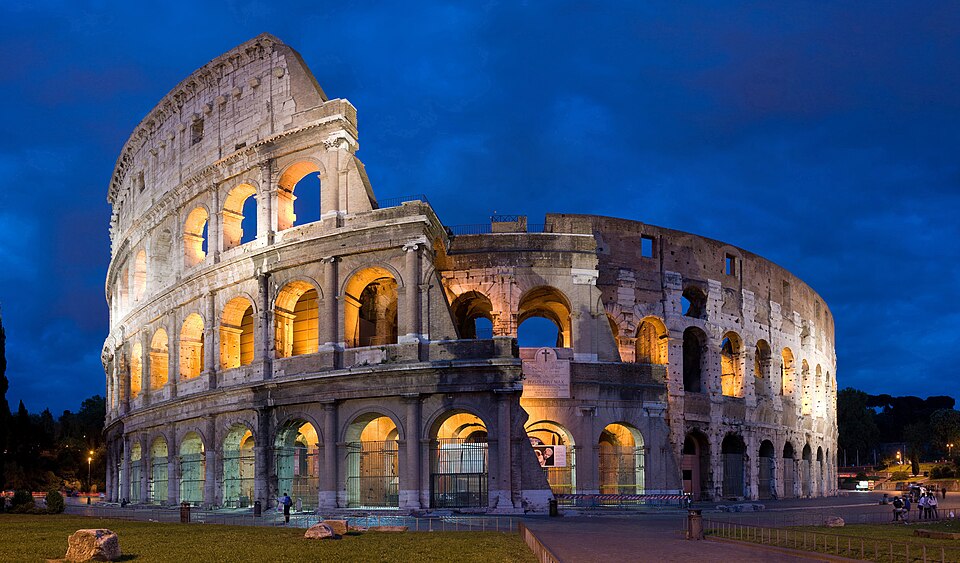
The Romans were some of the greatest builders in the ancient world. They invented concrete, which allowed them to construct buildings and structures that have lasted thousands of years. Roman engineers built a network of straight roads that connected the entire empire, making travel and trade much easier. They also built aqueducts, long channels that carried fresh water from sources as far as 57 miles away into cities for drinking, bathing, and fountains. The most famous Roman building is the Colosseum, a giant arena in the center of Rome that could seat about 50,000 people. Completed in 80 AD, it hosted gladiator contests, animal hunts, and other public events. Some Roman roads and aqueducts are still standing and even still in use today.
Daily Life in Ancient Rome
Life in ancient Rome was very different depending on whether you were rich or poor. Wealthy Romans lived in large houses with gardens, mosaic floors, and running water. Poorer families lived in crowded apartment buildings that could be several stories tall. Roman children from wealthy families went to school, where they learned reading, writing, math, and public speaking. The Romans enjoyed visiting public baths, which were like community centers where people could swim, exercise, and meet friends. Romans wore togas and tunics, ate meals while reclining on couches, and enjoyed foods like bread, olives, grapes, and fish. Slavery was common, and enslaved people did much of the hard work that kept Roman society running.
The Roman Army
Rome became so powerful largely because of its well-trained army. Roman soldiers, called legionaries, were organized into groups called legions, each containing about 5,000 men. Soldiers trained hard, marching long distances carrying heavy equipment, and they followed strict rules and discipline. The army used clever battle formations, including the famous “tortoise” formation where soldiers locked their shields together above and around them for protection. Roman soldiers also built roads, bridges, and forts wherever they went, helping to spread Roman culture and control across the empire. Serving in the army was a career that could last 25 years, and when soldiers retired, they often received land as a reward.
Roman Culture and Ideas
The Romans borrowed many ideas from the ancient Greeks, including their gods, art, and architecture, but they also created their own lasting contributions. Latin, the language of Rome, became the basis for modern languages like Spanish, French, Italian, and Portuguese. Roman law influenced the legal systems that many countries use today, including ideas like being innocent until proven guilty. The Romans developed the calendar system that we still use, with twelve months and 365 days in a year. They also created a number system using Roman numerals, which you can still see on clocks, in book chapters, and at the Super Bowl.
The Fall of Rome and Its Legacy
Over time, the Roman Empire became too large and difficult to manage. It was split into two halves, the Western Roman Empire and the Eastern Roman Empire, to make governing easier. The western half faced constant attacks from outside groups, economic problems, and weak leadership. In 476 AD, the last emperor of the Western Roman Empire was removed from power, marking the end of ancient Rome in the west. The Eastern Roman Empire, also called the Byzantine Empire, continued for nearly another thousand years. Even after Rome fell, its legacy lived on. Roman roads, laws, languages, architecture, and ideas about government became part of the foundation of modern Western civilization.
 OtterKnow Kids Encyclopedia