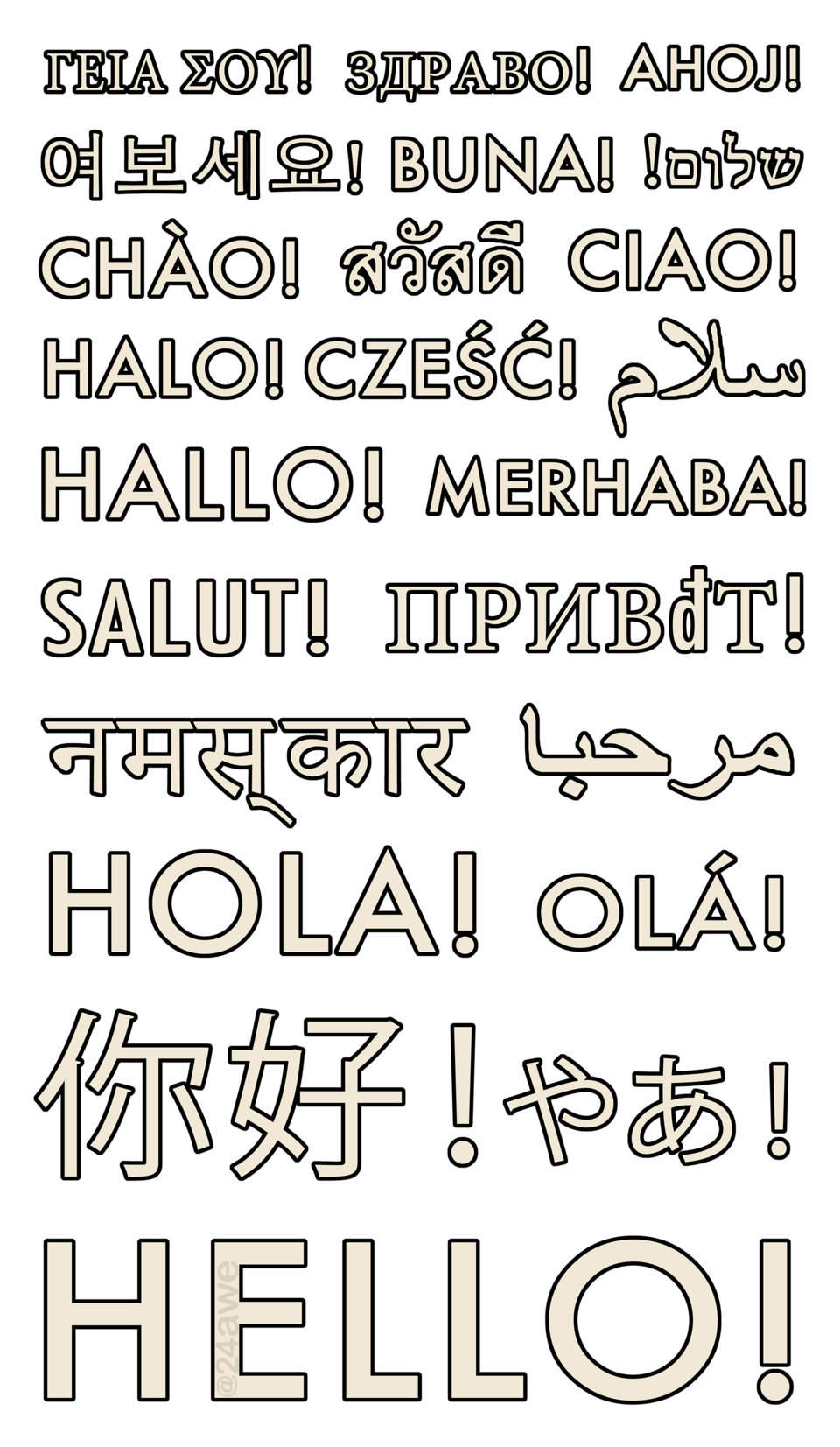
The Most Widely Spoken Languages
Mandarin Chinese has the most native speakers of any language, with nearly a billion people growing up speaking it. English is the most widely used language overall because so many people learn it as a second language for school, business, and travel. Spanish, Hindi, and Arabic are also among the top languages by number of speakers. Some languages are official in many countries at once — French, for example, is an official language in over 25 nations across Europe, Africa, and the Americas. The popularity of a language can change over time as populations grow and cultures spread.
How Languages Develop and Change
Languages are always changing, even if we do not notice it day to day. New words get invented when people need names for new inventions, foods, or ideas. Old words sometimes fade away because people stop using them. English today sounds very different from the English spoken 500 years ago during Shakespeare’s time. When groups of speakers are separated by mountains, oceans, or borders, their language can slowly split into completely different languages over many centuries.
Writing Systems Around the World
Not all languages use the same alphabet. English uses the Latin alphabet with 26 letters, but Russian uses the Cyrillic alphabet, and Arabic script is written from right to left. Chinese and Japanese use characters that can represent whole words or ideas instead of individual sounds. Some languages, like Cherokee, developed their own writing system — a man named Sequoyah created the Cherokee syllabary in the early 1800s. A few languages around the world have no writing system at all and are passed down only through speaking and listening.
Why Do People Speak Different Languages?
Thousands of years ago, small groups of humans lived far apart and had little contact with one another. Each group developed its own way of communicating, which led to many separate languages forming over time. Geographic barriers like mountains, deserts, and oceans kept people isolated for generations. When groups did meet through trade or migration, their languages sometimes blended together, creating new ones. This is why neighboring countries often have languages that sound somewhat similar but are still different.
Endangered and Disappearing Languages
An endangered language is one that fewer and fewer people speak each year. Experts estimate that about one language disappears every two weeks as its last speakers pass away. When a language dies, all the stories, songs, and knowledge carried in that language can be lost forever. Many Indigenous communities are working to save their languages by teaching them in schools and recording elders speaking. Technology is helping too — apps and websites now offer lessons in rare languages that were once at risk of being forgotten.
Being Bilingual and Multilingual
A person who speaks two languages is called bilingual, and someone who speaks three or more is called multilingual. More than half of the world’s people speak at least two languages in their daily lives. In many countries, children grow up hearing one language at home and learning another at school. Research shows that learning multiple languages can improve memory, problem-solving skills, and the ability to focus. Being multilingual also makes it easier to understand different cultures and connect with people from around the world.
How Language Connects Us
Language is one of the most powerful tools humans have for sharing ideas, feelings, and traditions. Translators and interpreters help people who speak different languages communicate with each other in hospitals, courtrooms, and international meetings. The United Nations uses six official languages — Arabic, Chinese, English, French, Russian, and Spanish — to bring countries together. Learning even a few words in someone else’s language can show respect and build friendships. No matter which language we speak, the desire to communicate and understand one another is something all people share.
 OtterKnow Kids Encyclopedia