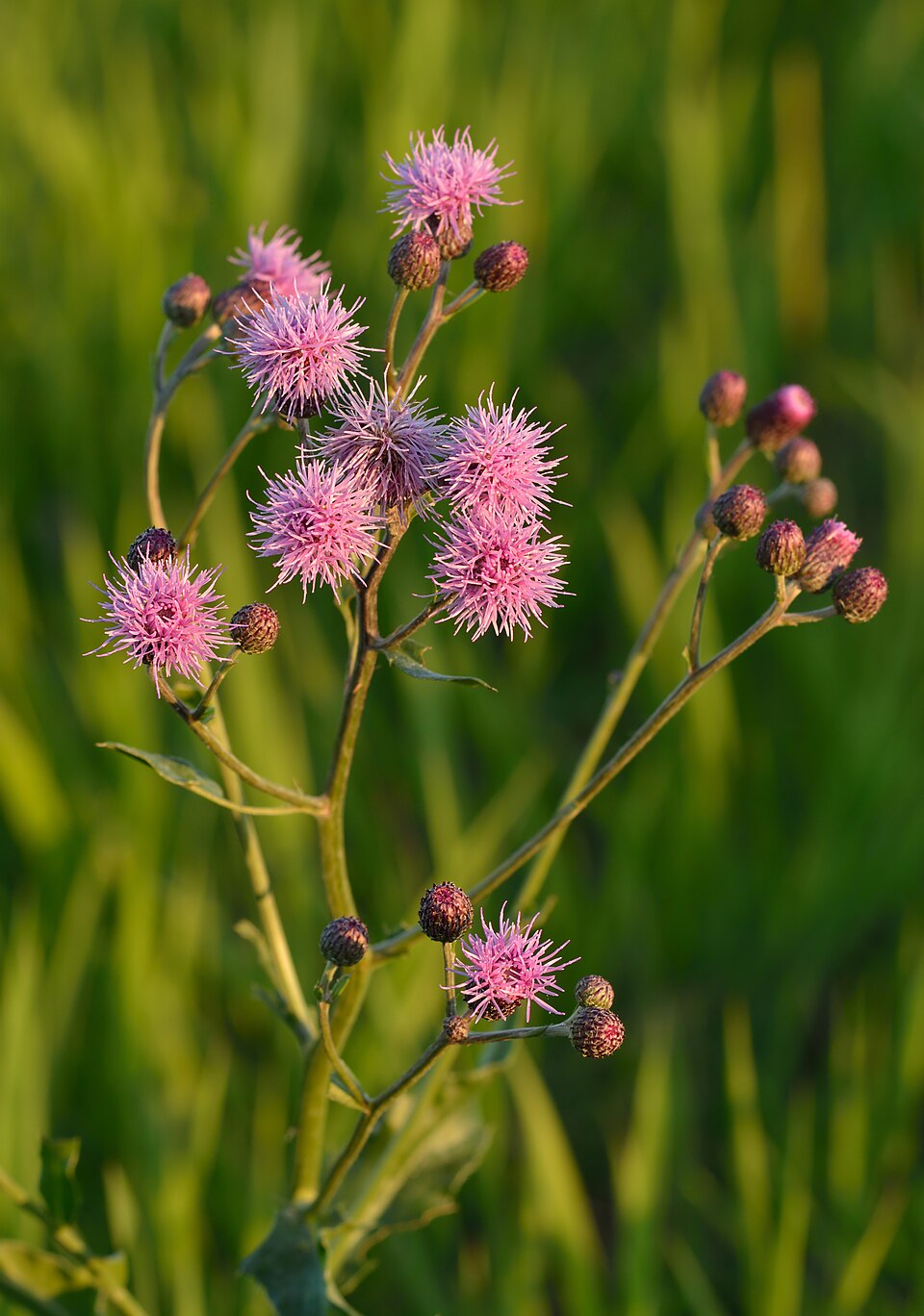
How Thistles Protect Themselves
The sharp spines on a thistle’s leaves and stems serve as armor against hungry animals. Cattle, sheep, and deer quickly learn to avoid munching on these prickly plants. According to a famous Scottish legend, Viking invaders once tried to sneak barefoot through a field of thistles at night, and their cries of pain alerted the sleeping Scots to the attack. Because of this story, the thistle became the national emblem of Scotland and still appears on Scottish coins and crests today. The spines also help reduce water loss by creating a thin layer of still air around the plant.
Seeds on the Wind
When a thistle flower finishes blooming, it produces dozens of tiny seeds, each attached to a tuft of silky white fluff called a pappus. The pappus works like a tiny parachute, catching the wind and carrying the seed far from the parent plant. On a breezy day, you can watch thousands of these feathery seeds drifting through the air like tiny clouds. This wind-powered travel is so effective that some thistle species have spread across entire continents. In fact, several thistle species are considered invasive in North America because they spread so quickly and crowd out native plants.
Thistles and Wildlife
Goldfinches are among the thistle’s biggest fans, and they time their nesting season to match when thistle seeds ripen in late summer. These bright yellow birds eat the nutritious seeds and even use the fluffy pappus to line their nests. Bumblebees, butterflies, and other pollinators visit thistle flowers for their rich nectar. The dense, spiny growth of thistle patches also provides shelter for small animals like rabbits and ground-nesting birds. Even though gardeners sometimes see thistles as weeds, these tough wildflowers play an important role in meadow ecosystems.
Thistles Around the World
There are over 200 species of thistles found on nearly every continent. The bull thistle and Canada thistle are two of the most common species in North America, though the Canada thistle actually originated in Europe. In Scotland, the Order of the Thistle is one of the highest honors a person can receive, showing just how deeply this plant is woven into the country’s identity. Some cultures have also used thistles as food, eating the young stems and roots after carefully removing the spines. Whether admired as a symbol of courage or pulled as a stubborn weed, the thistle remains one of the toughest wildflowers around.
 OtterKnow Kids Encyclopedia