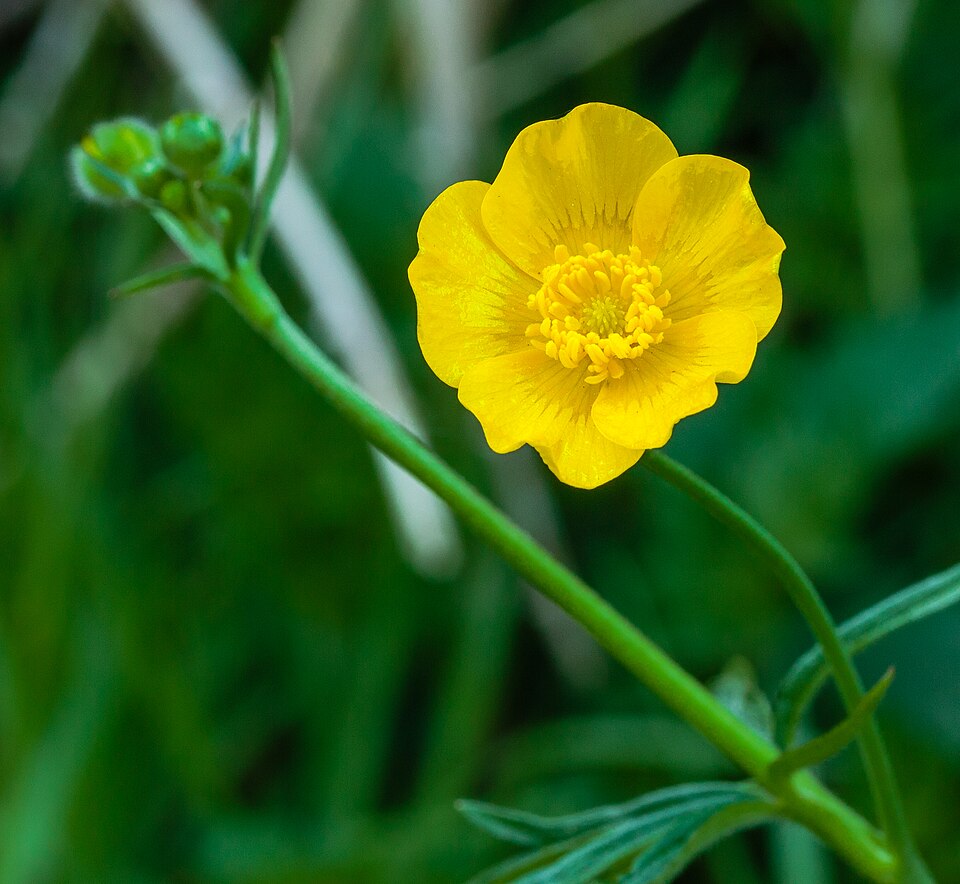
What It Looks Like
Most buttercups have five waxy, rounded petals that form a small cup shape about half an inch to an inch across. The petals have an unusually shiny surface created by a special layer of cells that reflects light almost like a tiny mirror. Underneath the flower, you can usually see five green sepals that supported the bud before it opened. The leaves vary depending on the species, but many have a deeply divided, palm-shaped pattern, and the plants typically grow 6 to 24 inches tall on branching, slightly hairy stems.
Where It Grows
Buttercups are found across North America, Europe, and Asia, growing in meadows, pastures, woodland edges, and even along streams and wetlands. They prefer moist soil and can tolerate partial shade, though most species do best in full sun. The meadow buttercup and the creeping buttercup are two of the most common species, often growing together in fields and parks. Buttercups are considered spring indicators, meaning their appearance signals that the growing season has begun.
Pollinators and Wildlife
Bees, hoverflies, and small beetles are the main pollinators of buttercups, attracted by the bright yellow petals and the nectar produced at the base of each petal. The shiny petal surface may help attract insects by reflecting ultraviolet light in patterns that are invisible to human eyes but stand out to pollinators. Most grazing animals avoid buttercups because of their bitter, acrid taste, which comes from a chemical called protoanemonin. Once buttercups are dried in hay, however, the toxin breaks down and the plants become harmless.
Uses and History
Children have played the “buttercup test” for generations, holding a flower under a friend’s chin to see if a golden reflection appears, which supposedly proves that the person likes butter. Scientists discovered that this golden glow happens because of the flower’s unique layered petal structure, which bounces light in a special way. In traditional folk medicine, some cultures applied buttercup preparations to the skin as a remedy for aches and pains, though this could cause blistering because of the plant’s irritating sap. Today, buttercups are mainly appreciated as wildflowers and garden ornamentals.
Interesting Facts
The name Ranunculus comes from the Latin word for “little frog” because many buttercup species grow near water, just like frogs. Scientists have studied the buttercup’s petal structure to understand how its surface reflects light so efficiently, and their findings have even inspired ideas for reflective materials and solar technology. Some buttercup species can spread by sending out runners along the ground, quickly covering large areas of a lawn or meadow. The creeping buttercup is considered a weed by many gardeners because it is so good at taking over flowerbeds and grassy areas.
 OtterKnow Kids Encyclopedia