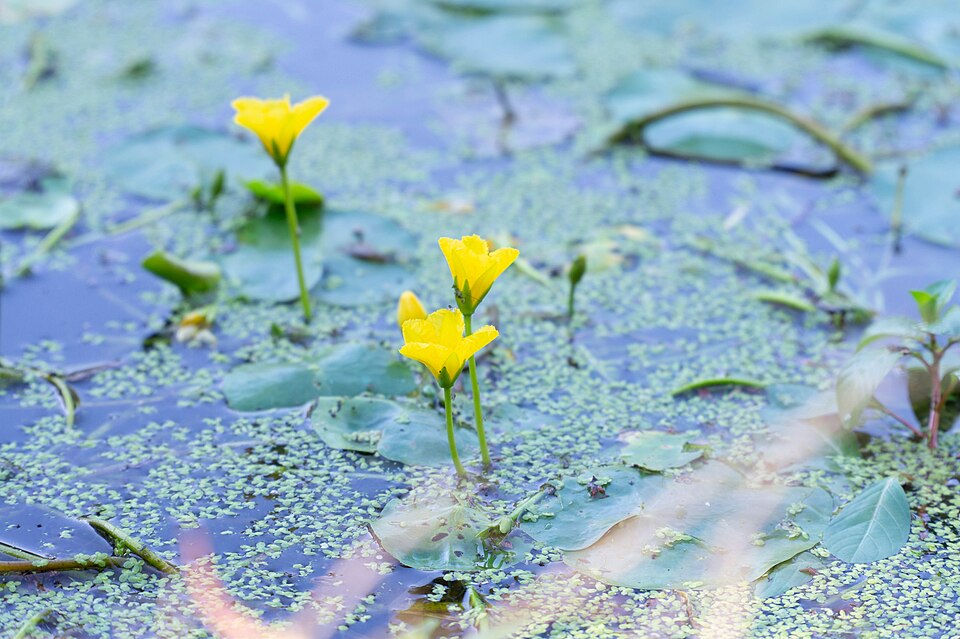
Clever Engineering for Underwater Life
Pond lilies have developed some impressive adaptations to thrive in the challenging environment between water and air. Their long stems contain special air channels called aerenchyma that act like tiny snorkels, carrying oxygen all the way from the leaves on the surface down to the roots buried deep in the mud. This system is essential because the muddy pond bottom has very little oxygen, and without these air channels the roots would suffocate. The leaves have a waxy coating on their upper surface that keeps water from pooling on top and weighing them down. Even the flowers are designed to float — if the water level rises, the flexible stems can stretch to keep the blooms above the surface.
A Busy Meeting Place for Wildlife
Pond lily leaves are like floating rest stops for all sorts of creatures that live in and around the water. Frogs perch on the broad leaves to bask in the sunshine and watch for passing insects, while dragonflies land on them to rest their wings. Below the surface, the tangle of stems and roots provides hiding spots for small fish, tadpoles, and aquatic insects. Ducks and muskrats feed on the seeds and starchy rhizomes, which are packed with energy. The famous French painter Claude Monet was so captivated by water lilies and pond lilies in his garden at Giverny that he created more than 250 paintings of them, making these humble plants some of the most famous in the history of art.
Pond Lilies and Their Ecosystems
Pond lilies play a quiet but important role in keeping freshwater ecosystems healthy and balanced. Their large floating leaves create patches of shade on the water’s surface, which helps keep the water cool and prevents algae from growing out of control. The shade also provides a comfortable environment for fish and other aquatic animals that prefer cooler water temperatures. As old leaves and stems decay, they add nutrients back into the pond, feeding the tiny organisms at the base of the food chain. Pond lilies are hardy plants that can survive cold winters by storing energy in their thick rhizomes, which rest dormant in the mud until warm spring temperatures signal them to send up fresh new leaves and flowers once again.
 OtterKnow Kids Encyclopedia