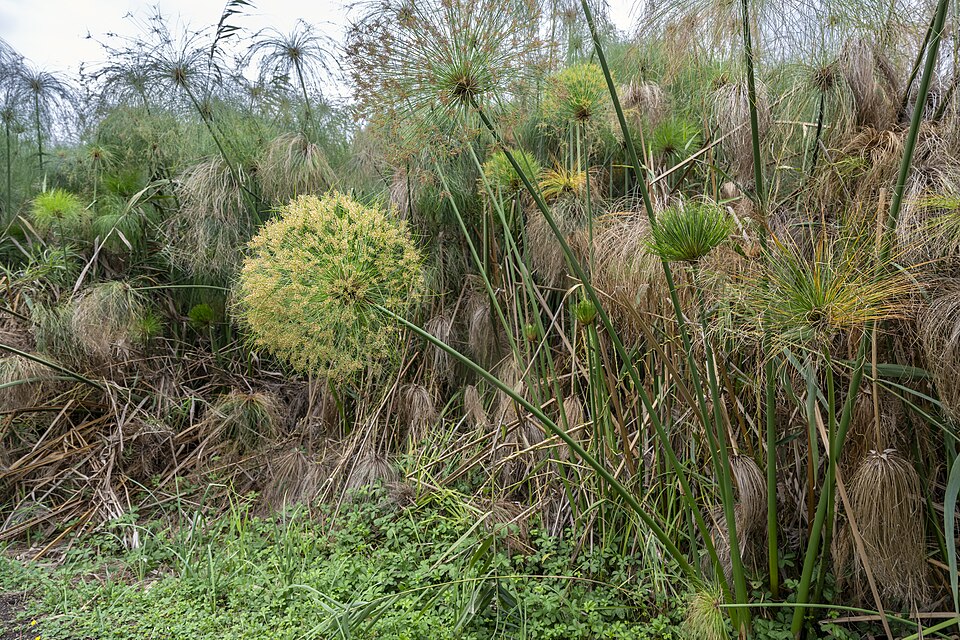
The Plant That Gave Us Paper
The English word “paper” actually comes from the word “papyrus,” because ancient Egyptians invented one of the world’s first writing surfaces using this plant. To make papyrus sheets, workers would slice the stem’s spongy inner pith into thin strips, lay them side by side, and then press a second layer on top at right angles. The natural sugars in the pith acted as a glue, bonding the layers together as they dried under heavy stones in the sun. The result was a smooth, flexible sheet that could be written on with ink and rolled into scrolls that lasted for thousands of years. Some papyrus scrolls found in Egyptian tombs are over 4,000 years old and can still be read today.
A Plant of Many Uses
Ancient Egyptians found ways to use almost every part of the papyrus plant in their daily lives. They bundled the stems together to build lightweight boats, some large enough to carry several people across the Nile River. The fibers were woven into sandals, mats, baskets, and even rope, making papyrus one of the most important resources in ancient Egypt. The root could be eaten or dried and burned as fuel, and the soft pith was sometimes chewed as a sweet snack. In modern-day Egypt, artisans still make papyrus paper using traditional methods and sell it to tourists as a connection to the country’s ancient past.
Papyrus in the Wild
In its natural habitat, papyrus forms dense, towering stands along riverbanks and in swampy areas that create important wetland ecosystems. These papyrus marshes provide shelter for hippos, crocodiles, and a wide variety of birds, including the rare shoebill stork that hunts fish among the stems. The thick root systems of papyrus help prevent soil erosion along riverbanks and filter pollutants from the water. Papyrus swamps also act like giant sponges, absorbing floodwaters during the rainy season and slowly releasing them during dry periods. In some parts of Africa, floating islands of papyrus break free from the shore and drift across lakes, creating moving habitats that fascinate scientists and visitors alike.
 OtterKnow Kids Encyclopedia