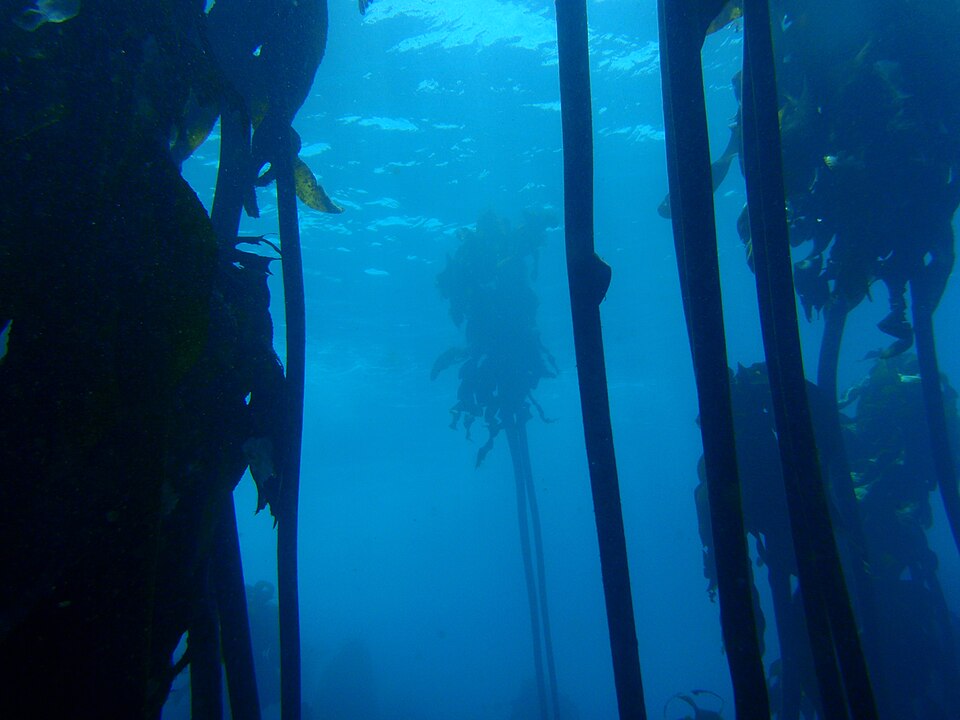
Towering Underwater Forests
Giant kelp can grow up to two feet in a single day, making it one of the fastest-growing organisms on Earth. Mature kelp forests can reach heights of 150 feet from the ocean floor to the surface, creating towering underwater landscapes that rival any forest on land. Each kelp blade has a small gas-filled bladder at its base that works like a tiny balloon, keeping the blade floating upright so it can soak up sunlight. Kelp forests provide shelter and food for more than 1,000 different species, from tiny sea snails to massive gray whales. Sea otters are famous for wrapping themselves in kelp fronds at the surface so they do not drift away while sleeping.
Kelp in Everyday Life
You might be surprised to learn that kelp shows up in many products you use every day. A substance called alginate, which comes from kelp, is used as a thickener in ice cream, toothpaste, salad dressing, and even some medicines. In countries like Japan, Korea, and China, people have eaten kelp for centuries in soups, salads, and snacks because it is rich in vitamins and minerals. Farmers also use dried kelp as a natural fertilizer to help their crops grow stronger. Scientists are now exploring kelp as a source of biofuel, which could one day help replace fossil fuels with a cleaner energy source.
Protecting Kelp Forests
Kelp forests face serious threats from warming oceans, pollution, and overfishing of the animals that keep kelp ecosystems in balance. When sea urchin populations explode because their predators — like sea otters and certain fish — have been removed, the urchins devour entire kelp forests, leaving behind barren areas called urchin barrens. Rising ocean temperatures also weaken kelp, which prefers water cooler than about 68 degrees Fahrenheit. Conservation efforts around the world are working to protect kelp forests by restoring sea otter populations and removing excess sea urchins by hand. Some groups are even experimenting with kelp farming, which could help feed people while also absorbing carbon dioxide from the ocean.
 OtterKnow Kids Encyclopedia