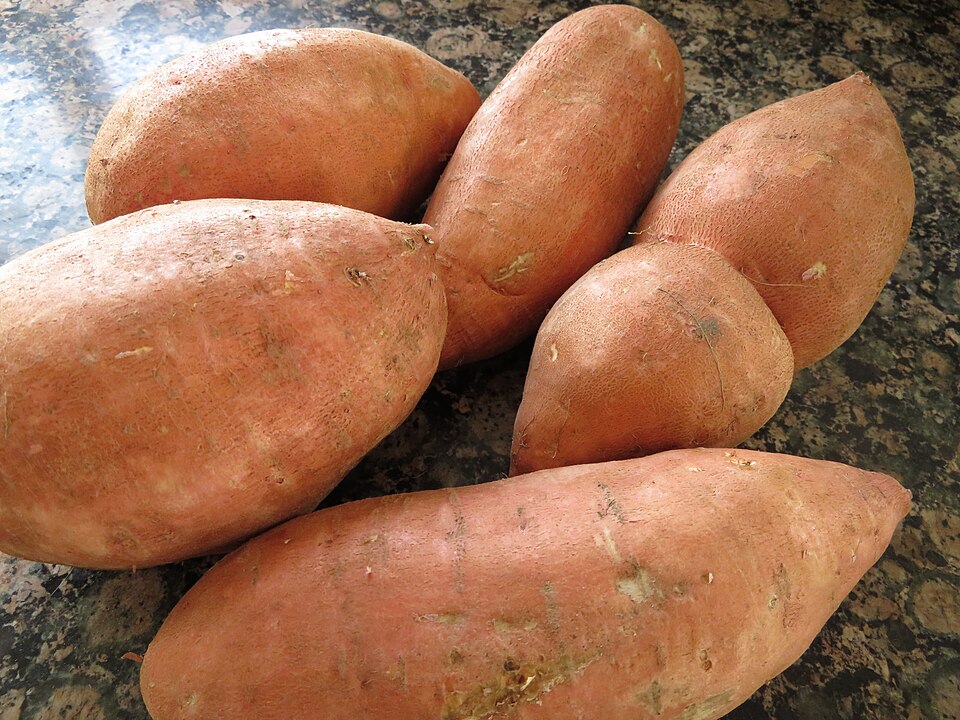
Sweet Potatoes vs. Yams
In the United States, you will often see sweet potatoes labeled as “yams” at the grocery store, but this is actually a mistake. True yams are a completely different vegetable that comes from Africa and Asia, and they can grow much larger than sweet potatoes, sometimes weighing over 100 pounds. American stores started calling orange-fleshed sweet potatoes “yams” to tell them apart from the white-fleshed variety, and the confusing name stuck. If you buy something labeled “yam” in a regular American grocery store, it is almost certainly a sweet potato.
Where They Come From
Sweet potatoes were first grown in Central or South America, and they have been cultivated for at least 5,000 years. One of the great mysteries of sweet potato history is how they ended up on Pacific islands like Hawaii and New Zealand long before European explorers arrived. Scientists believe that Polynesian voyagers somehow carried sweet potatoes across thousands of miles of open ocean, showing just how important this vegetable was to ancient peoples. Today, China grows more sweet potatoes than any other country, producing about half of the world’s supply.
Why They Are So Nutritious
Sweet potatoes are often ranked as one of the most nutritious vegetables in the world. They are loaded with beta-carotene (especially the orange varieties), which your body converts into vitamin A, a nutrient important for healthy eyes and a strong immune system. Sweet potatoes also contain special enzymes that convert their starch into sugar when they are heated, which is why cooked sweet potatoes taste much sweeter than raw ones. They are a great source of fiber, vitamin C, and potassium, and purple sweet potatoes contain powerful antioxidants called anthocyanins.
Fun Facts About Sweet Potatoes
Sweet potato leaves and vines are also edible and are commonly eaten as a green vegetable in many Asian and African countries. George Washington Carver, the famous agricultural scientist, developed over 100 different products made from sweet potatoes, including flour, dye, and even a type of glue. North Carolina is the largest sweet potato-producing state in the United States, growing about half of the country’s supply. A single sweet potato vine can spread over 10 feet across a garden during one growing season.
 OtterKnow Kids Encyclopedia