The Totonac Discovery
The Totonac people of eastern Mexico are believed to be the first humans to cultivate and use vanilla. According to their legend, the vanilla orchid sprang from the blood of a princess who was forbidden from marrying the young man she loved. The Totonacs used vanilla to flavor their chocolate drinks and as a perfume and medicine. When the Aztecs conquered the Totonacs, they adopted vanilla as well, adding it to their royal chocolate beverage called xocolatl. Spanish conquistadors brought vanilla back to Europe in the 1500s, where it became a prized flavoring among royalty and the wealthy.
Hand-Pollinated Flowers
Growing vanilla is incredibly labor-intensive, which is a big reason why it is the second most expensive spice in the world after saffron. In its native Mexico, vanilla flowers are naturally pollinated by a specific type of tiny bee called the Melipona bee and possibly by certain hummingbirds. When vanilla was transplanted to other tropical regions like Madagascar and Tahiti, these natural pollinators did not exist. In 1841, a 12-year-old enslaved boy named Edmond Albius on the island of Reunion figured out a technique for hand-pollinating vanilla flowers using a thin stick, a method still used today. Each flower blooms for only one day, so workers must check the vines every morning and pollinate each blossom by hand.
From Pod to Flavor
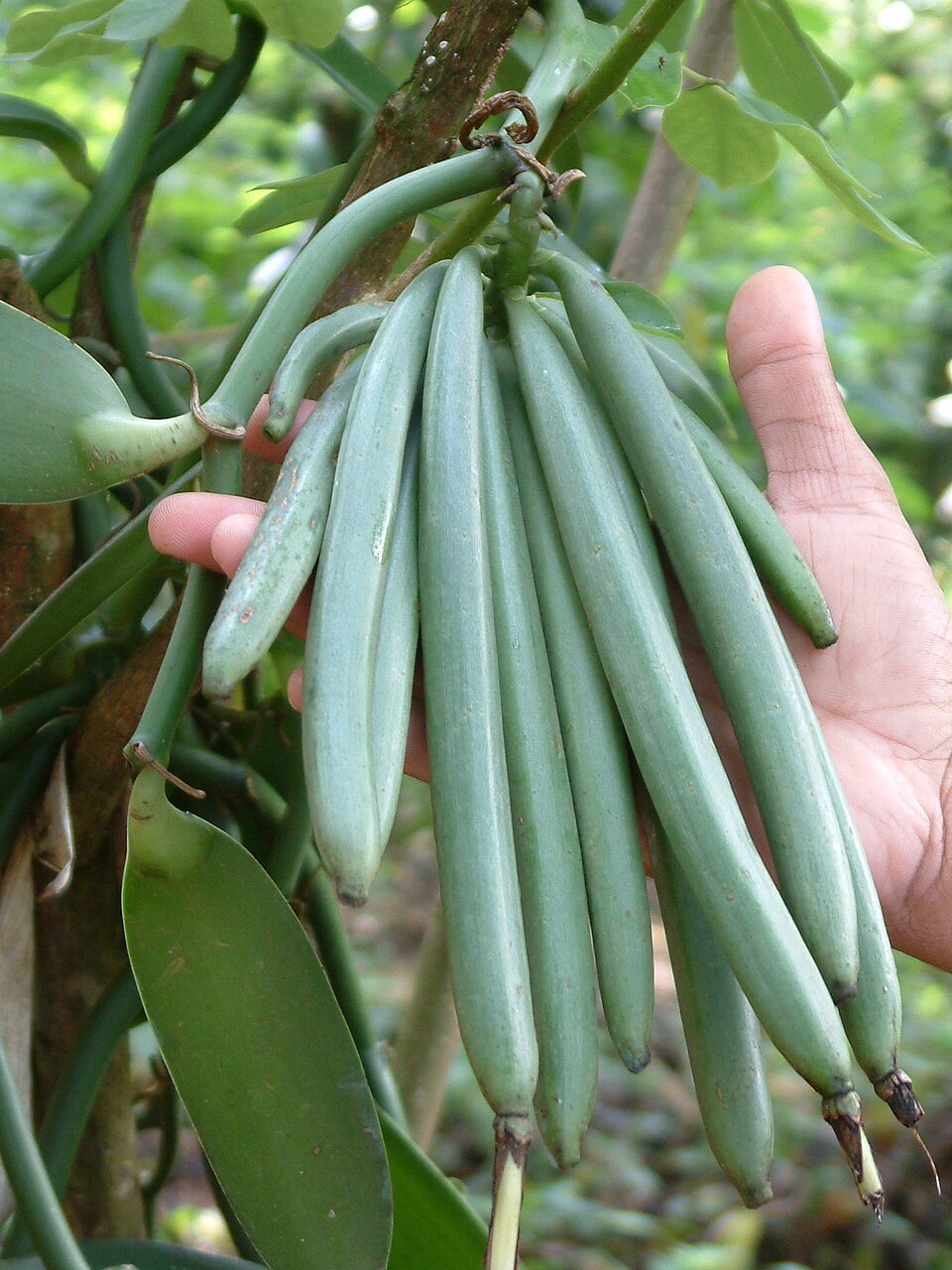
After pollination, vanilla pods take about nine months to grow to full size, roughly the same amount of time as a human pregnancy. The green pods are harvested just before they are fully ripe and then undergo a long curing process that takes several months. Workers blanch the pods in hot water, then wrap them in blankets to sweat during the day and spread them out to dry at night, repeating this cycle for weeks. This patient process allows enzymes to break down compounds in the pod and create the complex flavor and aroma we associate with vanilla. A single vanilla pod contains hundreds of chemical compounds that work together to produce its distinctive taste.
Vanilla Today
Madagascar is the world’s largest producer of vanilla, growing about 80 percent of the global supply. Because vanilla production is so labor-intensive and time-consuming, the price of real vanilla can swing wildly from year to year, sometimes costing more per pound than silver. Most of the vanilla flavor used in foods, ice cream, and baked goods today is actually artificial vanillin, a single chemical compound synthesized in laboratories. However, real vanilla extract contains that complex blend of hundreds of flavor compounds that artificial versions cannot fully replicate. The word “vanilla” has come to mean plain or boring in everyday language, but there is nothing plain about this rare and complex plant.
 OtterKnow Kids Encyclopedia