What It Looks Like
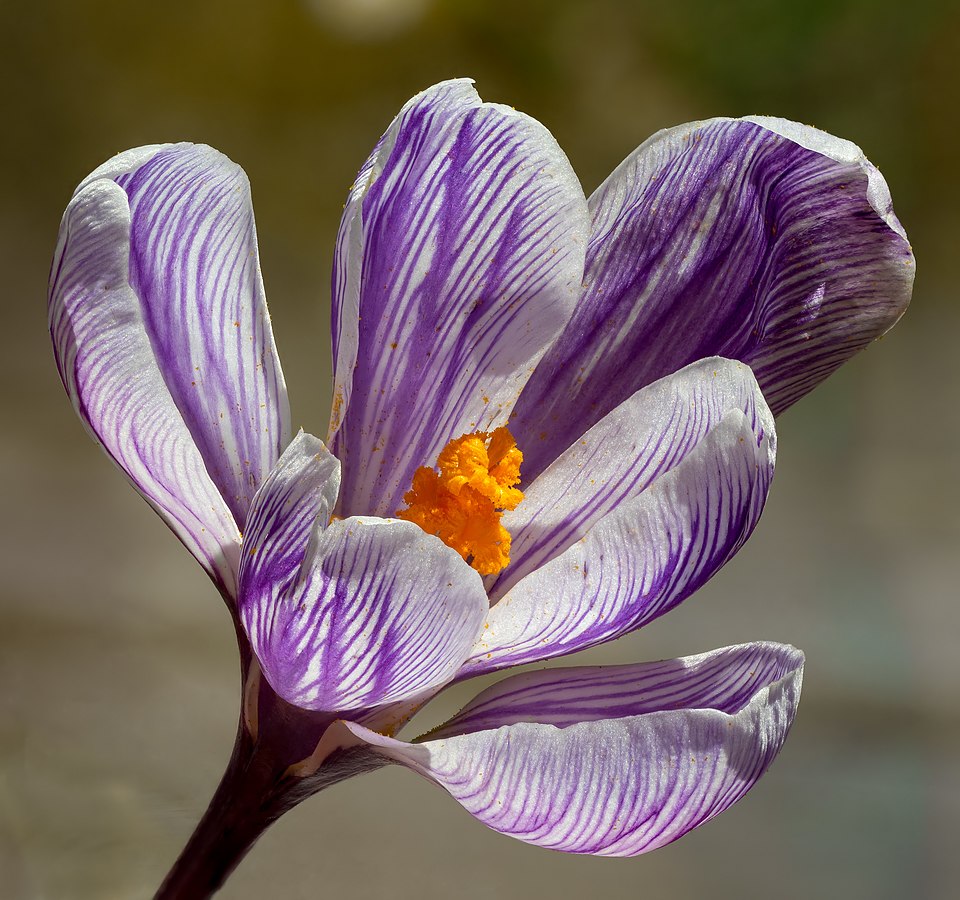
Violet flowers are small, usually just 1 to 3 centimeters across, with five petals arranged in a distinctive pattern: two upper petals, two side petals, and one lower petal that often has dark veins acting as nectar guides for visiting insects. The most common color is the deep blue-purple shade that gave the color “violet” its name, but different species also bloom in white, yellow, pink, and bicolored combinations. The leaves of most violet species are heart-shaped or rounded, growing in a low rosette close to the ground. Most violets stay quite small, typically reaching only 10 to 20 centimeters in height. Some species spread by sending out runners called stolons, creating dense carpets of foliage on the forest floor.
How It Grows
Violets are perennial plants that come back year after year and can spread rapidly through a combination of seeds and underground runners. One of the most fascinating things about violets is that they produce two types of flowers: the showy, colorful ones we see above ground, and hidden flowers called cleistogamous flowers that stay closed and never open, yet still produce seeds by self-pollinating inside their sealed petals. These secret flowers appear near the base of the plant, often hidden under the leaves, and they actually produce more seeds than the open flowers do. Violets prefer moist, partially shaded conditions and rich soil, though some species are remarkably adaptable and can colonize lawns, sidewalk cracks, and disturbed ground. Once established, violets can be very difficult to remove, spreading enthusiastically through gardens.
Where It Grows
Violets are found on every continent except Antarctica, growing naturally in woodlands, meadows, streambanks, and mountain habitats. The greatest diversity of violet species is found in temperate regions of the Northern Hemisphere, particularly in North America, Europe, and East Asia. Common blue violets are so widespread across the eastern United States that they serve as the state flower of four states: Illinois, Rhode Island, Wisconsin, and New Jersey. Many violet species thrive in the understory of deciduous forests, blooming in early spring before the trees leaf out and shade the forest floor.
Pollinators and Seeds
The open, colorful flowers of violets attract small bees, butterflies, and hoverflies, which pollinate them while collecting nectar. The lower petal of each flower has a spur at the back that contains nectar, and the dark lines on the petals guide pollinators to this hidden reward. However, most of a violet’s seeds actually come from the cleistogamous flowers that never open and pollinate themselves without any insect help at all. When violet seed capsules ripen, they split open and the three sections contract, squeezing the seeds outward and flinging them up to a meter away from the parent plant. Ants then carry many of these seeds even farther, attracted by a nutritious coating on each seed called an elaiosome.
Uses and Symbolism
Violet flowers and young leaves are edible and surprisingly rich in vitamins A and C, with the leaves containing more vitamin C per gram than oranges. The flowers have been candied with sugar for centuries and used to decorate cakes, cookies, and pastries, and they can also be made into violet syrup, jelly, and tea. In the Victorian era, violets were the most popular flower in England, outselling even roses, and they symbolized modesty, faithfulness, and love. Violet extracts have been used in perfumery since ancient times, though violet scent is famously tricky because a chemical in the fragrance called ionone temporarily numbs your sense of smell, so you can only detect the scent in brief bursts.
Interesting Facts
The phrase “shrinking violet,” used to describe a shy person, comes from the way violets often grow in hidden, shady spots as if they are trying to stay out of sight. Ancient Greeks considered the violet sacred to the god of wine, Dionysus, and the city of Athens was sometimes called the “violet-crowned city.” Scientists have discovered that the cleistogamous flowers of violets are an incredibly efficient reproductive strategy, guaranteeing seed production even when pollinators are scarce or weather conditions prevent the open flowers from being visited. Sweet violets were so popular in Toulouse, France, that the city became known as the “City of Violets” and developed an entire industry around violet-scented products, from candies to perfumes, that continues today.
 OtterKnow Kids Encyclopedia