Storing Water in Every Leaf
Like all succulents, jade plants are experts at surviving dry conditions by storing water in their thick, fleshy leaves. Each leaf is packed with a gel-like tissue that holds moisture the plant can use when the soil dries out. If you gently squeeze a healthy jade plant leaf, you can feel how firm and full of water it is. The waxy coating on the surface of each leaf helps prevent water from evaporating into the air. Jade plants also use CAM photosynthesis, a special process that allows them to open their breathing pores at night instead of during the hot daytime, which saves even more water.
A Plant That Lives for Generations
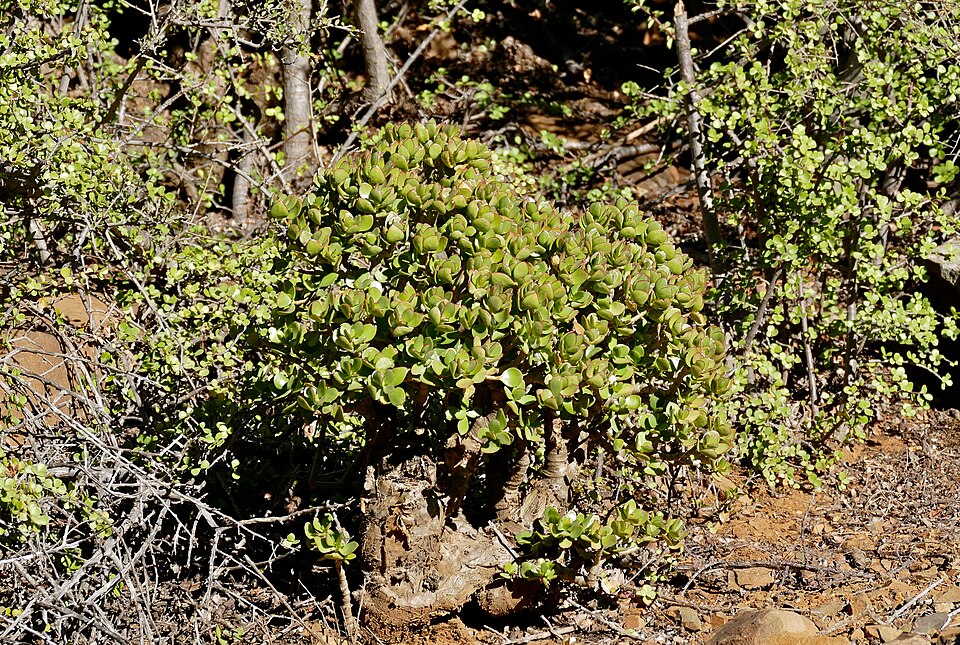
Jade plants have an unusually long lifespan. With proper care, a jade plant can live for 70 to 100 years, meaning a plant started by your great-grandparents could still be thriving today. Over the decades, jade plants develop thick, tree-like trunks and spreading canopies that can make them look like ancient miniature trees. Older jade plants occasionally produce clusters of small, star-shaped flowers that are usually white or pale pink. These flowers typically bloom in winter when the days are short and the nights are cool, adding a delicate surprise to a plant that is usually admired for its leaves.
Growing New Plants from Cuttings
Jade plants are incredibly easy to propagate, which means growing a brand-new plant from a piece of an existing one. If a leaf or stem cutting falls off a jade plant, it can sprout roots and grow into a completely new plant all on its own. To start a new jade plant, you simply let a stem cutting dry for a day or two, then place it in soil and wait for roots to appear. Even a single fallen leaf can produce a tiny new plant if it lands on moist soil. This ability to regenerate from cuttings is one reason jade plants have been shared between friends and passed down through families for generations.
Jade Plants and Culture
In many parts of Asia, jade plants are called “money plants” or “lucky plants” because their round, coin-shaped leaves are thought to bring financial good fortune. In feng shui, the Chinese practice of arranging living spaces for harmony, jade plants are placed near doorways or in the southeast corner of a home to attract wealth and prosperity. While jade plants are wonderful houseplants, pet owners should know that they are toxic to cats and dogs, so they should be kept out of reach of curious pets. Whether you grow one for good luck or simply because you enjoy its beauty, the jade plant is a living treasure that rewards patience with decades of steady, graceful growth.
 OtterKnow Kids Encyclopedia