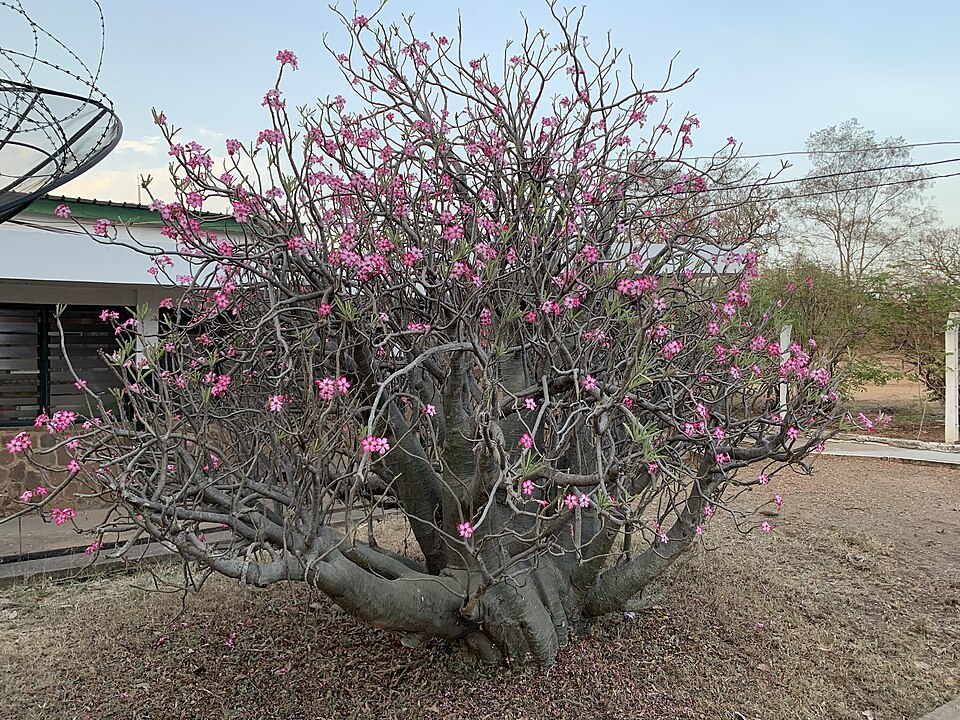
The Amazing Caudex
The thick, bottle-shaped caudex at the base of a desert rose is what sets this plant apart. This swollen trunk can grow to be several feet wide in older plants, giving them a sculpture-like appearance that fascinates gardeners and artists alike. The caudex works like a built-in water tank, storing moisture during the rainy season that the plant can draw upon during months of drought. As the plant ages, the caudex develops interesting twists, grooves, and textures that make each desert rose one of a kind. Because of this striking shape, desert roses are extremely popular as bonsai plants, with prize specimens selling for hundreds of dollars.
Flowers and Pollination
Desert rose flowers have five overlapping petals that spread open like small trumpets. The most common color is bright pink with a white center, though breeders have developed varieties in deep red, pure white, striped, and even multicolored patterns. In the wild, the flowers are pollinated by insects including bees, butterflies, and hawk moths that are attracted by the bright colors and sweet fragrance. After pollination, the plant produces long, narrow seed pods that eventually split open to release seeds attached to silky tufts that catch the wind. Desert roses can bloom repeatedly throughout the warm months, putting on a colorful display that lasts for weeks.
A Plant with a Dangerous Side
While the desert rose is beautiful to look at, it contains a milky white sap that is highly toxic. In parts of Africa, hunters have traditionally coated their arrow tips with this poisonous sap to make their weapons more effective. The sap contains compounds called cardiac glycosides that can affect the heart, so it is important to wash your hands after handling a desert rose and to keep the plant away from pets. Despite this toxicity, the plant has also been used in traditional medicine in small, carefully measured doses. It is a good reminder that some of nature’s most beautiful creations can also be some of its most dangerous.
Desert Roses Around the World
Desert roses have traveled far from their original home in Africa and Arabia. They are now widely grown in Southeast Asia, where Thailand in particular has become a major center for breeding new varieties. In frost-free climates, desert roses thrive outdoors, but in cooler areas, people grow them in pots that can be brought inside during winter. The plants need plenty of sunlight, well-drained soil, and only occasional watering to stay healthy. Wild desert roses can live for many decades, with some specimens in Africa estimated to be over a hundred years old, their massive caudexes telling the story of years spent weathering droughts and storms.
 OtterKnow Kids Encyclopedia