A Living Water Tank
One of the barrel cactus’s key abilities is storing enormous amounts of water inside its thick, spongy flesh. A large barrel cactus can hold more than 150 gallons of water after a good rainstorm. The vertical ribs running down the sides of the cactus work like an accordion, expanding outward when the plant fills with water and contracting inward during dry spells. This flexible design allows the cactus to swell to nearly twice its usual width without splitting open. The stored water keeps the plant alive through months of scorching heat and drought.
The Compass of the Desert
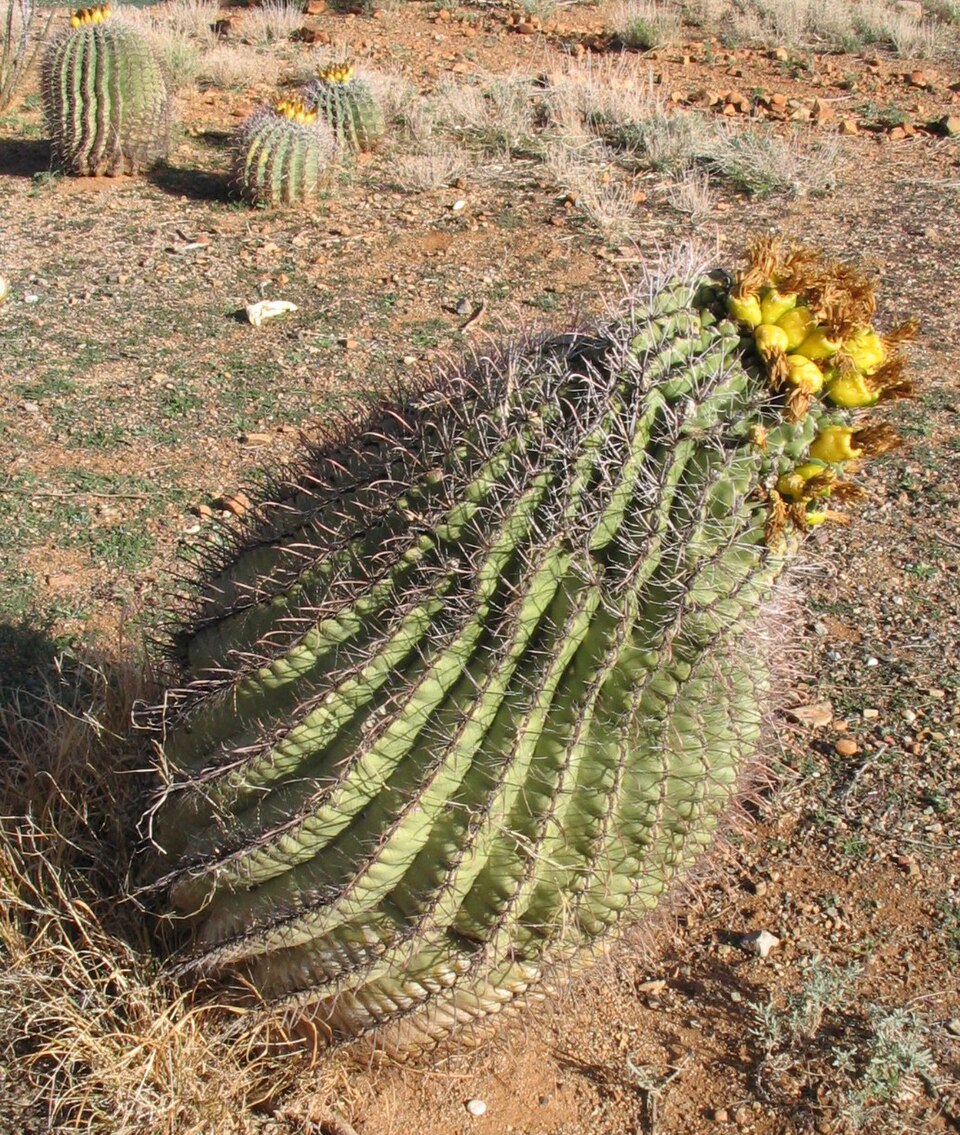
Barrel cacti have earned the nickname “compass cactus” because many of them lean slightly toward the south or southwest. Scientists believe this happens because the side facing the sun grows more slowly due to intense heat and light, causing the plant to tilt over time. This lean can be so noticeable that lost hikers have reportedly used barrel cacti to figure out which direction they were heading. The cactus grows very slowly, adding only about one inch of height per year. A barrel cactus standing four feet tall could easily be 50 years old or more.
Flowers and Fruit
Despite their fierce appearance, barrel cacti produce beautiful flowers that bloom in a ring around the top of the plant like a colorful crown. The flowers are usually yellow, orange, or red and appear during the spring and summer months. After the flowers are pollinated by bees and other insects, they develop into small, prickly fruits that look like tiny pineapples. These fruits are edible and have a sour, lemony taste that some desert animals and people enjoy. Native Americans once harvested barrel cactus fruit and also used the cactus flesh as an emergency water source during droughts.
Barrel Cacti and Desert Life
Barrel cacti play an important role in the desert ecosystem by providing food and shelter for wildlife. Cactus wrens and other birds sometimes build nests among the protective spines, safe from predators. Ground squirrels, javelinas, and desert tortoises eat the fruit and flesh when other food is scarce. The flowers are important nectar sources for native bees and butterflies during the hot summer months. Though barrel cacti are tough survivors, they face threats from illegal collection, habitat loss, and increasingly severe droughts caused by climate change.
 OtterKnow Kids Encyclopedia