What They Look Like
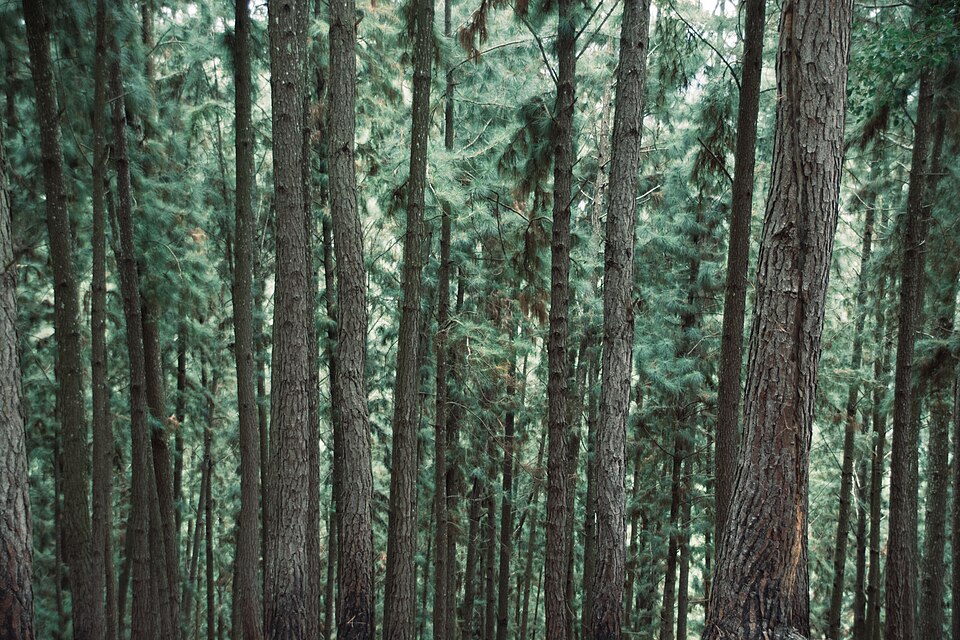
Pine trees are easy to identify because their leaves are long, thin needles that grow in small bundles called fascicles. The number of needles in each fascicle helps identify the species: white pines have five needles per bundle, yellow pines have two or three, and some species have just one. Pine bark varies from smooth and grayish on young trees to thick, scaly plates of reddish-brown or orange on mature trunks. Pines produce two types of cones: small pollen cones that release clouds of yellow dust in spring, and larger seed cones that take about two years to fully mature and open. The familiar woody pine cone that people collect on forest walks is the female seed cone, and its scales protect the seeds inside until conditions are right for them to spread.
Where They Grow
Pine trees dominate vast forests across North America, Europe, and Asia, from the boreal forests of Canada and Scandinavia to the mountains of Mexico and the Mediterranean coast. They are especially common in areas with sandy, acidic soils where other trees struggle to compete. In the southeastern United States, longleaf pine forests once covered 90 million acres and supported a unique ecosystem of grasses, wildflowers, and wildlife. Bristlecone pines grow in the harsh, windswept mountains of California, Nevada, and Utah, where the oldest known specimen, named Methuselah, has been alive for nearly 5,000 years. Scots pine is one of the most widely distributed pines in the world, stretching from Scotland across Siberia to the Pacific coast of Russia.
How People Use Them
Pine trees have been essential to human civilization for thousands of years. Pine lumber is one of the most commonly used building materials in the world, prized for being lightweight, straight-grained, and relatively inexpensive. Pine resin, the sticky sap that oozes from wounds in the bark, can be processed into turpentine for paint thinners and rosin used on violin bows and baseball pitchers’ hands. Pine nuts, the edible seeds found inside the cones of certain species, are a delicious ingredient in pesto, salads, and many traditional recipes. The tradition of bringing an evergreen tree indoors at Christmas likely began in Germany in the 1500s, and today pine, spruce, and fir trees remain the most popular choices for Christmas trees.
Fun Facts
A bristlecone pine named Methuselah, growing in California’s White Mountains, is nearly 5,000 years old, making it older than the Egyptian pyramids. Pine pollen is produced in such enormous quantities that it can coat cars, puddles, and sidewalks with a thick yellow-green layer each spring. Some pine species, like the lodgepole pine and jack pine, have cones sealed shut with resin that only opens in the extreme heat of a forest fire, ensuring their seeds sprout in freshly cleared ground. Pine needles are mildly acidic and create a thick carpet on the forest floor that discourages many other plants from growing beneath them. The world’s tallest pine tree is a ponderosa pine in southern Oregon that stands over 268 feet tall.
 OtterKnow Kids Encyclopedia