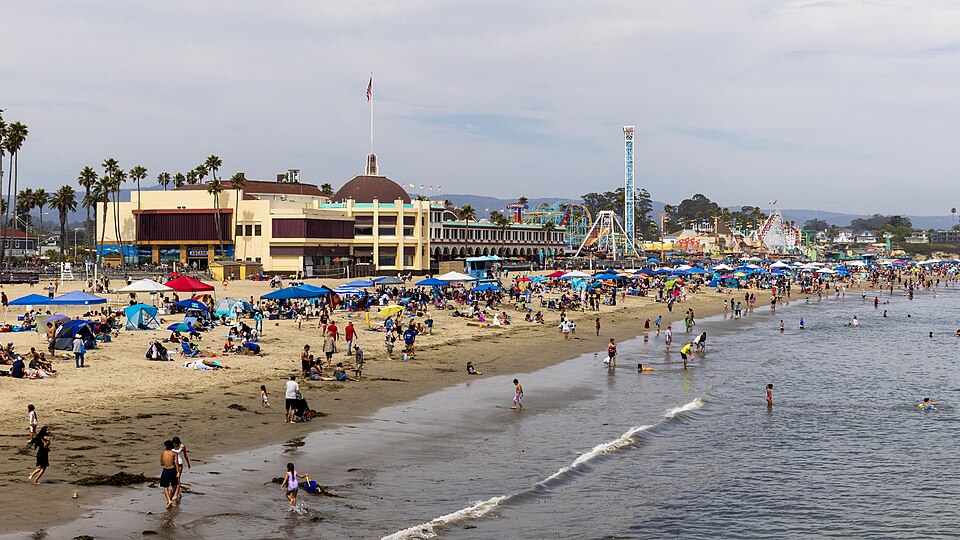
The Beach Boardwalk
The Santa Cruz Beach Boardwalk, which opened in 1907, is California’s oldest surviving amusement park and one of the few remaining seaside amusement parks on the West Coast. Its most famous attraction is the Giant Dipper, a wooden roller coaster that opened on May 17, 1924, and has carried more than 68 million riders since then. The Giant Dipper stands 70 feet tall and reaches speeds of 55 miles per hour. Both the Giant Dipper and the park’s antique Looff Carousel were designated National Historic Landmarks by the National Park Service in 1987, making the Boardwalk one of only a handful of amusement parks in the country with such a distinction.
Surfing Capital
Santa Cruz has a strong claim as one of the birthplaces of mainland surfing in the United States. In 1885, three Hawaiian princes visiting the area surfed the waves at the mouth of the San Lorenzo River on redwood boards, making it one of the earliest recorded instances of surfing on the U.S. mainland. Today, Steamer Lane near Lighthouse Point is considered one of the premier surfing spots in the world and hosts international competitions. A surfing museum inside the Mark Abbott Memorial Lighthouse overlooks the break and documents the sport’s local history.
UC Santa Cruz and the Banana Slug
The University of California, Santa Cruz (UCSC) was founded in 1965 on a forested hillside overlooking the city and Monterey Bay. The 2,001-acre campus sits among redwood trees and meadows, making it one of the most scenic university campuses in the country. UCSC is well known for its research in astronomy, marine biology, and computer science. The university’s official mascot is the banana slug — a bright yellow mollusk that thrives in the damp redwood forests on campus. Students voted to adopt the banana slug as their mascot in 1986, choosing it over the more traditional “sea lions” option.
Redwood Forests
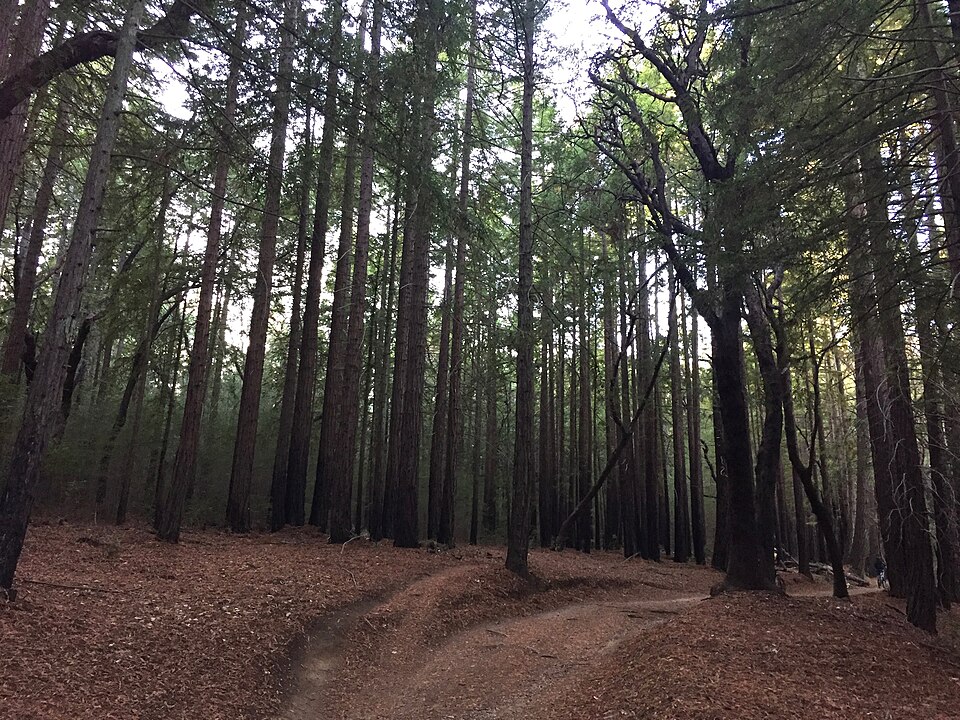
The Santa Cruz Mountains surrounding the city are home to magnificent coast redwood trees, some of the tallest and oldest living things on Earth. Henry Cowell Redwoods State Park, located just a few miles north of downtown, features a 40-acre grove of old-growth redwoods. The tallest tree in the park stands approximately 277 feet tall, is about 16 feet in diameter, and is estimated to be around 1,500 years old. Big Basin Redwoods State Park, California’s oldest state park (established in 1902), is also nearby, though it suffered significant damage in the 2020 CZU Lightning Complex fire and is still being restored.
History
The Ohlone people, also known as Costanoans, lived in the Santa Cruz area for thousands of years before European contact. They called the area “Aulinta” and thrived on the region’s abundant fish, shellfish, acorns, and game. In 1791, Spanish Franciscan missionaries founded Mission Santa Cruz, the twelfth of California’s 21 missions. The mission era brought devastating changes to the Ohlone, as European diseases and forced labor dramatically reduced their population. After California became a U.S. state in 1850, Santa Cruz grew as a resort town. The arrival of the railroad in the 1870s made it easy for San Francisco residents to visit the beaches, and by 1907 the Beach Boardwalk had opened, cementing Santa Cruz’s reputation as a top vacation destination.
Fun Facts
- The Giant Dipper roller coaster was built in just 47 days in 1924 using 327,000 board feet of lumber and 743,000 nails.
- Santa Cruz is sometimes called “Surf City” — the city even trademarked the nickname, though Huntington Beach, California, disputes the claim.
- Banana slugs can grow up to 10 inches long and are the second-largest slug species in the world.
- The redwood trees near Santa Cruz can live for over 1,500 years and grow taller than the Statue of Liberty.
- Natural Bridges State Beach in Santa Cruz is a major wintering site for monarch butterflies, with thousands arriving each fall.
 OtterKnow Kids Encyclopedia