History
The Ohlone people inhabited the San Mateo area for thousands of years before European contact. In 1776, Spanish explorer Juan Bautista de Anza led an expedition through the area, and settlers established a camp near San Mateo Creek. The region remained sparsely populated through the Mexican era and early American period. After the transcontinental railroad reached the Peninsula in the 1860s, wealthy San Franciscans built country estates in San Mateo, attracted by its mild weather and scenic hills. The city was officially incorporated in 1894. Following the devastating 1906 San Francisco earthquake, many families relocated permanently to San Mateo, spurring rapid growth.
Parks and Recreation
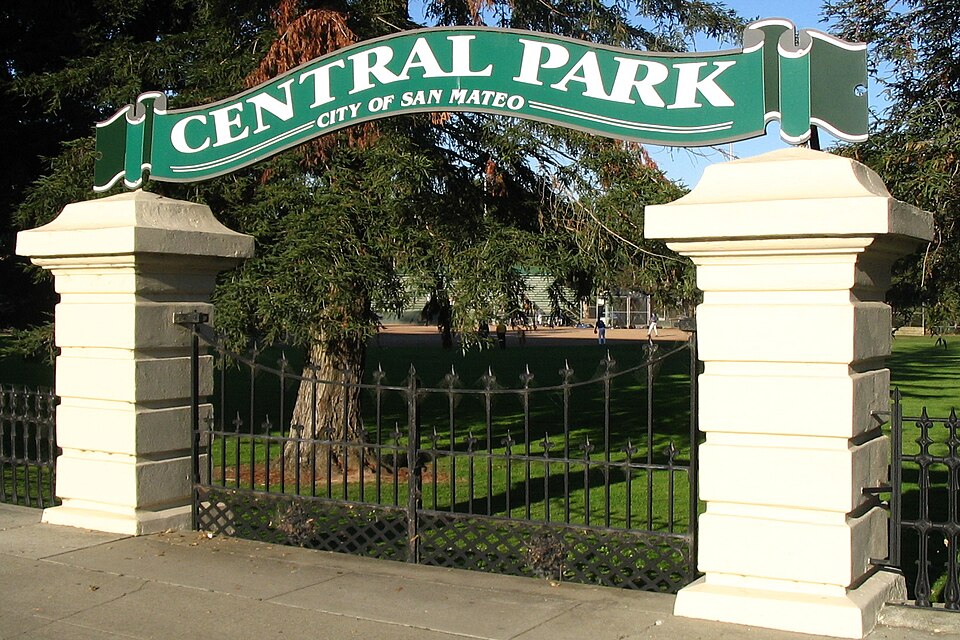
Central Park is the heart of San Mateo’s park system. Spanning 16 acres, it features a rose garden, a playground, picnic areas, and a miniature railroad that has delighted children since 1949. Inside Central Park sits the San Mateo Japanese Garden, a traditional Japanese-style garden built in 1966 that includes a koi pond, stone lanterns, and carefully pruned trees. Coyote Point Recreation Area occupies 670 acres along the bayfront, offering a beach, hiking trails, and CuriOdyssey, a hands-on science and wildlife center home to animals like river otters, hawks, and bobcats.
The San Mateo Bridge
The San Mateo-Hayward Bridge is one of the most prominent landmarks in the area. Stretching 7.1 miles across San Francisco Bay, it connects San Mateo on the Peninsula to Hayward in the East Bay. The original bridge opened in 1929 and was one of the first automobile bridges to span the bay. The current bridge, which replaced the original, opened in 1967 and was further updated in 2002. It carries approximately 93,000 vehicles per day and is the longest bridge in the San Francisco Bay Area.
Economy and Technology
Like much of Silicon Valley, San Mateo has become a hub for technology companies. GoPro, the company known for its rugged action cameras, is headquartered in San Mateo. The city also hosts offices for companies like SurveyMonkey, Roblox, and several biotech firms. Downtown San Mateo has a thriving commercial district along B Street and Third Avenue, filled with restaurants, shops, and a farmers market. San Mateo’s Caltrain station connects the city to San Francisco and cities to the south, making it convenient for commuters.
Climate and Geography
San Mateo enjoys a mild Mediterranean climate with warm, dry summers and cool, wet winters. Average high temperatures range from about 57 degrees Fahrenheit in January to 75 degrees in September. The city receives around 20 inches of rain per year, almost all of it between November and April. San Mateo sits between the bay to the east and the wooded hills of the Coast Range to the west, giving it a mix of flat bayside neighborhoods and hillside areas with views of the bay.
Fun Facts
- The San Mateo-Hayward Bridge is 7.1 miles long, making it the longest bridge in the San Francisco Bay Area.
- Central Park’s miniature railroad has been giving rides to children since 1949.
- The 1906 San Francisco earthquake drove many families to San Mateo, doubling the city’s population within a few years.
- GoPro, the action camera company, has its headquarters in San Mateo.
- The San Mateo Japanese Garden was built in 1966 and is one of the oldest Japanese gardens on the Peninsula.
- San Mateo County, which the city is part of, was created in 1856 and named after the city.
 OtterKnow Kids Encyclopedia