History
For thousands of years before European contact, the Ohlone people inhabited the area that is now Cupertino. They lived in villages along Stevens Creek and other waterways, gathering acorns, hunting deer, and fishing. In 1776, Spanish explorer Juan Bautista de Anza led an expedition through the Santa Clara Valley. A cartographer on the expedition named a nearby creek “Arroyo de San José de Cupertino” after Saint Joseph of Cupertino, an Italian friar from the 1600s who was said to have the ability to levitate.
Through the 1800s and early 1900s, the area was agricultural land, part of the vast orchards that gave the Santa Clara Valley its nickname, the Valley of Heart’s Delight. Farmers grew cherries, apricots, prunes, and grapes across the sunny hillsides. Cupertino incorporated as a city in 1955, just as the region was beginning its shift from farming to technology. The opening of De Anza College in 1967 brought new growth, and by the 1970s, tech companies were replacing orchards throughout the valley.
Apple and the Tech Industry
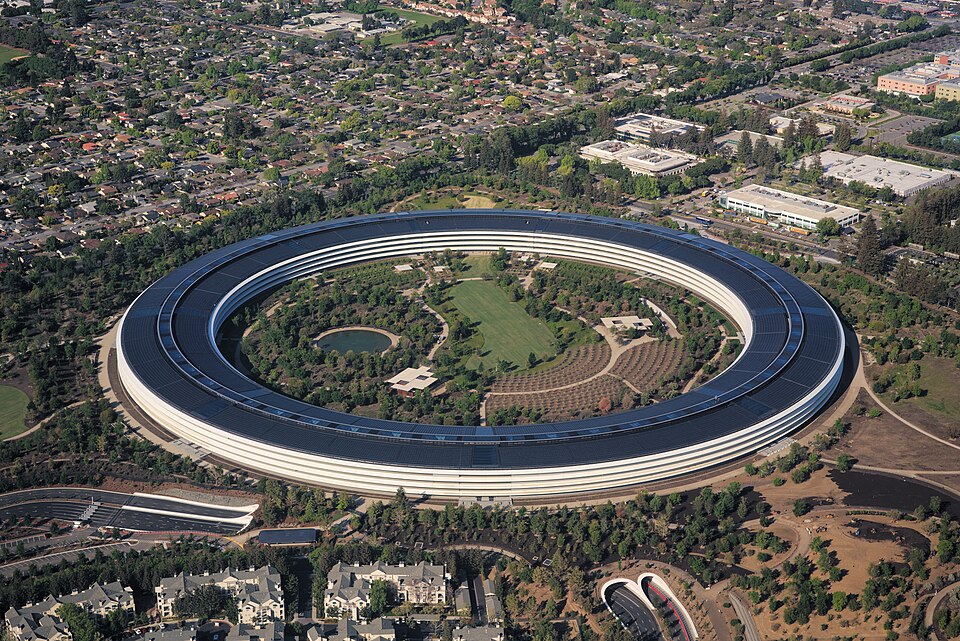
Cupertino’s identity is closely linked to Apple Inc. In 1977, Steve Jobs and Steve Wozniak co-founded Apple Computer, and the company moved its headquarters to Cupertino’s Bandley Drive in the early 1980s. Today, Apple’s headquarters is Apple Park, a massive campus that opened in 2017. The main building, designed by the architecture firm Foster + Partners, is a ring-shaped structure spanning 2.8 million square feet, surrounded by over 9,000 drought-resistant trees. The campus includes a 1,000-seat theater named after Steve Jobs, a visitor center open to the public, and one of the largest solar roof installations in the world.
Beyond Apple, Cupertino is home to offices for many other technology companies. The city’s location at the center of Silicon Valley means that thousands of engineers, designers, and researchers live and work in the area, contributing to one of the most innovative regions on the planet.
Schools and Education
Cupertino is well known for its outstanding public schools. The Cupertino Union School District serves elementary and middle school students, and many of its schools have received California Distinguished School awards. Monta Vista High School, part of the Fremont Union High School District, is consistently ranked among the top public high schools in the United States. De Anza College, a community college located in the city, serves over 20,000 students and is one of the largest single-campus community colleges in the country.
Parks and Nature
Despite being in the middle of Silicon Valley, Cupertino has excellent access to nature. The city borders the Santa Cruz Mountains to the west, providing hiking and biking trails in the surrounding foothills. Memorial Park is one of the city’s most popular parks, with playgrounds, sports fields, and picnic areas. The Stevens Creek Trail follows the creek through the city, connecting neighborhoods to parks and open spaces. Rancho San Antonio Open Space Preserve, located at the edge of Cupertino, offers miles of trails through rolling hills where visitors can spot deer, hawks, and even bobcats.
Community and Culture
Cupertino is one of the most diverse cities in the Bay Area. Over 60% of residents were born outside the United States, with large communities of people from China, India, Japan, Korea, and other Asian countries. This diversity is reflected in the city’s restaurants, cultural festivals, and community events. The Cupertino Library, part of the Santa Clara County Library system, is one of the busiest libraries in the county and hosts programs in multiple languages.
Fun Facts
- Cupertino is named after Saint Joseph of Cupertino, a 17th-century Italian friar who was reportedly able to levitate during prayer.
- Apple Park’s ring-shaped building is so large that its circumference is about one mile.
- The city was once farmland covered in fruit orchards, and some old orchard trees can still be found in older neighborhoods.
- More than 60% of Cupertino’s residents were born in another country, making it one of the most internationally diverse cities in California.
- De Anza College is named after Juan Bautista de Anza, the Spanish explorer whose expedition gave the area its name.
- The Apple Park Visitor Center is one of the few parts of Apple’s campus that is open to the general public.
 OtterKnow Kids Encyclopedia