History
The Ohlone (Huchiun) people lived in the Berkeley area for thousands of years before Spanish missionaries arrived in the late 1700s. The land was part of a Mexican rancho until California became a state in 1850. In 1866, the College of California chose a site in the Berkeley hills for a new campus, naming it after the Irish philosopher George Berkeley. The University of California opened there in 1873 and quickly became a world-class research institution. During World War II, scientists at the university’s Radiation Laboratory played a key role in nuclear research. In the 1960s, Berkeley gained national attention when students launched the Free Speech Movement, demanding the right to political expression on campus. This movement helped inspire student activism across the country.
The University of California, Berkeley
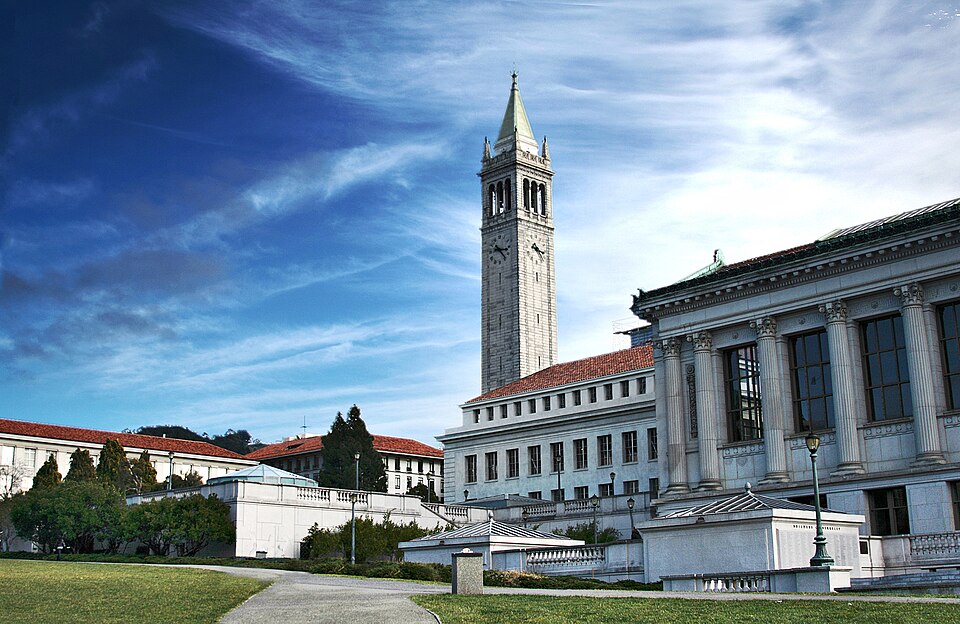
UC Berkeley is a major research university with over 45,000 students. Its campus covers about 1,232 acres and features a mix of historic and modern buildings. Sather Tower, also known as the Campanile, stands 307 feet tall and is the third-tallest bell and clock tower in the world, housing 61 bells. The university is home to the Lawrence Berkeley National Laboratory, where scientists have made groundbreaking discoveries in physics, chemistry, and biology. Researchers at Berkeley have discovered 16 chemical elements — more than any other institution — and the university has produced dozens of Nobel Prize winners. UC Berkeley is also a powerhouse in athletics, with its sports teams (the California Golden Bears) competing in the Pac-12 Conference.
Parks and Nature
The Berkeley Hills rise steeply behind the city, offering miles of hiking trails and wide views of the bay and the Golden Gate Bridge. Tilden Regional Park, a 2,079-acre park in the hills, features a botanical garden with California native plants, a swimming lake (Lake Anza), a miniature steam railroad, and the Little Farm where children can interact with farm animals. The UC Botanical Garden, located in Strawberry Canyon, holds over 10,000 plant species from around the globe. Along the waterfront, the Berkeley Marina provides access to the bay with a fishing pier that extends about 3,000 feet into the water, offering views of San Francisco and the Golden Gate Bridge.
Culture and Community
Berkeley has long been a center of progressive thought and cultural diversity. Its downtown area, centered on Shattuck Avenue, is filled with independent bookstores, cafes, and restaurants. The Gourmet Ghetto neighborhood in North Berkeley is where chef Alice Waters opened Chez Panisse in 1971, helping launch the farm-to-table food movement that changed how Americans think about cooking and eating. Fourth Street in West Berkeley has become a popular shopping and arts district. The city is also home to numerous theaters, music venues, and the Berkeley Art Museum and Pacific Film Archive (BAMPFA), which houses one of the largest university art collections in the country.
Accessibility and Innovation
Berkeley has been a national leader in disability rights. In the 1960s and 1970s, Ed Roberts and other disability rights activists based in Berkeley fought for accessible public spaces. Berkeley became one of the first cities in the United States to install curb cuts on sidewalks, making streets accessible to wheelchair users. This movement led to the founding of the first Center for Independent Living in 1972 and helped pave the way for the Americans with Disabilities Act of 1990.
Fun Facts
- Scientists at UC Berkeley have discovered 16 chemical elements, including berkelium (element 97), which is named after the city.
- Sather Tower’s 61 bells range in weight from 19 pounds to nearly 5 tons.
- The Berkeley Pit Stop program was one of the first in the nation to provide free, staffed public restrooms.
- The city’s annual Solano Avenue Stroll is one of the largest street festivals in the East Bay, attracting tens of thousands of visitors.
- Berkeley’s 1969 “People’s Park” protest over a vacant university lot became one of the most famous confrontations of the era.
 OtterKnow Kids Encyclopedia