Early History and Military Era
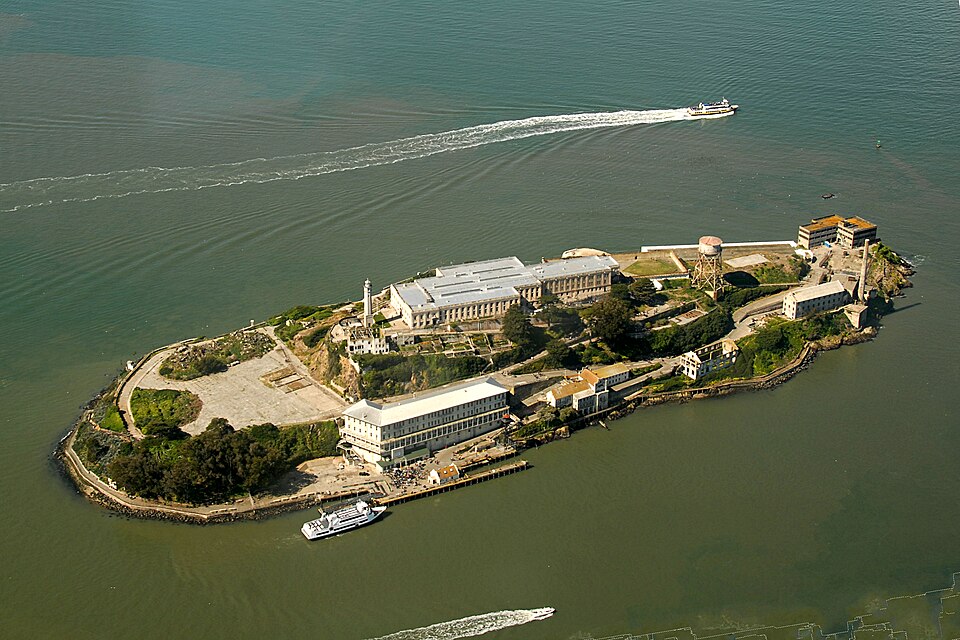
The first European to document the islands of San Francisco Bay was the Spanish naval officer Juan Manuel de Ayala, who charted the bay in 1775. The island’s name comes from the Spanish word “alcatraces,” which referred to pelicans and other sea birds that nested there. In the 1850s, during the California Gold Rush, the United States Army recognized the island’s strategic location and built a military fortress there to defend San Francisco Bay. The island’s first lighthouse, completed in 1854, was the first lighthouse built on the entire West Coast of the United States. By the 1860s, the fortress had also become a military prison, holding Civil War prisoners and later military convicts.
The Federal Penitentiary
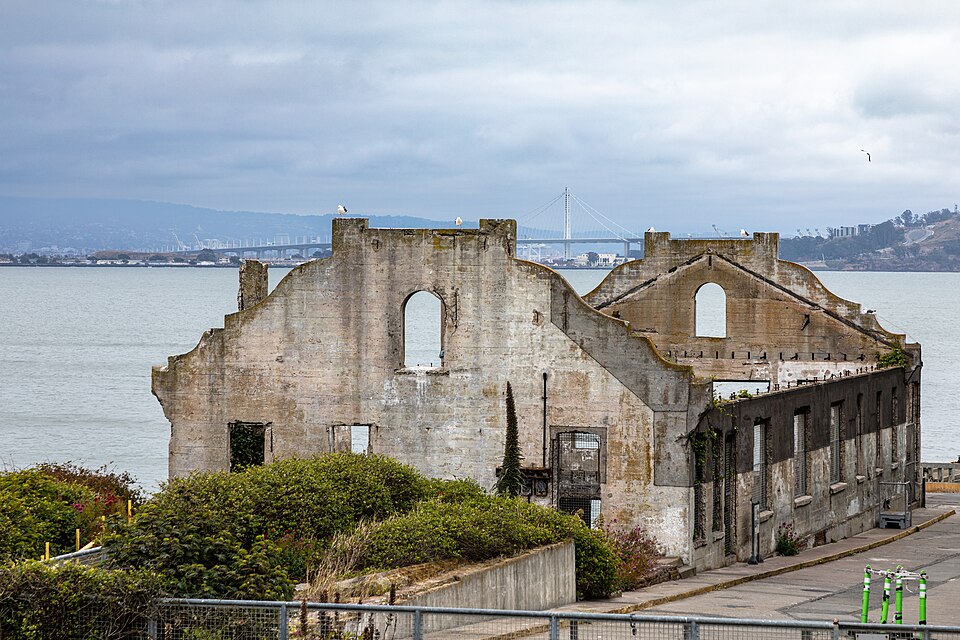
In 1934, the U.S. Department of Justice converted Alcatraz into a maximum-security federal penitentiary designed to hold the most dangerous and escape-prone prisoners in the country. The icy waters of San Francisco Bay, with temperatures averaging 50 to 55 degrees Fahrenheit (10 to 13 degrees Celsius) and powerful tidal currents, made escape nearly impossible. Each prisoner’s cell measured just 5 feet (1.5 meters) wide by 9 feet (2.7 meters) long. Among the prison’s most famous inmates were the gangster Al Capone, George “Machine Gun” Kelly, and Robert Stroud, known as the “Birdman of Alcatraz.” Over its 29 years of operation, there were 14 escape attempts involving 36 prisoners, but officially no one ever successfully escaped.
Closure and Cost
The federal penitentiary closed on March 21, 1963, primarily because it was extremely expensive to operate. Running the prison cost nearly 10 dollars per prisoner per day, compared to just 3 dollars per day at other federal prisons like the one in Atlanta. Because there was no natural source of fresh water on the island, approximately one million gallons of water had to be transported from the mainland every single week. The combination of these high costs and the deteriorating condition of the saltwater-damaged buildings led Attorney General Robert F. Kennedy to order the prison’s closure.
The Native American Occupation
One of the most important chapters in Alcatraz’s history came after the prison closed. On November 20, 1969, a group of Native American activists calling themselves the “Indians of All Tribes” occupied the island to protest the U.S. government’s treatment of Indigenous peoples. They cited an 1868 treaty that they argued entitled unused federal land to be returned to Native Americans. The occupation lasted 19 months, ending in June 1971 when federal marshals removed the remaining occupants. Although the occupiers did not achieve their specific goal of establishing a Native American cultural center on the island, the protest drew national attention to Indigenous rights and is considered a turning point in the Native American civil rights movement.
Wildlife on the Island
Since the prison closed, Alcatraz has been gradually reclaimed by nature and is now one of the most important seabird nesting sites in the San Francisco Bay Area. Western Gulls were the first birds to return to the felon-free island, followed by Black-crowned Night-Herons and Pigeon Guillemots. Today the island hosts the third-largest breeding colony of Brandt’s Cormorants in the world, with up to 10,000 cormorants nesting on the flat areas and cliffs during peak nesting season. Other species include about 100 pairs each of Black-crowned Night-Herons and Snowy Egrets, plus Great Blue Herons and Black Oystercatchers. During peak nesting months, as many as 30,000 individual birds can be found living on the island.
Visiting Alcatraz Today
Alcatraz Island is accessible only by ferry from Pier 33 in San Francisco, with the boat ride taking about 15 minutes. Visitors can explore the main cellhouse, walk through the prison corridors, and listen to an award-winning audio tour that features recordings of former inmates and guards describing life on “The Rock.” The island also offers gardens originally planted by prisoners and military families, tide pools along the shoreline, and panoramic views of the San Francisco skyline, the Golden Gate Bridge, and the bay. Because of its popularity, ferry tickets often sell out weeks in advance, especially during the summer months.
 OtterKnow Kids Encyclopedia