The Nile’s Two Branches
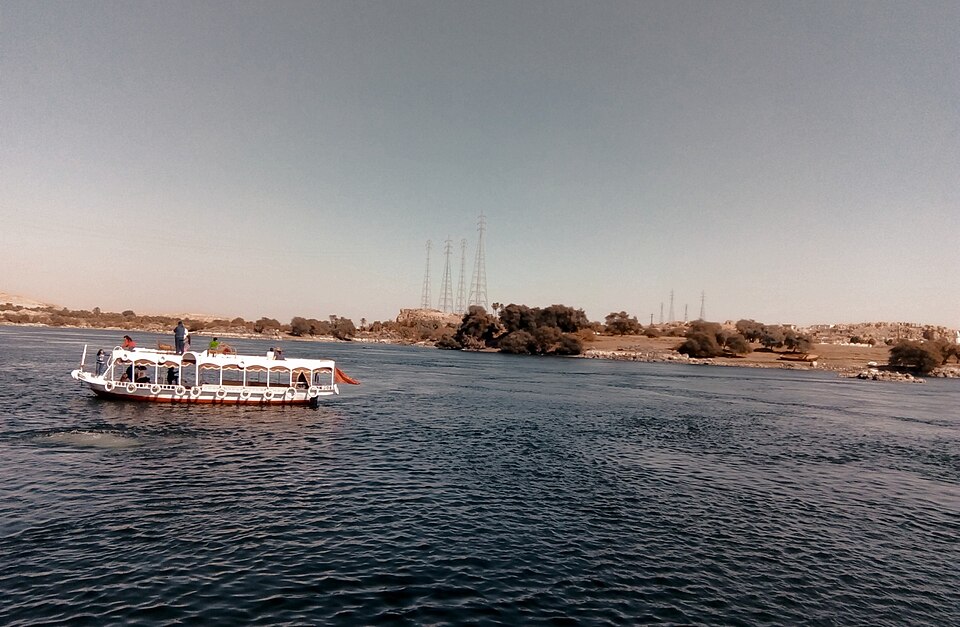
The Nile has two main branches called tributaries. The White Nile begins at Lake Victoria in Uganda and flows northward through South Sudan. The Blue Nile starts at Lake Tana in Ethiopia and joins the White Nile at Khartoum, the capital of Sudan. Even though it is called the “lesser” branch, the Blue Nile actually provides about 85 percent of the Nile’s water during flood season, carrying rich soil down from the Ethiopian highlands.
The Nile and Ancient Egypt
Ancient Egyptian civilization grew up along the banks of the Nile and depended on it for survival. Every year, the river flooded and deposited thick, dark silt across the surrounding land, turning dry desert into rich farmland. The Egyptians called this fertile soil “kemet,” meaning “black land,” and it allowed them to grow crops like wheat and barley in the middle of a desert. Without the Nile’s yearly floods, one of history’s greatest civilizations might never have existed.
The Aswan High Dam
In 1970, Egypt completed the Aswan High Dam in the southern part of the country to control the Nile’s unpredictable flooding. The dam created Lake Nasser, one of the world’s largest artificial lakes, stretching over 500 kilometers behind the dam wall. It generates large amounts of electricity and provides a reliable water supply for farming throughout the year. However, the dam also ended the annual flood cycle that had deposited fertile soil for thousands of years, so farmers now rely on chemical fertilizers instead.
The Nile Delta
Where the Nile reaches the Mediterranean Sea in northern Egypt, it fans out into a wide, triangle-shaped area called the Nile Delta. This delta is one of the most densely populated places on Earth, home to tens of millions of people and some of Egypt’s largest cities. The rich soil deposited over thousands of years makes the delta extremely productive farmland. Today, rising sea levels and reduced river flow threaten this low-lying region, making its future a serious concern for scientists and planners.
Wildlife Along the Nile
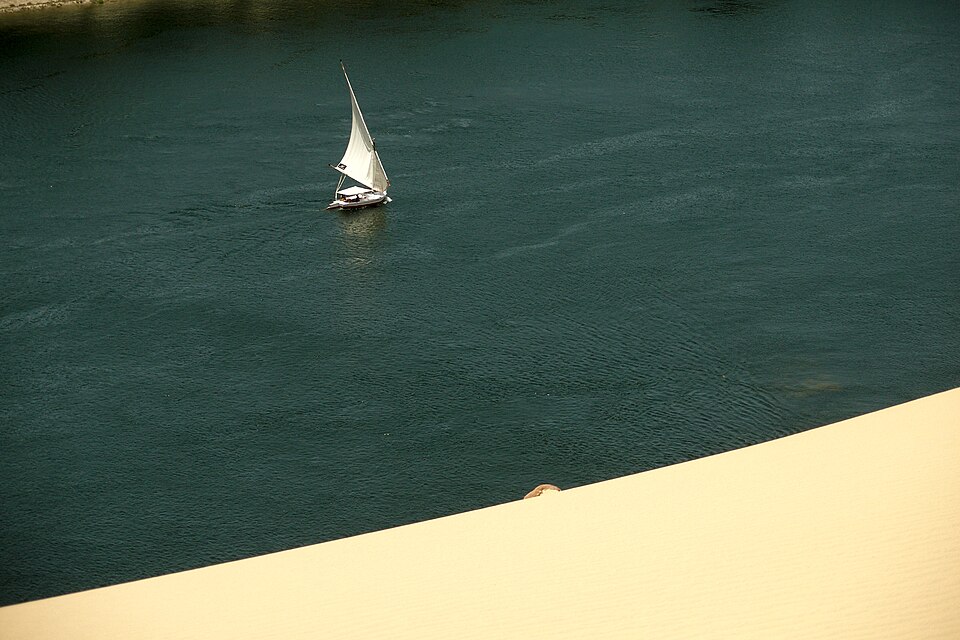
The Nile is home to a remarkable variety of animals and plants. The Nile crocodile, one of the largest reptile species in the world, has lived in the river for millions of years and can grow over five meters long. Hippos, herons, and many species of fish also depend on the river’s waters. Papyrus plants once grew thickly along the Nile’s banks, and ancient Egyptians used them to create one of the earliest forms of paper, which is how we get the word “paper” from “papyrus.”
The Nile’s Importance Today
The Nile remains a lifeline for the countries it flows through, providing drinking water, irrigation for crops, and a route for transporting goods. Egypt receives almost no rainfall, so the river supplies nearly all of the country’s fresh water. Countries upstream, including Ethiopia and Uganda, are building their own dams to generate electricity and store water, which has led to disagreements about how the river’s water should be shared. Finding fair solutions to these disputes is one of the biggest challenges facing the Nile region in the coming decades.
Fun Facts
- The Nile flows from south to north, which is unusual for such a major river, because the land slopes downhill toward the Mediterranean Sea.
- Ancient Egyptians used boats on the Nile as their main form of transportation, sailing south with the wind and floating north with the current.
- The word “Nile” likely comes from the Greek word “Neilos,” but the ancient Egyptians simply called it “iteru,” meaning “the river.”
- The Nile is so important to Egypt that an old saying goes, “Egypt is the gift of the Nile.”
 OtterKnow Kids Encyclopedia