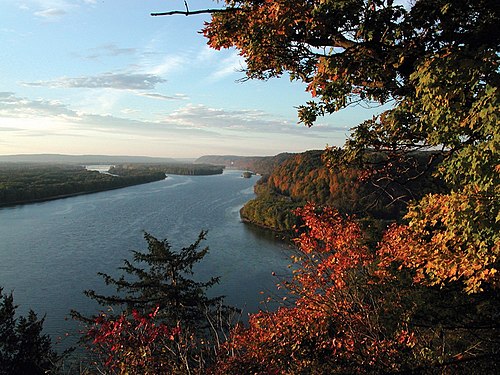
Geography and River Basin
The Mississippi drains the largest river basin in North America, covering about 3.2 million square kilometers. This enormous watershed stretches from the Appalachian Mountains in the east to the Rocky Mountains in the west, touching all or part of 32 U.S. states and two Canadian provinces. Hundreds of tributaries feed into the Mississippi, including the Missouri, Ohio, Arkansas, and Red Rivers. At its mouth in Louisiana, the river fans out into a wide delta of bayous, wetlands, and marshy islands before reaching the Gulf of Mexico. The Mississippi Delta is one of the richest ecosystems in North America.
Early History and Indigenous Peoples
Long before European explorers arrived, Indigenous peoples built thriving civilizations along the Mississippi. The Ojibwe, Dakota, Chickasaw, Choctaw, and many other nations depended on the river for food, water, and trade routes. The great city of Cahokia, near present-day St. Louis, was once one of the largest settlements in North America, home to tens of thousands of people around 1100 CE. Spanish explorer Hernando de Soto became one of the first Europeans to reach the Mississippi in 1541. French explorers later claimed the river valley, and control of the Mississippi became a key issue in the growth of the United States.
The River in American History
The Mississippi River played a central role in the development of the United States. After American independence, the river served as the western boundary of the young nation until the Louisiana Purchase of 1803 doubled the country’s size. Steamboats began traveling the river in the early 1800s, transforming it into a major highway for passengers and goods. Cities like St. Louis, Memphis, and New Orleans grew into bustling ports along its banks. The writer Mark Twain, who grew up along the Mississippi, captured life on the river in famous novels that are still read today.
Wildlife and Ecosystems
The Mississippi River and its surrounding wetlands support an incredible variety of life. More than 250 species of fish swim in its waters, including catfish, bass, and paddlefish. About 260 species of birds live along the river or use it as a migration route, including bald eagles, great blue herons, and pelicans. The river is also home to around 50 species of freshwater mussels, many of which are found in few other places. The bottomland forests, swamps, and marshes along the river provide habitat for alligators, river otters, and dozens of species of turtles and frogs.
Flooding and Flood Control
Flooding has been a constant challenge along the Mississippi. When heavy rains or snowmelt cause the river to rise, floodwaters can spread across vast areas of farmland and cities. The Great Mississippi Flood of 1927 was one of the most destructive river floods in United States history, displacing hundreds of thousands of people and covering 70,000 square kilometers. After that disaster, the U.S. Army Corps of Engineers built an extensive system of levees, floodwalls, and spillways to control the river. Despite these efforts, major floods still occur, reminding people of the river’s enormous power.
The River Today
Today, the Mississippi remains one of the busiest waterways in the world. Barges carry millions of tons of grain, coal, petroleum, and other goods up and down the river each year. The river also provides drinking water to millions of people in cities and towns along its path. However, the Mississippi faces environmental challenges, including pollution from agricultural runoff, loss of wetlands in the delta, and the spread of invasive species like Asian carp. Scientists and engineers are working to balance the river’s economic importance with the need to protect its ecosystems.
Fun Facts
The Mississippi River is so wide near its mouth that you cannot see from one bank to the other. At its source at Lake Itasca, however, the river is narrow enough to wade across in ankle-deep water. The river drops about 450 meters in elevation from its source to the Gulf of Mexico, a gentle slope that gives it a slow, winding character. The Mississippi carries an estimated 159 million metric tons of sediment to the Gulf each year, building and reshaping the delta over time. During spring floods, the river can be more than 11 kilometers wide in some places.
 OtterKnow Kids Encyclopedia