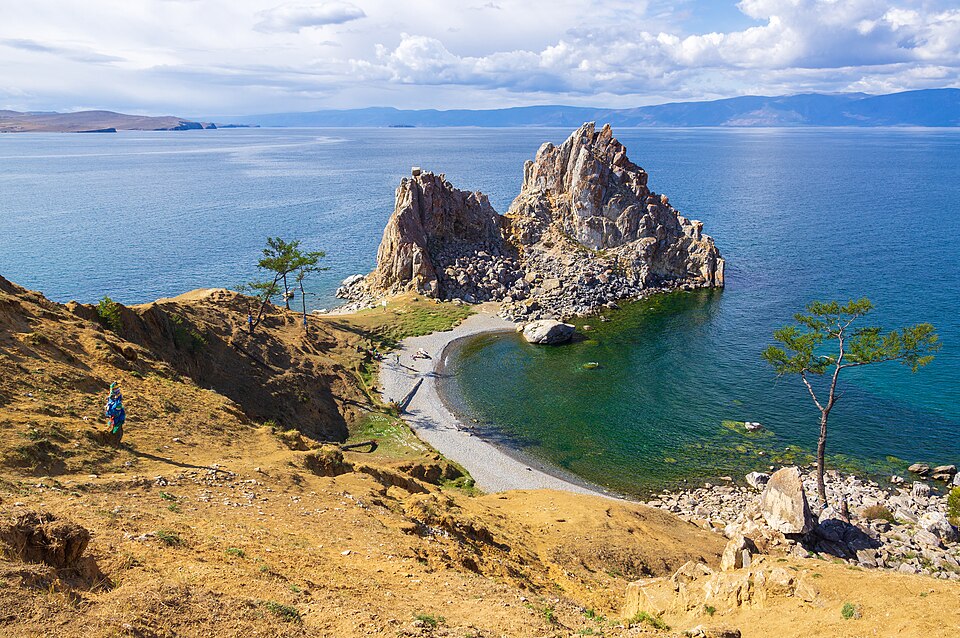
Crystal-Clear Water
One of the most unusual things about Lake Baikal is the clarity of its water. In some areas, objects can be seen up to 40 meters below the surface, making it one of the clearest lakes anywhere. This incredible transparency is partly thanks to tiny crustaceans called epischura that filter and clean the water by eating algae and bacteria. More than 300 rivers and streams flow into Lake Baikal, but only one river, the Angara, flows out of it. The lake is surrounded by mountains and dense forests of pine and birch, creating a dramatic and beautiful landscape.
Unique Wildlife
About 80 percent of the species living in Lake Baikal are found nowhere else on Earth. The most famous of these is the Baikal seal, also called the nerpa, which is the world’s only freshwater seal. Scientists are still not entirely sure how the nerpa’s ancestors reached this landlocked lake so far from the ocean. Another remarkable species is the golomyanka, a small fish with a nearly transparent body that gives birth to live young instead of laying eggs. The lake is also home to hundreds of unique species of snails, worms, sponges, and other invertebrates that evolved over millions of years.
Winter on the Lake
Lake Baikal freezes over every winter, usually from January through May. The ice can grow to be one to two meters thick, which is strong enough to support trucks and even cars driving across the frozen surface. The ice sometimes forms unusual patterns, including large cracks, bubbles of methane gas trapped beneath the surface, and striking turquoise-colored ice formations. In some winters, locals set up temporary roads and even markets on the frozen lake. When spring arrives, the ice breaks apart in dramatic fashion, creating thunderous sounds that can be heard from shore.
The People of Baikal
The indigenous Buryat people have lived around Lake Baikal for centuries and consider the lake sacred. In Buryat tradition, the lake is a living spirit deserving of respect and protection. Russian settlers began arriving in the region in the 1600s, and today the area is home to a mix of cultures and communities. The famous Trans-Siberian Railway, one of the longest railway lines in the world, runs along Baikal’s southern shore, offering travelers stunning views of the lake. Tourism has grown in recent years, with visitors coming from around the world to see the lake’s beauty.
A UNESCO World Heritage Site
Lake Baikal was designated a UNESCO World Heritage Site in 1996 in recognition of its unique natural value. The designation highlights the lake’s incredible biodiversity, its ancient age, and its importance as a freshwater resource. Scientists from many countries study the lake to learn about evolution, geology, and climate history. Sediment layers at the bottom of the lake hold a detailed record of climate changes stretching back millions of years. This makes Baikal not just a natural wonder but also a valuable scientific resource.
Threats and Conservation
Despite its remote location, Lake Baikal faces environmental challenges. Pollution from nearby factories and the city of Ulan-Ude has affected water quality in some areas. Algal blooms, which were once rare in the lake, have become more common in recent years due to nutrient pollution. Climate change is warming the lake’s water and reducing the amount of time it spends frozen each year. Conservation groups and the Russian government have taken steps to protect the lake, but balancing economic development with environmental preservation remains an ongoing challenge.
 OtterKnow Kids Encyclopedia