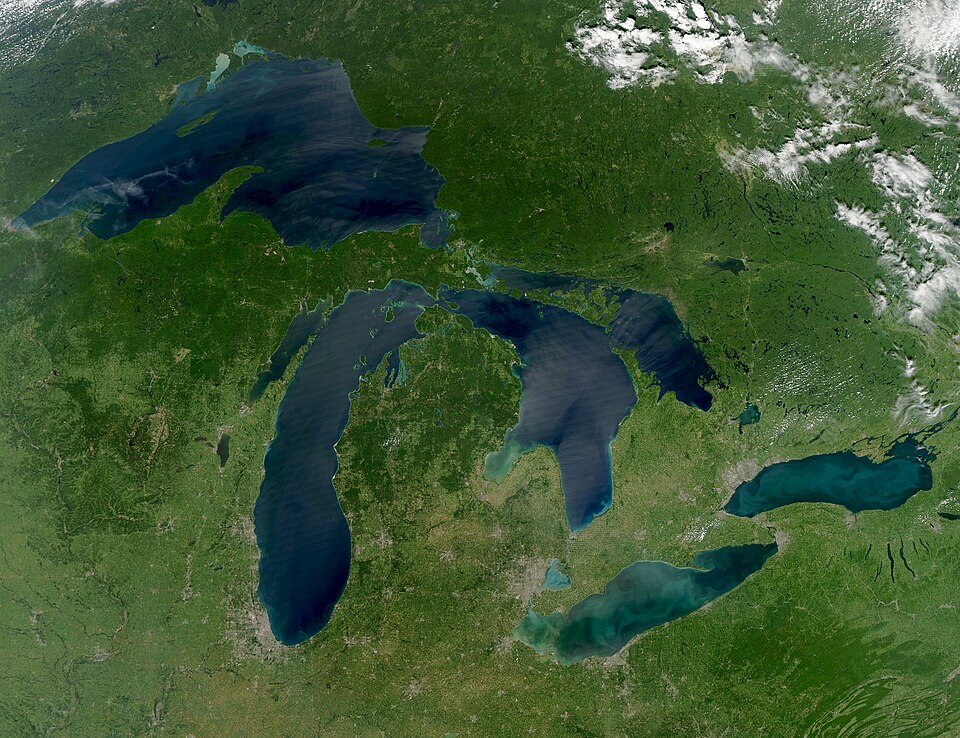
The Great Lakes were carved out by massive glaciers during the last ice age. As the glaciers slowly moved across the land, they scraped deep basins into the rock and soil beneath them. When the ice began to retreat about 10,000 to 14,000 years ago, meltwater filled these basins and created the lakes we see today. The enormous weight of the glaciers also pushed the land down, and even now, thousands of years later, parts of the region are still slowly rising back up.
A Closer Look at Each Lake
Lake Superior is the largest of the five by surface area and is also the largest freshwater lake by surface area in the world. Lake Michigan is the only Great Lake located entirely within the United States, while the other four are shared with Canada. Lake Huron is known for its thousands of islands, including Manitoulin Island, the largest freshwater island on Earth. Lake Erie is the shallowest and warmest of the five, and Lake Ontario is the smallest by surface area but much deeper than Erie. Water flows from Lake Superior through the other lakes and eventually reaches the St. Lawrence River, which carries it to the Atlantic Ocean.
People and the Great Lakes
About 30 million people in the United States and Canada depend on the Great Lakes for their drinking water. The lakes also support shipping, recreation, and tourism, and large cities like Chicago, Detroit, Cleveland, and Toronto sit along their shores. Commercial fishing has been important in the region for generations, with valuable species including lake trout, whitefish, walleye, and yellow perch. The lakes are connected to the ocean through the St. Lawrence Seaway, allowing large cargo ships to travel between the interior of North America and ports around the world.
Indigenous History
Indigenous nations have lived around the Great Lakes for thousands of years, long before European explorers arrived. The Ojibwe, Potawatomi, and Odawa peoples, known together as the Council of Three Fires, have deep cultural and spiritual connections to the lakes. The Haudenosaunee (Iroquois) Confederacy and many other nations also called the Great Lakes region home. These peoples fished, hunted, traded, and built thriving communities along the shores and waterways. Their knowledge of the land and water continues to shape conservation efforts in the region today.
Environmental Challenges
The Great Lakes face several serious environmental threats. Invasive species like sea lampreys, zebra mussels, and Asian carp have caused major ecological problems by disrupting the food chain and outcompeting native species. Pollution from factories, farms, and cities has at times made parts of the lakes unsafe for swimming or drinking. Harmful algal blooms, fueled by fertilizer runoff, have become a growing concern, especially in Lake Erie. Climate change is also affecting the lakes by altering water levels, ice cover, and water temperatures.
Protecting the Great Lakes
Governments in both the United States and Canada have worked together for decades to protect the Great Lakes. The Great Lakes Water Quality Agreement, first signed in 1972, set goals for reducing pollution and restoring water quality. Programs to control sea lampreys have helped native fish populations recover in some areas. Many organizations, tribes, and community groups also work to clean up shorelines, restore wetlands, and monitor water quality. Protecting the Great Lakes is important not only for the people and wildlife that depend on them but for the health of the entire continent’s freshwater supply.
 OtterKnow Kids Encyclopedia