Where It Flows
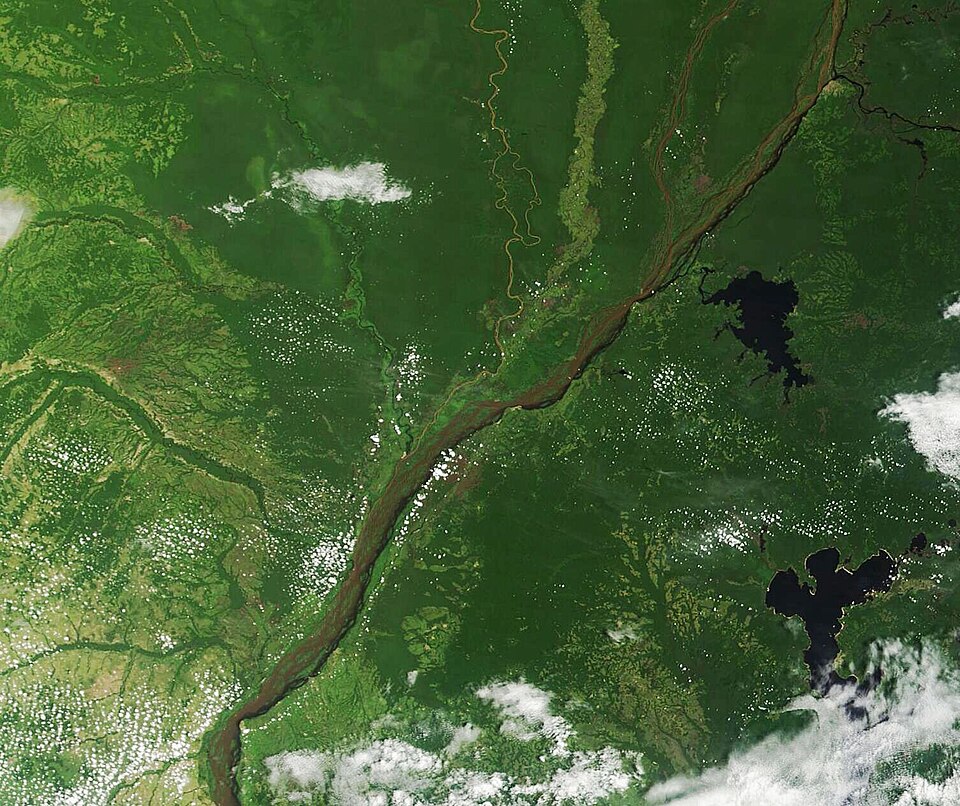
The Congo River begins its journey in the highlands of southeastern Democratic Republic of Congo, near the border with Zambia. From there it curves northward, crosses the equator, loops back southward, and crosses the equator a second time before emptying into the Atlantic Ocean. This winding path means the river passes through dense tropical rainforest for much of its length. It flows through the Democratic Republic of Congo and the Republic of Congo, and forms borders with several neighboring countries. The river finally reaches the sea at the city of Matadi, pouring a massive volume of freshwater into the Atlantic.
The Congo Basin and Its Climate
The Congo River drains a vast area known as the Congo Basin, which is home to the Congo Rainforest, the second-largest tropical rainforest in the world. Because the basin straddles the equator, its northern and southern tributaries experience opposite wet and dry seasons. When tributaries north of the equator are swollen with rain, those to the south are in their dry season, and vice versa. This balance means the Congo maintains a remarkably steady flow of water throughout the year. Few other major rivers in the world have such a constant water level across all seasons.
Unique Wildlife
The Congo River and its surrounding forests are home to a wide variety of wildlife. The river contains more than 700 species of fish, many of which are found nowhere else on Earth. One of the most famous is the goliath tigerfish, a fierce predator that can grow over one meter long and weigh up to 50 kilograms. The electric catfish, which can produce a jolt of electricity to stun prey, also lives in the Congo’s waters. In some places the river is so wide that fish populations on opposite banks evolved separately, developing into completely different species over thousands of years.
People and the River
The Congo River is a lifeline for tens of millions of people who live along its banks and tributaries. Communities depend on the river for drinking water, fishing, and farming on the fertile floodplains. Because roads and railways are scarce in much of central Africa, the Congo serves as a major transportation highway. Large barges and small wooden canoes carry people and goods between cities and villages. The river connects remote communities to larger towns and markets, making trade and travel possible across the vast rainforest region.
Inga Falls and Hydroelectric Power
Near the river’s mouth, the Congo drops steeply through a series of massive rapids known as Inga Falls. Although not a single tall waterfall, Inga Falls has one of the greatest flow rates of any waterfall system in the world. Engineers have long recognized the enormous potential for generating hydroelectric power at this site. Two smaller dams, Inga I and Inga II, already operate there, producing electricity for parts of central and southern Africa. Plans for a much larger project, called Grand Inga, could one day make it one of the biggest hydroelectric installations on the planet.
Exploration and History
European explorers first reached the mouth of the Congo in the late 1400s, but the river’s interior remained largely unknown to outsiders for centuries. In 1876-1877, the explorer Henry Morton Stanley became the first European to travel the full length of the river, a dangerous journey that took nearly three years. African peoples, of course, had navigated and lived along the Congo for thousands of years before any European arrival. During the colonial era the river became a route for resource extraction, a painful chapter in the region’s history. Today the countries along the Congo are working to manage the river’s resources for the benefit of their own people.
Why the Congo River Matters
The Congo River plays a critical role in the health of our planet. The surrounding rainforest absorbs huge amounts of carbon dioxide from the atmosphere, helping to slow climate change. The river’s basin is one of the most biodiverse places on Earth, sheltering gorillas, forest elephants, bonobos, and countless other species. Protecting the Congo River and its forests is important not just for the people of central Africa, but for the entire world. Scientists and conservation groups continue to study and advocate for the preservation of this remarkable river system.
 OtterKnow Kids Encyclopedia