An Ancient Ocean Remnant
Millions of years ago, the Caspian Sea was part of a vast ancient ocean called the Paratethys, which once stretched across much of central Eurasia. As the continents shifted and mountain ranges rose, the Paratethys was cut off from the world’s oceans and gradually shrank. The Caspian Sea is what remains of that ancient body of water, a landlocked remnant of a much larger sea. This ancient history explains why the Caspian contains saltwater and marine animals, even though it is surrounded entirely by land. Understanding this connection helps scientists learn about how Earth’s geography has changed over deep time.
Geography and Water
The Caspian Sea stretches about 1,200 kilometers from north to south, but its character changes dramatically along the way. The northern part is very shallow, fed by the Volga River — the longest river in Europe — which pours in huge amounts of freshwater. This makes the northern Caspian much less salty than the southern portion, where evaporation concentrates the salt. Overall, the Caspian’s salinity is about one-third that of the ocean, making it brackish rather than fully salty. The sea reaches its greatest depth of about 1,025 meters in the southern basin near Iran.
Wildlife of the Caspian
The Caspian Sea is home to a unique mix of animals found nowhere else on Earth. The Caspian seal is the only marine mammal that lives in the Caspian, and it is now an endangered species due to habitat loss and pollution. The sea is perhaps most famous for the beluga sturgeon, a massive fish that can grow up to 7 meters long and live for over 100 years. The eggs of the beluga sturgeon, known as beluga caviar, are one of the most expensive foods in the world. Other important species include several types of sturgeon, herring, and gobies that have adapted to the Caspian’s brackish waters over millions of years.
Natural Resources
Beneath the Caspian Sea and the land surrounding it lie enormous reserves of oil and natural gas. These resources have made the Caspian region one of the most important energy-producing areas in the world. Countries like Azerbaijan and Kazakhstan have built major industries around drilling for oil and gas from the seabed. Pipelines carry these fuels across continents to markets in Europe and Asia. While these resources bring wealth to the region, extracting them also raises serious concerns about pollution and damage to the Caspian’s fragile ecosystem.
A Shrinking Sea
One of the most alarming things happening to the Caspian Sea is that it is shrinking. Water levels have dropped significantly in recent decades, and scientists believe this trend is accelerating due to climate change. Rising temperatures increase evaporation from the surface, while reduced rainfall and water diversion from rivers feeding the Caspian mean less water flows in to replace what is lost. Some scientists predict the Caspian could lose as much as one-third of its surface area in the coming decades. This shrinkage threatens wildlife habitats, fishing communities, and the economies of all five surrounding countries.
People and Culture
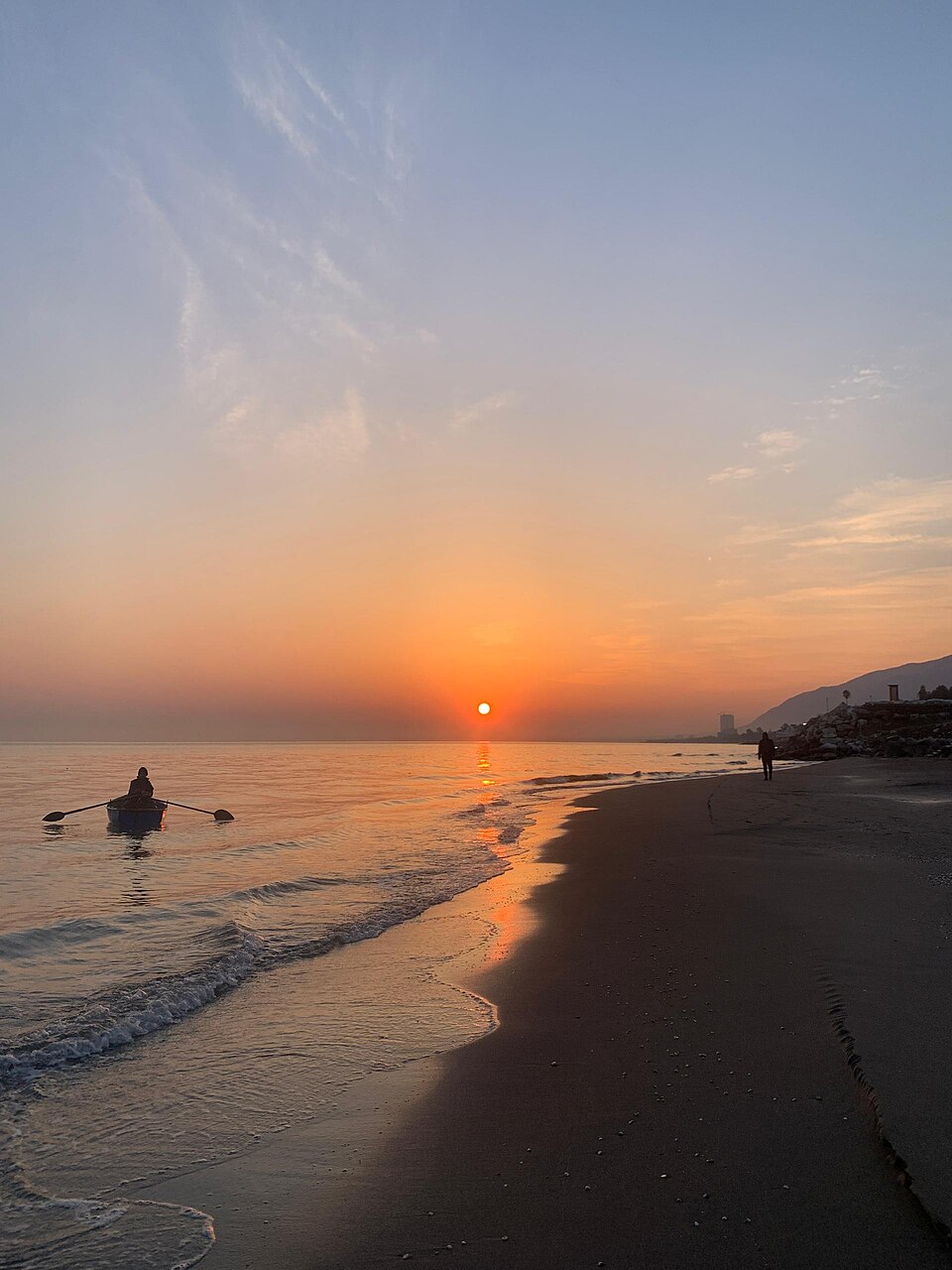
People have lived along the shores of the Caspian Sea for thousands of years, building cities, trading goods, and fishing its waters. The ancient Silk Road trade routes passed near the Caspian, connecting merchants traveling between China, Central Asia, and Europe. Today, major cities like Baku in Azerbaijan sit on the Caspian coast, blending modern industry with centuries of history. Fishing, especially for sturgeon, has been central to the culture and economy of Caspian communities for generations. The sea also serves as a transportation route, with ferries and cargo ships crossing between the five countries that share its shores.
Why the Caspian Sea Matters
The Caspian Sea is important for many reasons beyond its impressive size. It provides water, food, energy, and transportation to millions of people across five nations. Its unique wildlife, including species found nowhere else, makes it a priority for conservation scientists. The challenges facing the Caspian — shrinking water levels, overfishing, pollution, and climate change — mirror environmental problems found around the world. Studying and protecting the Caspian Sea teaches us important lessons about how human activity and natural forces together shape the future of our planet’s water resources.
 OtterKnow Kids Encyclopedia