Tidal Zones
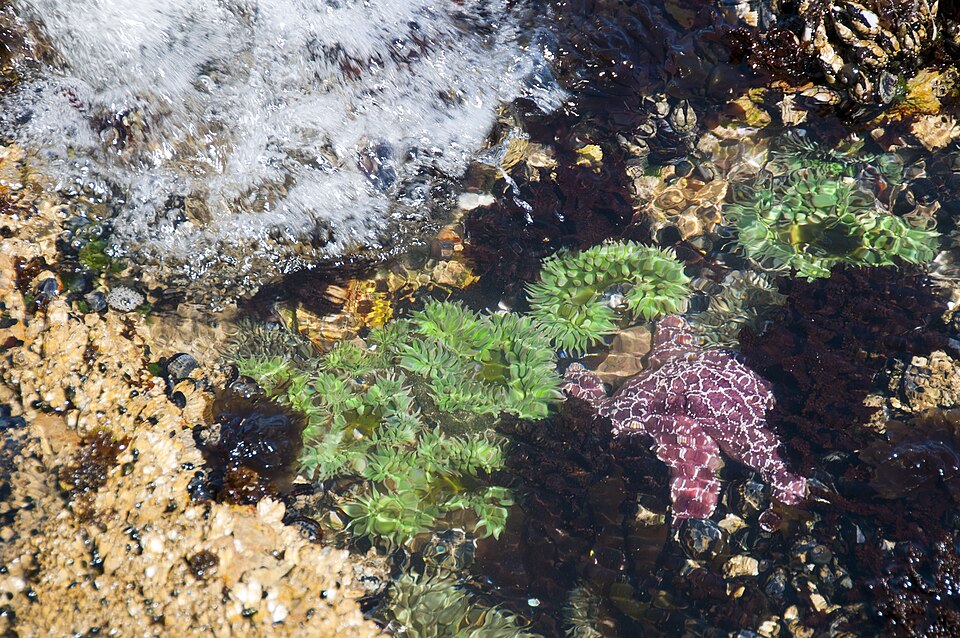
The rocky shore is divided into distinct zones based on how much time each area spends underwater. The splash zone sits highest on the shore and only gets wet from ocean spray. Hardy creatures like periwinkle snails and certain lichens survive here. Below that is the high intertidal zone, which is submerged only during the highest tides. Barnacles and tough green algae dominate this area. The middle intertidal zone is covered and uncovered twice daily and supports the greatest diversity of tide pool life, including sea stars, mussels, and anemones. The low intertidal zone is almost always underwater and is home to delicate organisms like sea urchins, sponges, and nudibranchs that cannot tolerate long exposure to air.
Organisms and Adaptations
Tide pool creatures face extreme challenges. Temperatures can swing wildly as the sun heats a shallow pool, and salinity changes when rain dilutes the water or evaporation concentrates the salt. Waves crash with tremendous force during storms. To survive, organisms have developed specific adaptations. Mussels and barnacles cement themselves firmly to rocks. Sea anemones can pull their tentacles inward and seal themselves into a blob of jelly to avoid drying out. Limpets create a watertight seal against the rock surface to trap moisture inside their shells. Sea stars grip the substrate with hundreds of tiny tube feet, each powered by a water vascular system unique to echinoderms.
Common Tide Pool Animals
Sea stars are among the most recognizable tide pool inhabitants. Most species have five arms and can regenerate a lost arm over time. The ochre sea star, common along the Pacific Ocean coast of North America, plays a critical role as a keystone predator by keeping mussel populations in check. Sea anemones look like underwater flowers but are predatory animals that use stinging cells on their tentacles to capture small prey. Hermit crabs are scavengers that protect their soft abdomens by living inside discarded snail shells, upgrading to larger shells as they grow. Sea urchins graze on algae using a structure called Aristotle’s lantern, a set of five hard teeth on their underside. Other common residents include chitons, sea cucumbers, shore crabs, and small fish called gobies and sculpins.
California Tide Pools
California’s coastline is one of the best places in the world to explore tide pools. The cold waters of the California Current bring nutrient-rich water that supports dense populations of marine life. Popular tide pool destinations include Cabrillo National Monument in San Diego, Crystal Cove State Park in Orange County, Fitzgerald Marine Reserve near Half Moon Bay, and the rocky shores of Pacific Grove near Monterey. The Monterey Bay area is especially rich because of the nearby Monterey Submarine Canyon, which channels deep-ocean nutrients close to shore. California has established Marine Protected Areas along much of its coastline to help conserve these fragile habitats.
Conservation
Tide pools face growing threats from human activity. Visitors sometimes accidentally crush organisms by stepping on them, or harm the ecosystem by collecting animals and shells. Pollution from coastal runoff introduces chemicals and trash into tide pool habitats. Rising ocean temperatures and ocean acidification linked to climate change are making it harder for shelled organisms like mussels and sea urchins to build and maintain their protective coverings. In recent years, sea star wasting disease devastated sea star populations along the Pacific coast, removing a key predator and causing shifts in the balance of tide pool communities. Conservation efforts include establishing marine protected areas, educating visitors about responsible tide pool etiquette, and monitoring populations to track ecosystem health over time.
Exploring Tide Pools Safely
The best time to visit a tide pool is during a low tide, especially during minus tides when the water drops even lower than usual. You can find tide charts online or at local visitor centers. When exploring, step only on bare rock and avoid touching or moving animals. Never turn over rocks, because many creatures shelter underneath and may not survive being exposed. Stay aware of incoming waves and keep an eye on the rising tide so you do not get stranded. Observing without disturbing helps keep tide pools healthy for the creatures that call them home and for future visitors to enjoy.
 OtterKnow Kids Encyclopedia