Size and Power
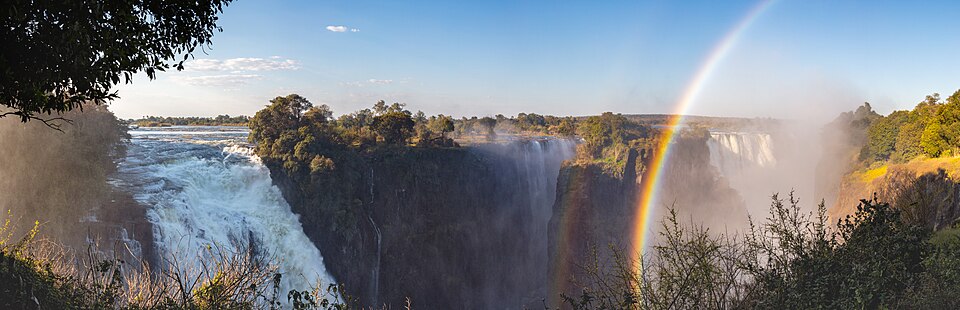
Victoria Falls holds the title of the world’s largest waterfall when you combine its width and height together. During peak flow, which usually happens around April at the end of the rainy season, about 500,000 cubic meters of water crash into the gorge every minute. That is an almost unimaginable amount of water, enough to fill hundreds of swimming pools every second. The force of the falling water sends a column of spray hundreds of meters into the air, which can be seen from a great distance and is what inspired the name “The Smoke That Thunders.”
The Rainforest on the Edge
One of the most unusual features of Victoria Falls is the strip of rainforest that grows along the opposite lip of the gorge. The constant spray from the falls keeps this forest wet all year round, even during the dry season when the surrounding landscape turns brown and dry. This narrow band of lush, green forest is home to unique plants and animals that thrive in the permanent mist. Visitors walking along the trails through this rainforest often get completely soaked by the spray, as if standing in a rainstorm.
History and Discovery
Indigenous peoples, including the Tonga and other groups, knew about and lived near the falls for thousands of years. The Scottish explorer David Livingstone became the first European to see the falls in 1855, during his journey across the African continent. He named them after Queen Victoria of Britain. Today, both the Zambian and Zimbabwean sides of the falls are protected as a UNESCO World Heritage Site, jointly designated under the name “Mosi-oa-Tunya / Victoria Falls.” This recognition helps ensure the falls and their surroundings are preserved for future generations.
Wildlife Along the Zambezi
The Zambezi River and the areas around Victoria Falls are rich with wildlife. Hippos and crocodiles live in the river both upstream and downstream of the falls. Elephants, zebras, and giraffes can be spotted in the surrounding national parks on both sides of the border. The river is also home to many species of fish, and birdwatchers come to see birds like fish eagles, herons, and kingfishers. The combination of river, forest, and savanna habitats makes this region one of the most diverse wildlife areas in southern Africa.
The Gorges Below
Below the falls, the Zambezi River rushes through a series of deep, zigzagging gorges carved into the basalt rock over millions of years. The Batoka Gorge, just downstream, is famous for extreme adventure activities including bungee jumping from a 111-meter-high bridge, whitewater rafting through some of the world’s most challenging rapids, and zip-lining across the canyon. These gorges were formed as the falls slowly moved upstream over time, cutting new channels into the rock. Geologists believe the falls have been retreating in this way for tens of thousands of years.
Seasons and Water Flow
The amount of water flowing over Victoria Falls changes dramatically throughout the year. During the wet season, from February to May, the Zambezi swells with rain and the falls are at their most powerful, producing enormous clouds of spray. During the dry season, from September to November, parts of the falls can slow to a trickle, and in some spots the rock face is completely exposed. This seasonal variation gives the falls a very different character depending on when you visit. Some travelers prefer the dramatic power of the wet season, while others enjoy the dry season when they can see the gorge walls and rock formations more clearly.
Visiting Victoria Falls
Victoria Falls is one of the most popular tourist destinations in Africa, drawing visitors from all over the world. The town of Victoria Falls in Zimbabwe and the town of Livingstone in Zambia both serve as gateways to the falls. Visitors can view the falls from trails along the gorge rim, take helicopter flights for an aerial view, or go on boat cruises on the Zambezi at sunset. The falls are sometimes called one of the Seven Natural Wonders of the World. Whether seen from the ground, the air, or the river, Victoria Falls leaves a lasting impression on everyone who experiences its thundering power.
 OtterKnow Kids Encyclopedia