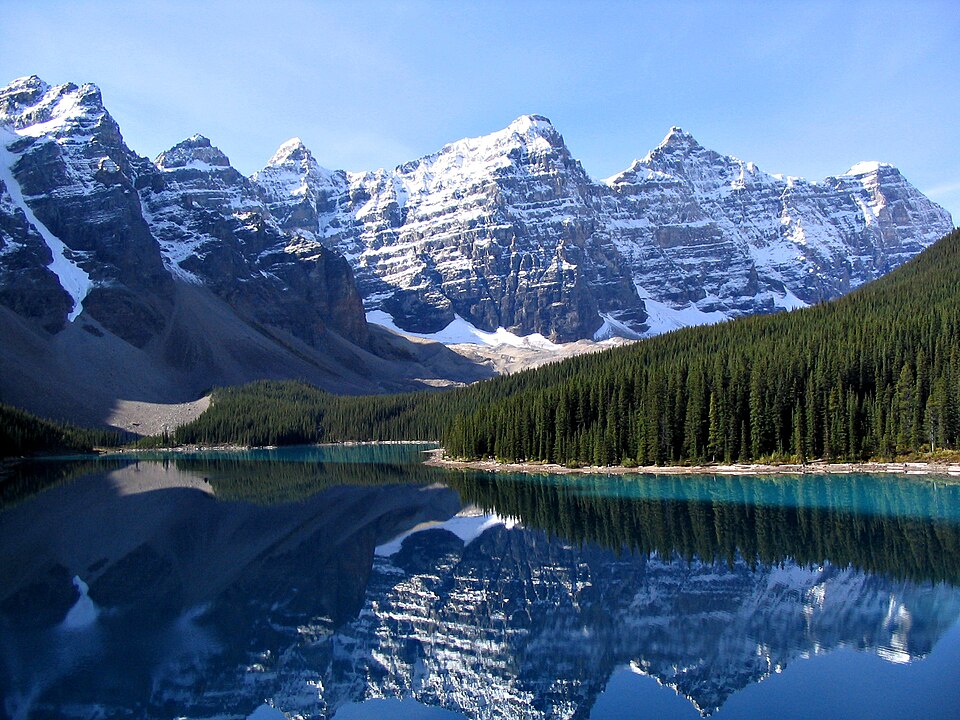
The Rocky Mountains were created by powerful forces deep inside the Earth. Between about 80 and 55 million years ago, tectonic plates beneath the surface collided, pushing layers of rock upward and folding them into towering peaks. This long period of mountain building is called the Laramide orogeny. Over time, wind, rain, and glaciers wore down parts of the mountains and carved out deep valleys, dramatic cliffs, and wide basins. The Rockies are much older than some other western ranges, and their geology includes ancient rocks more than a billion years old.
Peaks and Geography
The highest peak in the Rocky Mountains is Mount Elbert in Colorado, which rises to 4,399 meters (14,440 feet) above sea level. Colorado alone has more than 50 peaks over 14,000 feet, known as “fourteeners.” One of the most important geographic features of the Rockies is the Continental Divide, a line running along the crest of the range. Water that falls on the east side of the Divide flows toward the Atlantic Ocean and the Gulf of Mexico, while water on the west side flows toward the Pacific Ocean. Major rivers including the Missouri, Arkansas, Colorado, Snake, and Columbia all begin in the Rockies.
Wildlife
The Rocky Mountains are home to many animals adapted to mountain life. Large mammals like grizzly bears, gray wolves, elk, moose, and mountain lions roam the forests and meadows. Mountain goats and bighorn sheep are expert climbers, scrambling across steep rocky slopes with ease. Smaller animals such as pikas, marmots, and wolverines live at higher elevations where conditions are harsh. The rivers and streams of the Rockies support populations of trout and other fish, while bald eagles, golden eagles, and peregrine falcons soar above the peaks.
National Parks
Some of the most famous national parks in the United States are found in the Rocky Mountains. Yellowstone National Park, located mostly in Wyoming, was the world’s first national park when it was established in 1872. It is famous for its geysers, hot springs, and abundant wildlife. Rocky Mountain National Park in Colorado attracts millions of visitors each year with its alpine meadows, mountain lakes, and scenic Trail Ridge Road. Glacier National Park in Montana is known for its rugged peaks and remaining glaciers. Banff and Jasper National Parks in the Canadian Rockies are equally spectacular.
Indigenous Peoples
Indigenous peoples have lived in and around the Rocky Mountains for thousands of years. Nations including the Blackfeet, Shoshone, Ute, Crow, and Nez Perce made their homes in the mountain valleys and surrounding plains. They hunted bison, elk, and deer, gathered plants for food and medicine, and traveled through mountain passes to trade with other groups. Many of these nations developed deep knowledge of the land, seasons, and wildlife of the Rockies. Their connection to these mountains continues today, and many Indigenous communities remain in the region.
Exploration and Westward Expansion
The Rocky Mountains were a major barrier for European and American explorers heading west. The Lewis and Clark Expedition (1804-1806), sent by President Thomas Jefferson, crossed the Rockies with help from the Shoshone guide Sacagawea to reach the Pacific Ocean. Later, fur trappers known as “mountain men” explored the range in search of beaver pelts. The discovery of gold and silver in the mid-1800s brought waves of settlers into the Rockies during the gold rush era. Towns like Denver, Colorado, and Helena, Montana, grew rapidly as mining camps turned into permanent cities.
The Rockies Today
Today the Rocky Mountains are a popular destination for outdoor recreation, including hiking, skiing, rock climbing, fishing, and camping. The region also faces modern challenges, including wildfire, drought, and the effects of climate change on snowpack and wildlife habitats. Conservation efforts work to protect the forests, rivers, and animals that depend on the mountain ecosystem. The Rockies remain one of North America’s most important natural landmarks, providing water, resources, and wild spaces for millions of people and countless species.
 OtterKnow Kids Encyclopedia