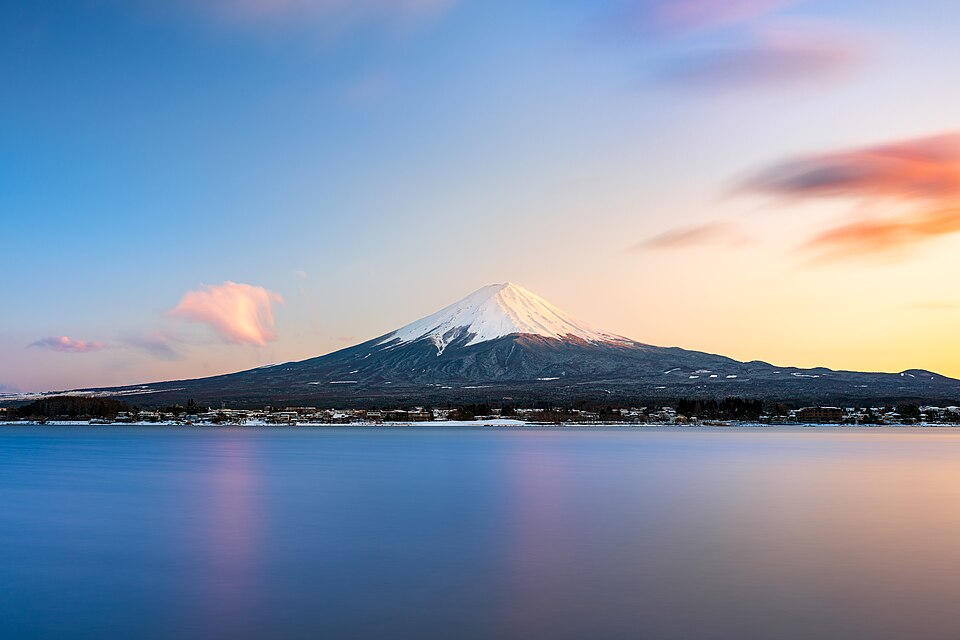
A Sleeping Volcano
Mount Fuji is a stratovolcano, a type of volcano known for its steep sides and symmetrical cone shape built up from layers of hardened lava and volcanic ash. The mountain last erupted in 1707 during what is called the Hoei eruption, which sent ash falling over Edo, the city now known as Tokyo. Although Mount Fuji has not erupted in over 300 years, scientists do not consider it extinct. Volcanologists continue to monitor the mountain carefully using instruments that detect earthquakes and changes underground. If Fuji were to erupt today, millions of people living nearby could be affected.
A Sacred Mountain
Mount Fuji has been considered a sacred place in both Shinto and Buddhist traditions for well over a thousand years. Pilgrims have climbed the mountain as a spiritual journey since ancient times, believing the climb brought them closer to the divine. Shinto shrines can be found at the base and summit of the mountain, and priests hold ceremonies there throughout the year. For centuries, women were not allowed to climb Mount Fuji because of religious rules, a ban that was not lifted until 1872. Today, the mountain remains a place of deep cultural and spiritual meaning for the Japanese people.
Mount Fuji in Art
Few mountains have inspired as much art as Mount Fuji. In the 1830s, the Japanese artist Katsushika Hokusai created his famous series called “Thirty-six Views of Mount Fuji,” which included 46 woodblock prints showing the mountain from different locations and in different seasons. One of those prints, known as “The Great Wave off Kanagawa,” became one of the most recognized works of art in the world. Japanese poets have written about Fuji for centuries, and the mountain appears in countless paintings, photographs, and stories. Artists and writers around the world still look to Mount Fuji as a subject.
Climbing Mount Fuji
About 200,000 people climb Mount Fuji each year, most of them during the official climbing season from July to September. There are four main routes to the summit, and each one begins at a “fifth station” located at an elevation between 2,000 and 2,400 meters. Many climbers start in the afternoon, hike through the night, and reach the top just in time to watch the sunrise, a tradition called “goraiko.” The climb takes between five and twelve hours depending on the route and the climber’s pace. While the trail does not require technical climbing equipment, the high altitude and steep paths make it a serious physical challenge.
Weather and Environment
The weather on Mount Fuji can change quickly and can be harsh even during the summer climbing season. Temperatures near the summit often drop below freezing, and strong winds can make conditions dangerous for hikers. Snow covers the upper slopes for much of the year, usually from October through May. The mountain’s lower slopes are covered with forests that are home to deer, bears, and many species of birds. Five beautiful lakes sit at the northern base of the mountain, known as the Fuji Five Lakes, and are popular destinations for visitors year-round.
Protecting Mount Fuji
The popularity of Mount Fuji has created challenges for protecting its natural environment. Large numbers of climbers leave behind trash, and erosion from heavy foot traffic damages the mountain’s trails and slopes. In recent years, Japan has introduced fees and crowd limits to reduce the impact of tourism on the mountain. Volunteers organize cleanup hikes each year to collect litter left behind on the trails. Balancing the desire of people to experience Mount Fuji with the need to protect it for the future remains an important goal for Japan.
Mount Fuji Today
Mount Fuji continues to be one of Japan’s most visited and most beloved landmarks. The area around the mountain attracts millions of tourists each year who come to hike, take photographs, and enjoy the hot springs in nearby towns. The mountain plays a role in Japanese festivals, appears on currency, and is featured in advertisements and logos around the country. Scientists keep a close watch on the volcano, and Japan has detailed evacuation plans in case it ever erupts again. Whether seen from a bullet train window or climbed to its summit, Mount Fuji remains a powerful symbol of natural beauty.
 OtterKnow Kids Encyclopedia