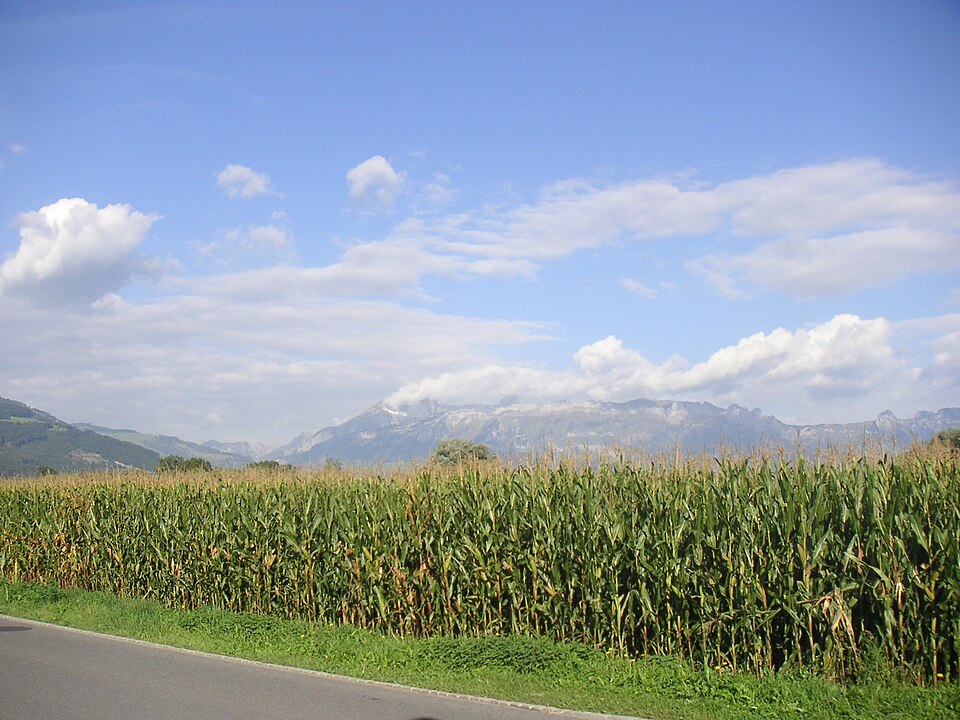
The Highest Peaks
The tallest mountain in the Alps is Mont Blanc, which rises 4,808 meters (15,774 feet) above sea level on the border between France and Italy. Mont Blanc is also the highest point in all of Western Europe. Other famous peaks include the Matterhorn on the Swiss-Italian border, known for its dramatic pyramid shape, and the Eiger in Switzerland, famous for its steep north face. Many of the Alps’ peaks remain covered in snow and ice year-round.
The Alps were created by the slow collision of the African and European tectonic plates over millions of years, beginning about 65 million years ago. As these enormous plates pushed together, the rock between them was squeezed upward, forming towering mountains. During the last ice age, massive glaciers carved out the deep valleys, sharp ridges, and sparkling lakes that make the Alps so beautiful today. The mountains are still rising very slowly, pushed up by the same forces that created them.
Rivers and Water
Several of Europe’s most important rivers begin high in the Alps. The Rhine, which flows north through Germany and the Netherlands, starts in the Swiss Alps. The Rhone begins in Switzerland and flows through France to the Mediterranean Sea. The Po, Italy’s longest river, and the mighty Danube, Europe’s second-longest river, also have their sources in the Alps. Melting snow and glaciers feed these rivers, providing water to millions of people across the continent.
History and Famous Crossings
The Alps have played a major role in European history by acting as a natural barrier between northern Europe and the Mediterranean region. One of the most famous crossings happened in 218 BCE, when the Carthaginian general Hannibal led his army and war elephants across the Alps to attack Rome during the Second Punic War. Napoleon Bonaparte also marched his army across the Alps in 1800. For centuries, mountain passes like the Brenner Pass and the Great St. Bernard Pass served as important trade and travel routes.
Wildlife and Nature
The Alps are home to a variety of animals adapted to mountain life. Ibex, a type of wild goat with long curved horns, scramble across steep rocky cliffs. Chamois, nimble mountain antelopes, leap from ledge to ledge. Golden eagles soar above the peaks, and marmots whistle warnings from alpine meadows. The mountains also support wildflowers like edelweiss and gentians, which bloom during the short summer growing season.
Activities and Tourism
The Alps are world-famous for outdoor sports and recreation. In winter, millions of people visit to ski, snowboard, and go ice climbing at popular resorts across Switzerland, Austria, France, and Italy. In summer, hikers and mountain climbers explore thousands of kilometers of trails and climb challenging peaks. Mountain biking, paragliding, and swimming in alpine lakes are also popular warm-weather activities. Cable cars and cog railways carry visitors to high viewpoints where they can enjoy wide views of the mountains.
The Alps Today
Today, the Alps face challenges from climate change, which is causing glaciers to shrink and snow seasons to become shorter. Scientists have measured temperatures in the Alps rising nearly twice as fast as the global average. Communities in the Alps are working to protect their environment while continuing to welcome visitors. National parks and nature reserves help preserve the mountains’ wildlife and natural beauty for future generations.
 OtterKnow Kids Encyclopedia